



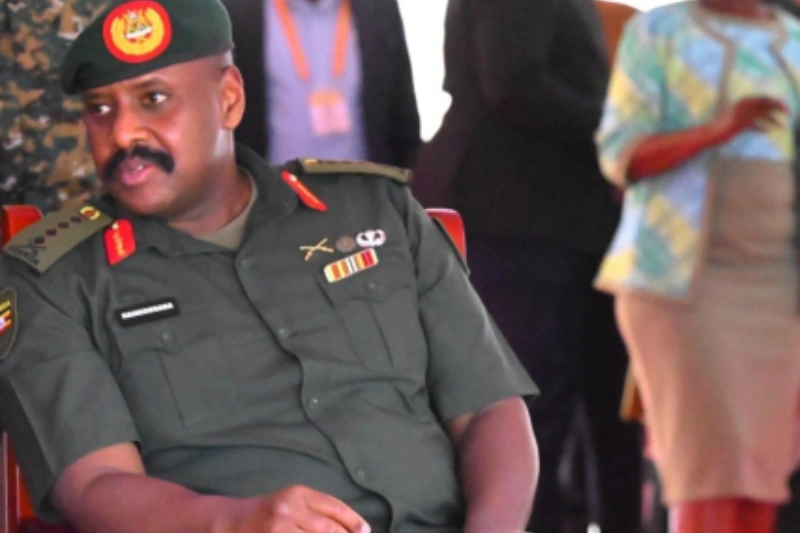

The posts were short. The message was not.
“We approve the FRN’s capture of Walikale. UPDF will not oppose them,” Muhoozi wrote on X on Monday.
He went further. If the rebels of the Front for the Refoundation of the Nation (FRN) dragged their feet, he said, Uganda could take the mineral-rich territory itself.
Kinshasa moved quickly. Its foreign ministry summoned the head of Uganda’s diplomatic mission in Kinshasa on Tuesday, 24 November, demanding an explanation for the remarks.
The ministry described the comments as “particularly serious”, saying they undermined the restraint expected in relations between sovereign states. It wants Kampala to clarify its official position and prevent similar incidents from happening again.
It also stressed that respect for sovereignty and territorial integrity applies to digital platforms. Congo, it said, would defend its dignity and institutions against provocation or interference.
By Thursday, 26 November, Kampala had issued no public response. Muhoozi’s X account, which had nearly 1.4 million followers, was no longer accessible. It was unclear whether he had deactivated it or the platform had suspended it.
The posts matter because of who the FRN is.
Former president Joseph Kabila launched the movement in Goma on 12 October. The FRN is a separate armed movement led by Kabila, operating amid the wider conflict involving M23 and its political-military alliance, the Congo River Alliance (AFC). Its emergence has added another layer to the fighting against the Congolese government.
Congo accuses Rwanda of backing M23. Kigali denies the allegation.
Uganda, meanwhile, is supposed to be on the other side of that conflict. Its troops have been in eastern Congo since November 2021 under Operation Shujaa, a joint campaign with Congolese forces against the Allied Democratic Forces (ADF). Kampala has also been involved in efforts to mediate between Kinshasa and the Convention for the Popular Revolution (CRP), an armed group led by Thomas Lubanga in Ituri.
That makes Muhoozi’s comments particularly awkward. Uganda’s soldiers are operating inside Congo as part of a security partnership with Kinshasa, while the country’s military chief is publicly welcoming a rebel advance on Congolese territory. That contradiction lies at the heart of the diplomatic dispute.
Walikale is no random target. The North Kivu territory is known for its tin deposits and gold mining. M23 captured the town on 19 March 2025 and held it for 16 days before withdrawing amid diplomatic pressure and peace efforts involving the Democratic Republic of Congo and Rwanda.
Muhoozi says minerals are not the point. “We are not interested in minerals or anything else in Walikale,” he wrote. He said his concern was the ADF and the safety of the Bahema community, whom he described as “my people”.
He also accused fighters linked to the Democratic Forces for the Liberation of Rwanda (FDLR), a Rwandan Hutu armed group with roots in the 1994 genocide, of killing Bahema people around Walikale. That allegation could not be independently verified.
This is not the first time Muhoozi’s online statements have strained DRC-Uganda tensions. In March 2025, Reuters reported that the Ugandan army chief had threatened to seize Kisangani if M23 failed to move quickly enough. A Ugandan military spokesperson at the time dismissed his posts as unofficial.
In 2024, Kinshasa also summoned a Ugandan envoy after Muhoozi threatened foreign mercenaries operating in eastern Congo.
The latest controversy is unfolding against a changing military situation on the ground. The FRN reportedly took the village of Taliha in Lubero territory on Tuesday, 24 November, after clashes with Congolese forces and allied Wazalendo fighters, according to local reporting by Actualite.cd. The territory’s administrator confirmed the fighting, although the Congolese army had not publicly explained how the position was lost.
Taliha sits along the western shore of Lake Edward. Routes from the area lead towards other lakeside communities and eventually towards Kasindi, a border town adjoining Uganda. The latest fighting has also forced residents of nearby villages to flee, according to local sources.
Tweets are not troop orders. No order sending Ugandan soldiers to join the FRN had been announced by Thursday, and Muhoozi’s posts alone do not establish a change in Uganda’s military policy.
But Kinshasa’s concern is understandable. Muhoozi is not simply a military commentator. He is Uganda’s Chief of Defence Forces, a senior presidential adviser on special operations and the son of President Yoweri Museveni. His statements carry weight, even when Kampala has not formally endorsed them.
The latest DRC-Uganda tensions expose the fragility of a security partnership built around a common enemy. Uganda and Congo still have a shared interest in fighting the ADF, but public support for a rebel movement operating against Kinshasa threatens to undermine that cooperation.
In eastern Congo, a post can travel faster than a battalion. Kampala has yet to say whether this one was meant to.


