




Nigeria’s oil revenue shortfall reached ₦10.78 trillion in the first half of 2026, exposing a much wider gap between the government’s petroleum revenue expectations and what actually entered the treasury.
The figure is contained in the Budget Office‘s second-quarter and half-year implementation report. It shows that the government collected just ₦7.88 trillion against a half-year target of ₦18.65 trillion, achieving only 42.22 per cent of its projected oil revenue.
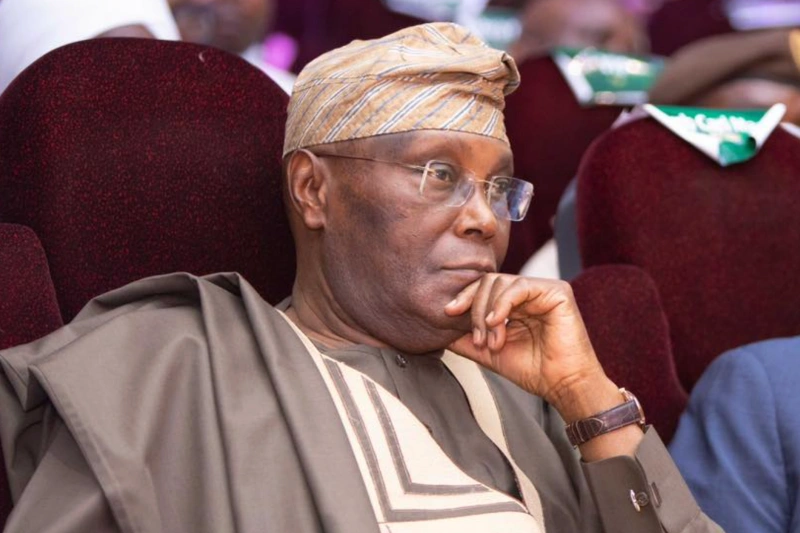
Atiku Abubakar drew attention to the same report but led with a different number: the ₦1.44 trillion year-on-year decline in gross oil revenue. His claim has brought fresh political scrutiny to petroleum receipts, but the bigger question is why Nigeria fell so far short of its own revenue target.
The figures behind the oil revenue shortfall describe a fall in collections. They do not establish that money was collected and then withheld.
The larger oil revenue shortfall sits beside it. The government planned to collect ₦18.65 trillion in the half-year but received only 42.22 per cent of that amount. The oil revenue shortfall against the target was ₦10.78 trillion.
Atiku mentioned that gap too, in a statement issued on Wednesday by his spokesman, Phrank Shaibu, which Leadership carried that evening. But the smaller figure dominated the headline, while the gap against the government’s own target received less attention.
His argument is political and blunt. Atiku says Tinubu “made life expensive” and that Nigerians “pay more, while the government delivers less. He wants an account that “follows the barrel from the oilfield to the public account”.
Here is what makes the oil revenue shortfall awkward for the Presidency. The Budget Office’s second-quarter and half-year implementation report shows crude averaging $104.52 a barrel between April and June. The 2026 budget assumed $64.85.
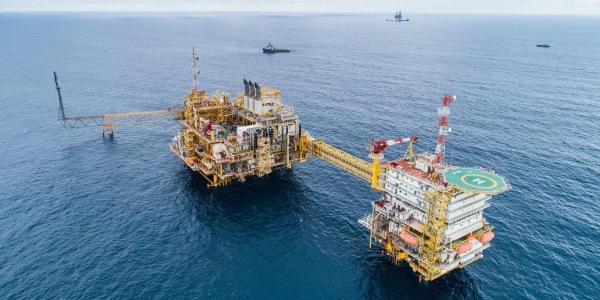
Output was the weak link. Production reached 1.72 million barrels a day in the second quarter, up from 1.55 million in the first, but still 120,000 below the 1.84 million benchmark. That is a gap of 6.5 per cent.
Yet petroleum profit and gas taxes brought in ₦2.92 trillion against a target of ₦11.96 trillion. They alone account for about ₦9 trillion of the oil revenue shortfall.
A 6.5 per cent production gap does not, by itself, explain a tax revenue shortfall of about three quarters. Tax receipts can also be affected by assessment and payment schedules, deductible costs and other fiscal arrangements. The report points to structural problems, but Nigerians still need a clearer breakdown of how production, lifting volumes, costs, deductions and tax remittances translated into the final figure.
The Budget Office blames “low sector investment and legacy oil production constraint issues” for weaker lifting, and lists theft and pipeline vandalism among the sector’s problems.
Not every line missed. Unbudgeted gas-flaring penalties added ₦324.56 billion.
The Presidency’s explanation for the oil revenue shortfall, such as it is, came months ago. On 2 August, spokesman Bayo Onanuga replied to an earlier Atiku claim of a ₦7.98 trillion oil windfall.
He argued that “the production shortfall partly offset the price premium” and that some crude had been pledged for loans that funded past subsidy payments. He also told Atiku to “show the workings”.
That was a different claim in a different statement. At the time of writing, neither the Presidency nor NNPC Limited had publicly responded to Wednesday’s one.
The record has a wrinkle that bears on the oil revenue shortfall. Executive Order 9, signed by Tinubu in February and effective from 13 February, directed operators under production-sharing contracts to pay royalty oil, tax oil, profit oil and profit gas due to the Federation directly into the Federation Account. It also ended NNPC Limited’s 30 per cent management fee and addressed other deductions. The stated aim was to curb leakages.
The Budget Office’s director-general, Tanimu Yakubu, was named secretary of the committee overseeing the order. So the office that published these half-year figures also sits inside the machinery meant to stop the leaks.
Minister of State for Finance Doris Uzoka-Anite later promised monthly revenue dashboards and production-to-remittance reconciliation. The question raised by the oil revenue shortfall is why Nigerians cannot already see a regular, detailed account that allows them to reconcile production with what reaches the public purse.
Atiku now wants production, liftings, sales, deductions and remittances published together. That is close to what the ministry said it would deliver.
His own offer has a cost too. Atiku promises “targeted relief” on locally refined fuel, which would also be paid for from oil revenue. The Presidency has previously dismissed his subsidy proposal as a return to a wasteful regime.
Both camps are arguing over the same pot, and the oil revenue shortfall means it came in light. INEC has fixed 16 January 2027 for the presidential vote, leaving just over seven weeks.
Crude averaged more than $100 a barrel, yet the treasury missed its oil revenue target by more than half. Voters will decide who they believe can explain why.


