




The National Bureau of Statistics (NBS) put Nigeria’s headline inflation at 14.63 per cent in September, down from 15.39 per cent in August. But that decline does not mean goods and services have become affordable. It means prices are rising more slowly, not that the increases Nigerians have endured are being reversed. The distinction matters when examining energy costs and inflation in Nigeria and their impact on household purchasing power.
Food inflation remained at 19.59 per cent year-on-year, while core inflation, which excludes farm produce and energy, increased by 1.11 per cent month-on-month. For households already struggling to stretch their incomes, the difference between slowing inflation and falling living costs is more than statistical. It raises a central question about energy costs and inflation in Nigeria: how much of the pressure comes from fuel, electricity and logistics, and how far do these costs travel through the prices of everything else?
The answer has two parts: the direct contribution of transport and energy-related items to the inflation basket, and the wider effect on the cost of producing, moving and selling goods.
According to the NBS, transport added 1.56 percentage points to September’s headline inflation rate, while food contributed 5.85 percentage points. Transport therefore accounted for roughly 11 per cent of the headline rate and food about 40 per cent.
The World Bank puts energy-related items, including transport, at approximately 10.1 per cent of Nigeria’s consumer price basket. But this weighting does not capture their full influence on prices. Fuel and electricity costs affect many other goods and services, even when energy is not the item being purchased. This is central to understanding energy costs and inflation in Nigeria: the price of fuel affects considerably more than the transport component of the consumer price basket. These wider effects make energy costs and inflation in Nigeria a broader economic problem than the direct contribution of fuel and transport to the consumer price index suggests.
In April, the World Bank estimated that oil prices of around $80 a barrel could add approximately 3.1 percentage points to Nigeria’s inflation if the full increase in costs was passed on to consumers. It warned that the effects could be greater when additional pressure on transport, logistics and food prices was taken into account.
World Bank country director Mathew Verghis described the mechanism: “Higher global energy prices and rising shipping costs are putting pressure on domestic prices.”
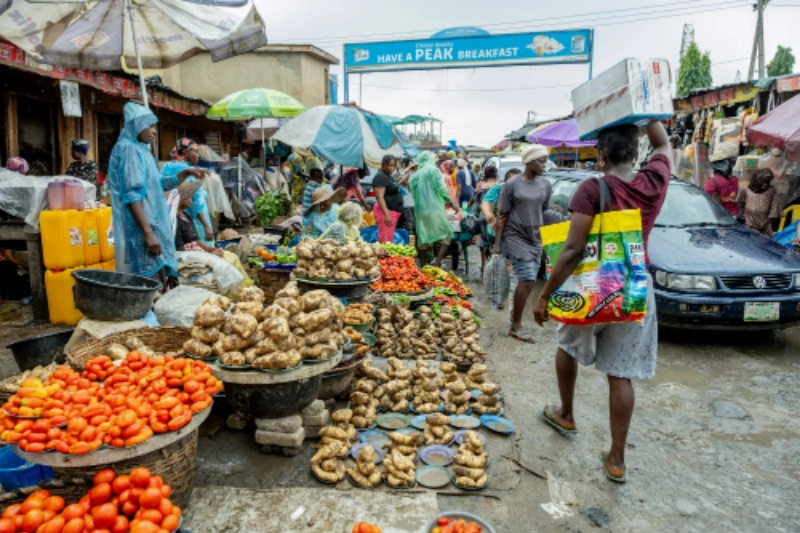
Food produced in rural communities has to reach urban markets, often over long distances and through several intermediaries. A haulier pays more for diesel, a trader pays more to transport produce, and the additional cost eventually finds its way into the price paid by consumers.
Electricity shortages add another layer. Businesses that cannot rely on the national grid have to generate their own power, transferring fuel costs into the prices of their products and services. The Centre for the Promotion of Private Enterprise (CPPE), in a policy brief reported by BusinessDay, estimated that Nigerians spend more than ₦3.7 trillion annually on generators. The burden is particularly visible among small businesses, from neighbourhood shops and restaurants to manufacturers and cold-storage operators, that depend on generators to remain operational. For these businesses, energy costs and inflation in Nigeria are not abstract economic indicators but recurring operating expenses that influence what customers pay.
September’s inflation figures illustrate the difference between temporary price relief and the wider pressures facing the economy. Food prices fell by 1.55 per cent month-on-month, helping to pull down the headline rate to just 0.06 per cent. The harvest season provided an important source of relief as increased food supply eased prices.
But the improvement was not uniform. Core inflation, which excludes farm produce and energy, rose by 1.11 per cent month-on-month after falling by 0.06 per cent in August. This suggests that price pressures remained active outside the more volatile food and energy components. It does not establish that fuel costs alone caused the increase, but it shows why the headline figure should not be read as evidence that inflationary pressures have disappeared.
The rural and urban figures tell another part of the story. Rural prices fell by 0.89 per cent in September, while urban prices rose by 0.53 per cent. A fall in agricultural prices does not necessarily translate into cheaper food in the cities, where transport, handling, storage and distribution costs can absorb much of the benefit before produce reaches consumers. These differences help explain why the effects of energy costs and inflation in Nigeria are not experienced equally across households and regions.
Meanwhile, petrol prices continued to rise. According to Punch, Dangote Refinery increased its petrol gantry price four times between 21 August and 12 September, taking it to ₦1,350 per litre. The refinery subsequently raised its diesel price to ₦1,800 on 10 October.
The effects of such increases do not appear immediately across the economy. Transport operators may adjust fares at different times, traders may take time to revise prices, and manufacturers may initially absorb some additional production costs before passing them on. Consequently, September’s inflation figures cannot capture the full effect of energy price increases that continued into October. The next inflation report should provide a clearer indication of how much of that pressure has filtered through. The continued increases show why energy costs and inflation in Nigeria cannot be assessed using figures from a single month, particularly when higher fuel prices take time to filter through the economy.
The scale of the challenge is also evident in the earlier petrol price increases. NBS data put the average price of a litre of petrol at ₦1,051 in February and ₦1,533 in April, an increase of approximately 46 per cent in two months. Although these are historical national averages rather than a reflection of what every motorist paid, they demonstrate how quickly fuel costs can change and why their wider economic consequences matter.
The CPPE has cautioned against interpreting easing inflation as falling prices. A slower rate of increase does not reverse previous price rises. For households, the practical question is whether their incomes can keep pace with the cost of food, transport, electricity and other essentials. With food inflation still at 19.59 per cent year-on-year, the pressure remains substantial.
So how much of Nigeria’s inflation comes directly from energy and logistics? The available figures suggest that the direct contribution is relatively limited, at around one tenth of the consumer price basket. But no official figure isolates the full indirect contribution of energy costs through transport, production, electricity and distribution. Any attempt to put a precise number on that wider effect would therefore go beyond what the available data establish.
What the evidence does show is that energy costs and inflation in Nigeria are closely connected, even when the relationship is not immediately visible in the headline figures. Harvests can bring seasonal reductions in food prices, but they cannot permanently offset the cost of moving produce, powering factories, preserving food or operating businesses.
For households, a lower inflation rate is of limited comfort if the prices they face remain beyond their means. Sustainable relief will depend on reducing energy costs, improving electricity supply and addressing the transport and distribution bottlenecks that add to the price of almost everything Nigerians buy.
A good harvest can ease the food bill for a season. But without more reliable and affordable energy, the cost of getting that food to market and keeping the rest of the economy running will continue to undermine the relief.


