



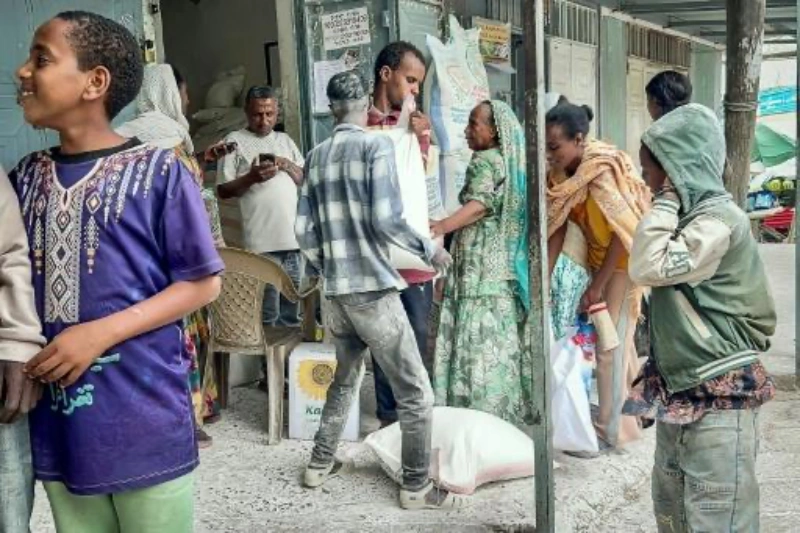

Mekelle fell silent on Thursday night. Not the silence of a ceasefire, but the silence of a line being deliberately cut.
Within hours, residents across Ethiopia’s northern Tigray region could not call, text or move money on their phones. The Tigray internet shutdown followed close behind the heaviest fighting the region has seen since a two-year war ended in 2022.
Four sources with knowledge of the matter told Reuters that Tigray’s ruling party, the Tigray People’s Liberation Front, gave the order. They said private operator Safaricom and state-owned Ethio telecom were told to cut phone and internet access across the region. Neither company responded to requests for comment.
The global monitor NetBlocks confirmed the outage on Friday. It said network data indicated a subnational internet disruption in northern Ethiopia, consistent with reports of a telecoms blackout in Tigray.
For residents such as the woman in Mekelle who spoke to Reuters, the Tigray internet shutdown meant something closer to survival than inconvenience. “Even Safaricom doesn’t work in all places… you have to move from place to place to get connectivity,” she said. Mobile money transfers, not bank branches, keep many households running here.
The Tigray internet shutdown is not the first of its kind here. During the 2020-2022 war, the federal government’s own communications siege choked off access to food, cash and medicine. That pushed hundreds of thousands into famine-like conditions. The conflict killed an estimated 600,000 people, among the deadliest wars fought anywhere this century.
This time the roles have reversed. It is Tigray’s leadership, not Addis Ababa, accused of shutting the lines down. One source close to the matter pointed to a tactical motive behind the Tigray internet shutdown. Severing mobile networks, the source said, may blunt the federal military’s advantage in using battlefield drones that depend on network access to strike targets.
None of this appeared from nowhere. Tension had been rising for months over land, power and the unravelling of the 2022 Pretoria peace agreement. In May, the TPLF reasserted control over Tigray’s regional government, sidelining the interim administration that Pretoria had installed.
Then, on 22 September, Ethiopian forces launched drone strikes and air raids. Two schools in Alamata were hit, killing at least 14 civilians. The TPLF called it an “open invasion” and declared a defensive war. Within hours, Tigrayan forces and allied Fano fighters had seized airports across Tigray and pushed into neighbouring Afar and Amhara.
Ethiopian Airlines suspended flights to the region. Flights to Lalibela, home to Amhara’s UNESCO-listed rock-hewn churches, were grounded on Thursday as fighting closed in nearby. The federal army says it killed 272 Tigrayan fighters in a counteroffensive in Amhara, with 260 more wounded.
Panic has followed the Tigray internet shutdown into daily life. Residents rushed to shops this week to empty shelves of basic supplies. Many withdrew cash before the shutdown cut off the mobile transfer apps their households rely on. Some residents told Reuters they had seen TPLF fighters going house to house searching for young men to conscript.
Four senior Tigrayan military figures were reportedly detained this week. They include former regional president Tadesse Werede, who had voiced doubts about renewed war. It is a detail that complicates any picture of unified Tigrayan resolve behind the fighting.
The contrast with 2022 is stark. That year, a peace deal signed in Pretoria brought soldiers home, reopened roads and let aid convoys back into Tigray after two years of siege. Four years on, the same corridors are closing again. The silence that once signalled catastrophe has returned within days rather than months.
The African Union has called the seizure of Tigray’s airports inconsistent with the Pretoria deal. It has urged both sides to step back and enlisted former Nigerian president Olusegun Obasanjo, who helped broker the 2022 agreement, to press for calm. Neither the TPLF nor the federal government has signalled it is ready to reverse course. The blackout remains firmly in place.
For aid workers, the blackout carries its own warning. During the last war, communication failures made it harder to track famine conditions until they were already severe. A prolonged Tigray internet shutdown would leave humanitarian agencies working with the same blind spots that cost lives before.
Whether this becomes a full return to war or a shorter, contained flare-up depends on decisions still being made in Addis Ababa and Mekelle. What is certain is this: Tigray’s roughly five million people are once again cut off from each other and from the outside world, waiting for a signal that may not arrive by phone.


