



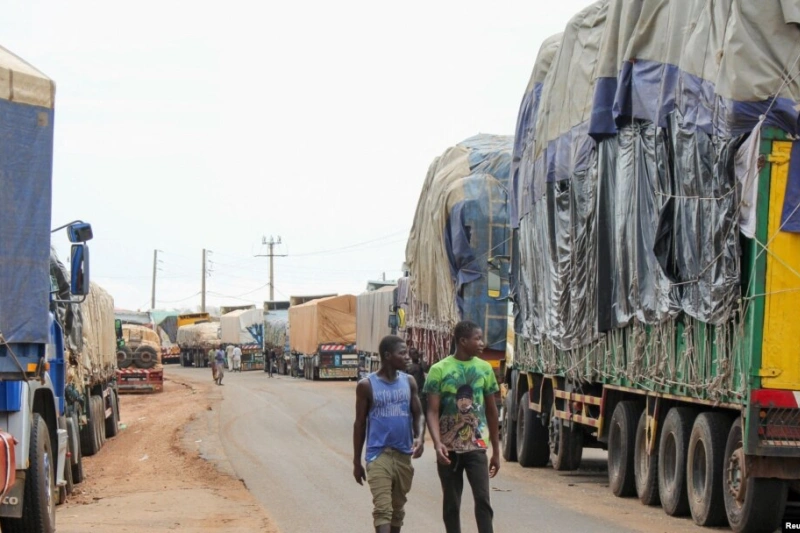

Diplomats have spent nearly four months telling West Africa that the Benin-Niger border crossing is about to reopen. There is a thaw. On the ground at Malanville and Gaya, however, the barrier has barely moved.
That gap between announcement and reality is where the real story sits. The Benin-Niger border crossing has dominated headlines since June. Benin’s newly inaugurated president, Romuald Wadagni, flew to Niamey and shook hands with military leader General Abdourahamane Tiani. Expectations were high. The outcome has been far more modest.
Niger shut its side of the Benin-Niger border crossing in July 2023 after soldiers overthrew elected president Mohamed Bazoum. The move coincided with wider ECOWAS sanctions imposed on the military leaders, most of which were lifted by February 2024.
Benin reopened its own side that month. Niamey kept its gate shut. It accused Cotonou of harbouring French military bases plotting to destabilise the country, a claim Cotonou has always denied.
Wadagni’s June visit briefly changed the mood. The two leaders signed a nine-point roadmap and set up a joint expert committee. By 16 June, both governments called the committee’s first round of work satisfactory.
Five days later, in Cotonou, the same experts wrapped up a second round of talks. Niamey attached two conditions to any reopening of the Benin-Niger border crossing. It wanted full transparency on foreign military assets near the frontier and a joint intelligence unit to track jihadist movement. No date was ever announced.
Then came August. A mutiny inside Niger’s own military attacked the presidential palace and the airport in Niamey overnight on 28 to 29 August. State forces put it down within hours.
In the aftermath, Niger’s military government accused France, Chad and Benin of backing the plot. No evidence has been produced publicly. The accusation alone has undone months of careful diplomacy and pushed the Benin-Niger border crossingfurther from reopening than it was in June.
Yet while diplomats focused on reopening the frontier, a different trade route was quietly reshaping the regional balance.
In February, on the instruction of President Bola Tinubu, the Nigeria Customs Service reopened the Kamba and Tsamiya posts in Kebbi State. Roughly 2,000 stranded trucks began moving again. Most were destined for Niamey.
The cargo still passes through the Port of Cotonou. It simply completes the journey through Nigerian territory, bypassing the Benin-Niger border crossing entirely.
“We are happy that our trucks, which were trapped for months, can now move freely through Nigeria to their destinations,”
Nigerien transport official Commander Maigiro Yahaya-Tubil said when the Kebbi route opened.
That single sentence captures who has actually gained ground. Nigeria now sits astride Niger’s main supply line to the sea, a position it did not hold before the crisis began.
Every truck moving through Kamba earns Nigerian customs revenue. It keeps Nigerian haulage firms and border towns in business. It hands Abuja fresh leverage as a self-styled mediator between Cotonou and Niamey. None of that depended on the frontier itself reopening.
Benin, by contrast, is still waiting on the Benin-Niger border crossing to reopen. The IMF once trimmed Benin’s growth forecast from 6% to 5.4%, citing the closure directly. The Port of Cotonou, once the gateway for roughly 80% of Niger’s imports, still runs below its pre-crisis capacity.
Analysts at South Africa’s Institute for Security Studies argue that reopening the Benin-Niger border crossing would restore formal trade and squeeze out the smuggling networks that filled the vacuum. That outcome remains theoretical while the gate stays shut.
For the traders and families who live along the river, the diplomacy has changed almost nothing. Crossing between Malanville and Gaya still means paying boatmen and dodging checkpoints. Some travellers have lost savings to extortion along the way.
Communities that once moved freely between the two towns now measure a family visit in months rather than minutes. That is the human cost sitting underneath every promise to reopen the crossing.
There is a lesson here for anyone reading the statements as proof of progress. A nine-point roadmap is not a reopened border. A satisfactory committee report is not a reopened border either.
Until a truck can cross the bridge at Gaya without first detouring through three Nigerian states, the real winner of this thaw remains the country that was never named in any of the headlines.


