



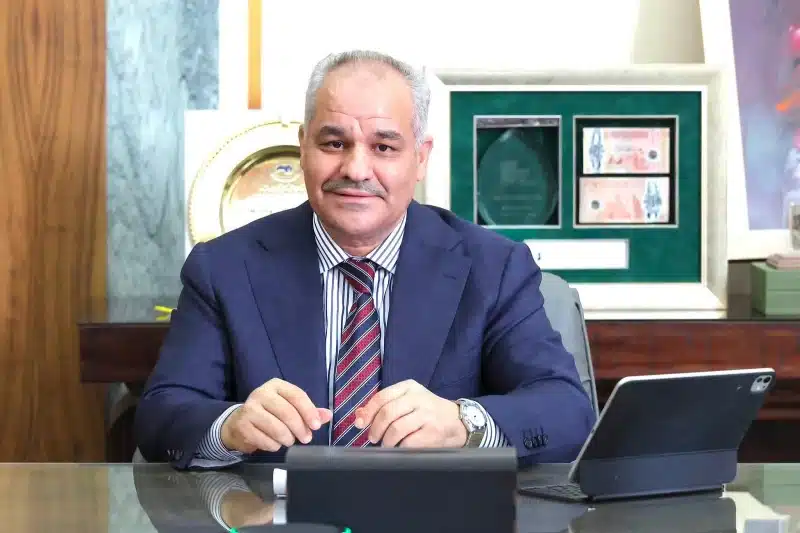

Libya’s central bank governor, Naji Issa, has resigned from his post, submitting his resignation to the country’s two rival legislative chambers in documents dated 9 August, Reuters reported.
In the letters, whose authenticity Issa confirmed directly to Reuters, he apologised for being unable to continue his duties. He did not explain his decision, citing only the sensitivity of his reasons. Libya’s central bank governor told Reuters he could not continue in his post but declined to say more when pressed on what had prompted the move.
Libya’s central bank governor addressed his resignation letters to the heads of the House of Representatives, based in the east and elected in 2014, and the High Council of State, based in the west and formed under a 2015 political agreement. Members of the latter chamber were drawn from a parliament elected in 2012. The two bodies have shared oversight of the Central Bank of Libya since Issa’s appointment.
Mohamed Takala, head of the High Council of State, responded by asking Issa to remain in office. Takala said continuity was needed to protect financial, economic and political stability while the resignation is reviewed through constitutional and legal channels. The House of Representatives had not issued a formal response as of Monday.
Libya’s central bank governor took up his position in October 2024, after the House of Representatives and the High Council of State agreed on his appointment. That agreement ended a bitter standoff over control of the Central Bank of Libya.
The dispute began in August 2024, when factions aligned with the western administration moved to remove then governor Sadiq al Kabir and install a rival board in his place. Eastern factions responded by halting oil production across the country, a move that sharply cut Libya’s output and export earnings during the crisis.
Libya has remained split since 2014 between competing authorities in the west and east, a legacy of the turmoil that followed the fall of Muammar Gaddafi in 2011. The central bank has functioned as one of the few institutions recognised by both sides, making its leadership a recurring flashpoint in the country’s wider political rivalry.
The resignation follows months of strain between Libya’s central bank governor and members of the House of Representatives. Parliament had previously summoned Libya’s central bank governor, along with his deputy Miree Al Barasee and the bank’s board, for questioning after the institution disclosed that ten billion Libyan dinars had been printed outside its official system. Lawmakers also used that session to raise proposals on scrapping a foreign currency tax and restructuring the state’s sovereign financial positions.
Analysts in Tripoli have linked the resignation to deeper pressure on the bank rather than a single dispute. Libya Herald, a Tripoli based outlet, reported that the governor’s departure coincides with unresolved disagreements over a United States mediated unified public spending agreement, alongside warnings from the International Monetary Fund about the sustainability of current fiscal practices.
The bank has been expected to simultaneously fund high public expenditure, defend the dinar, supply foreign currency for trade, cover a large fuel subsidy bill, protect foreign reserves and narrow the gap with the parallel currency market. These are competing goals that are difficult to reconcile without changes to underlying government spending.
No successor has yet been named. Until the House of Representatives responds formally to Issa’s letter, Libya’s central bank governor remains in post in a caretaker capacity, according to the High Council of State’s request.


