



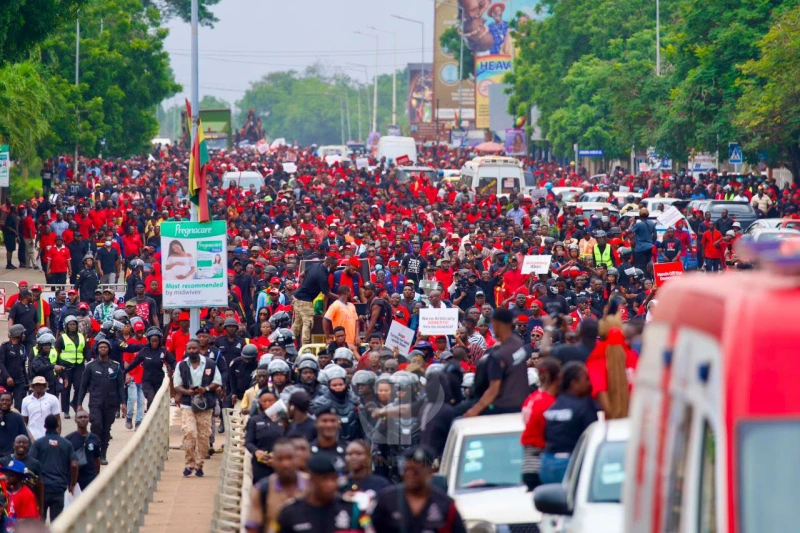

Ghana’s main opposition party, the New Patriotic Party, staged a nationwide demonstration in Accra on Thursday, accusing the governing National Democratic Congress of undermining the country’s democratic institutions.
The NPP demonstration, themed “Democracy Under Attack,” began at 5am at the Community Centre opposite the Supreme Court, according to NewsGhana, before marchers proceeded through the Mövenpick Ambassador Hotel Road, the Efua Sutherland/Ridge Roundabout and the Ako Adjei Interchange, ending at Jubilee House.
Participants wore black and red. Organisers said the colours symbolised mourning for the state of Ghana’s democracy, The Sikaman Times reported.
NPP National Organiser Henry Nana Boakye, popularly known as Nana B, led the mobilisation for the NPP demonstration. Speaking at a press conference the day before, he insisted the exercise was a peaceful constitutional exercise rather than an act of confrontation or disorder, Modern Ghana reported.
Marchers presented three separate petitions during the NPP demonstration. One petition went to the Supreme Court leadership over concerns about judicial independence, a second was submitted to Parliament, and a third was handed to President John Dramani Mahama at Jubilee House, urging him to address alleged attacks on democratic institutions, Ourhomeland reported.
The immediate trigger for the NPP demonstration was a Court of Appeal ruling. The court unanimously overturned a 10-year sentence against former Microfinance and Small Loans Centre chief executive Sedina Tamakloe-Attionu, acquitting and discharging her after finding the prosecution had failed to prove its case beyond reasonable doubt, Citi Newsroom reported.
The NPP argues the acquittal exposes a wider pattern of selective justice. National Organiser Boakye questioned why a notice of appeal reportedly surfaced only in 2026, despite not being served on the Attorney-General’s office during the previous administration or raised during extradition proceedings in the United States, Ourhomeland reported.
Beyond the Tamakloe-Attionu case, an NPP communications team member and spokesperson for flagbearer Mahamudu Bawumia, Dennis Miracles Aboagye, listed further grievances behind the NPP demonstration. He pointed to arrests of opposition figures and critics, insult-related charges, the detention of TikTok users and journalists, and what he called misuse of bail conditions, Adomonline reported.
Government has pushed back on the accusations driving the NPP demonstration. Attorney General Dominic Ayine defended the state’s decision to challenge the Tamakloe-Attionu acquittal, insisting the move reflects legal principle and accountability rather than political motive, MyJoyOnline reported.
More broadly, the NDC has rejected claims that it is undermining democracy or using state institutions to persecute political opponents, Asaase Radio reported. Government has maintained that arrests and prosecutions follow due process and that law enforcement agencies act independently, Adomonline reported.
The NPP demonstration also drew support beyond the party’s own base. The People’s National Party expressed solidarity with the protest, citing concerns over unequal application of the law and perceived political interference in state institutions, The Sikaman Times reported.
Not every voice inside the NPP camp backed the demonstration unreservedly. A former party communications officer, Kwame Baffoe Abronye, alleged the demonstration had become a vehicle for party leaders to draw campaign funding from Bawumia ahead of internal elections, MyNewsGH reported, an allegation the party’s organisers have not publicly addressed.
Police were formally briefed ahead of the NPP demonstration. The Ghana Police Service was notified in advance and security arrangements were coordinated with organisers to maintain order along the route, BusinessGhana reported.
The demonstration in Accra was not intended as the final phase. Organisers said a further stage of the NPP demonstration would extend to Kumasi, with additional details expected in the coming days.
Thursday’s events add to months of friction between Ghana’s two dominant parties, with the judiciary, the Attorney-General’s office and the conduct of high-profile prosecutions now sitting at the centre of the country’s political debate.


