



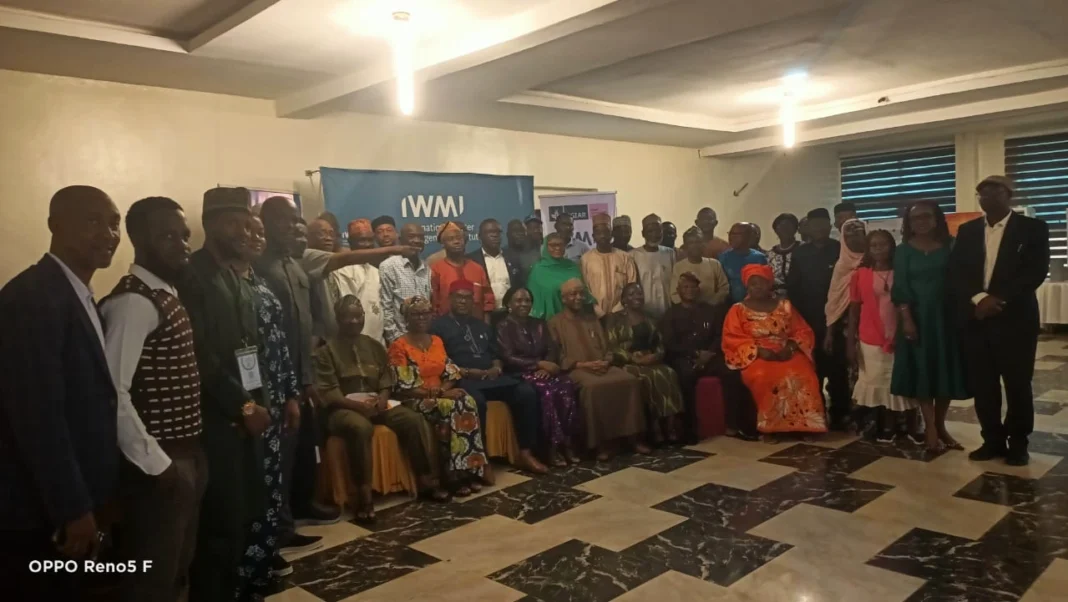

Irrigation reform in Nigeria took a fresh step forward this week as government officials, researchers and development partners gathered in Abuja to examine the country’s biggest obstacles to expanding irrigated farmland.
The International Water Management Institute convened the two day session at the Candela Imperial Hotel. It carried the working title Validation and Reform Paths to Creation on Enabling Environment Diagnosis for Scaling Irrigation and Innovation in Nigeria. The Federal Ministry of Water Resources and Sanitation co hosted the event.
Adebayo Oke, IWMI’s senior regional researcher for Next Generation Irrigation Systems, told delegates that Nigeria holds more than five million hectares of irrigable land. He said this land is spread across hundreds of schemes of different sizes, from large government run projects down to small community plots. Many of the country’s reservoirs and dams remain underused, he said, with performance sitting well below what the resources could support.
That gap sits at the heart of irrigation reform in Nigeria. Only about one per cent of Nigerian cropland is currently irrigated, according to research published by the International Food Policy Research Institute. Most farmers depend on rainfall alone, which leaves harvests exposed to drought, erratic weather and seasonal shocks. The institute has linked this dependence to persistent food insecurity and rural poverty.
Agriculture remains central to the national economy. The Food and Agriculture Organization reports that the sector contributed 28 per cent of gross domestic product between 2021 and 2024, while employing about 40 per cent of Nigeria’s labour force. Officials at the workshop said closing the irrigation gap could raise yields and rural incomes without pushing farming further into fragile land.
Speaking on behalf of the Minister of Water Resources and Sanitation, Prof Joseph Utsev, Director of Irrigation and Drainage Victor Ojiako said the ministry sees irrigation reform in Nigeria as central to its food security agenda. He said the government wants realistic, inclusive and implementable reform recommendations that address policy gaps, weak institutions and limited financing.
The Abuja workshop builds on wider federal efforts already under way. In March, the Federal Government and the World Bank launched the 500 million dollar Sustainable Power and Irrigation for Nigeria project, known as SPIN. Utsev described the scheme at its launch as a strategic intervention to modernise dam operations, expand irrigation infrastructure and strengthen hydropower generation nationwide. Punch newspaper reported that the project targets 500,000 hectares of newly irrigated farmland and up to 30 gigawatts of additional sustainable energy.
Engr Anthea Udo, representing the SPIN project coordinator at the workshop, said dams, reservoirs and canals can only work if backed by stronger institutions. She pointed to five pillars guiding the diagnostic process: water resources, policy and regulation, irrigation programmes, gender inclusion and security. Udo said the reform roadmap from the workshop would directly shape how SPIN rolls out across participating states, tying day to day irrigation reform in Nigeria to a much larger financing pipeline.
IWMI has also been building longer term structures to support the sector. In September last year, the institute launched a Multi Stakeholder Platform on Farmer led Irrigation Development with the Federal Ministry of Water Resources and Sanitation, the Federal Ministry of Agriculture and Food Security, and the Bank of Agriculture. The platform runs quarterly dialogues aimed at mobilising investment and coordinating policy across government agencies.
Speakers at the Abuja workshop pointed to silted dams, poorly maintained canals and unclear land rights as recurring barriers to progress. One recent report put the annual loss of newly irrigated farmland at roughly a quarter, largely down to poor upkeep. Figures like that explain why irrigation reform in Nigeria has become an urgent policy priority rather than a long term ambition.
Ojiako said the ministry wants findings from the workshop to feed directly into a national irrigation policy review. He urged participants to speak candidly during the discussion sessions, saying the ministry values evidence over assumption when shaping water policy.
The workshop continues with sector specific sessions, and delegates are expected to produce a validated reform roadmap by the close of proceedings. Organisers say the roadmap will guide how federal agencies, state governments and financial institutions coordinate irrigation reform in Nigeria over the coming years, as the country works to close a food production gap that has widened alongside its population growth.


