



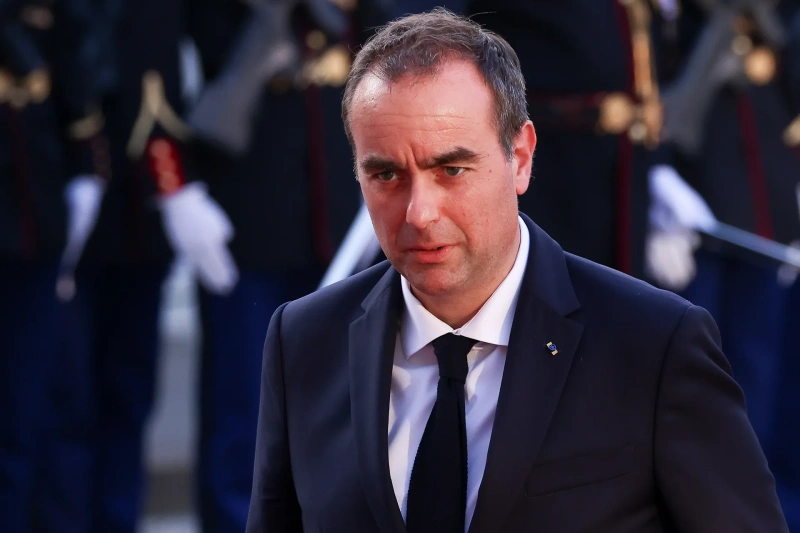

French Prime Minister Sébastien Lecornu arrived in Rabat this week at the head of a delegation of about a dozen ministers, marking his first official trip abroad since taking office and signalling how central the Morocco-France strategic partnership has become to Paris’ foreign policy priorities in Africa, according to a report by Al Jazeera.
The two-day visit, which began on Wednesday, brought Lecornu into direct talks with Moroccan Head of Government Aziz Akhannouch before the pair co-chaired a plenary session of the High Joint Commission for Bilateral Cooperation on Thursday, Middle East Online reported.
It is the first time the commission has convened since December 2019. Its revival after a seven-year hiatus shows how far the Morocco-France strategic partnership has travelled since a period of strained ties between the two governments.
Lecornu’s delegation includes Foreign Minister Jean-Noël Barrot and Interior Minister Laurent Nuñez, according to AFP, reflecting the breadth of the agenda, which spans diplomacy, security, migration, defence and economic cooperation.
Talks in Rabat are expected to produce between eight and ten agreements covering investment, digital transformation, energy, mining, transport and institutional cooperation, North Africa Post reported, as officials work to turn a broader political rapprochement into firm commitments.
At the heart of the discussions is a new bilateral cooperation treaty that both governments hope will eventually be signed by King Mohammed VI and President Emmanuel Macron. This would cement what Macron has called France’s first strategic partnership agreement of its kind with a country outside the European Union, North Africa Post reported.
The renewed Morocco-France strategic partnership follows Macron’s recognition of Moroccan sovereignty over Western Sahara in July 2024, a decision that ended years of French ambiguity over the disputed territory and opened the door to closer political and economic ties, Al Jazeera reported.
That policy shift has allowed both sides to open talks on defence and security matters linked to the Sahara, giving what analysts describe as institutional weight to a decision that had previously appeared to rest on Macron’s personal judgement alone, Al Jazeera reported, citing researcher Ouissal Marsaoui.
Beyond diplomacy, the Morocco-France strategic partnership carries clear economic stakes for both sides. Morocco’s growing role as a logistics hub in the Mediterranean, supported by expanded ports and industrial zones, has made it an attractive entry point for European firms seeking access to African markets, Al Jazeera reported.
For France, deeper engagement with Rabat offers a chance to recover commercial ground lost elsewhere on the continent as competition from other global powers grows across North Africa and the Sahel.
Officials from both countries are also looking at opportunities in artificial intelligence, big data and advanced manufacturing. Moroccan economist Ahlam Qafas said these sectors could help the country move up the value chain rather than simply attract foreign capital, Al Jazeera reported.
Infrastructure investment tied to Morocco’s preparations for the 2030 World Cup, which it will co-host with Spain and Portugal, is also expected to feature in the commission’s talks, according to Yabiladi.
Lecornu’s itinerary in Rabat includes a wreath-laying visit to the Mausoleum of Mohammed V and an official luncheon, Middle East Online reported, rounding off a trip both governments have framed as a turning point rather than a routine diplomatic exchange.
With relations between Paris and Algiers remaining fragile, observers say Macron’s government sees little reason to keep balancing its ties across the Maghreb. That gives the Morocco-France strategic partnership added weight as France looks to secure a dependable long-term ally in the region.


