



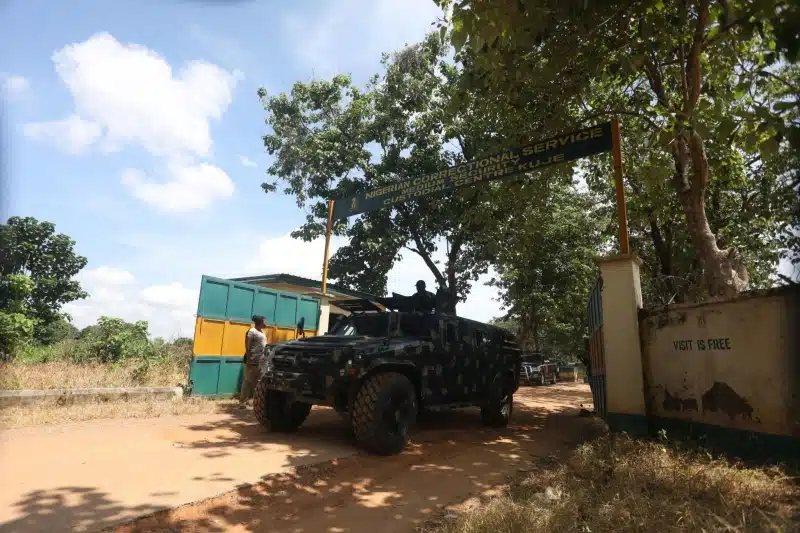

Nigeria’s security agencies have moved to a heightened state of alert following intelligence assessments pointing to a coordinated Nigeria terror plot targeting key installations in Abuja and the neighbouring Niger State, in what analysts describe as a dangerous shift from remote insurgency to urban warfare.
According to internal security memos reportedly circulated among federal agencies including the Nigeria Customs Service, two sites have been identified as primary targets: the Nnamdi Azikiwe International Airport and the Kuje Correctional Facility.
Investigators believe the Nigeria terror plot includes plans to replicate the kind of aviation-linked attack seen recently in Niamey, Niger’s capital. A simultaneous assault on Kuje is feared to be aimed at freeing detained commanders linked to active insurgent groups, a grim echo of the July 2022 prison break at the same facility, during which hundreds of inmates escaped.
Security analysts tracking the threat say the pairing of an aviation target with a prison facility is deliberate. It is a strategy calibrated to deliver both symbolic damage to Nigeria’s international standing and an immediate operational advantage for the groups involved.
Urban Threat Shift and Sleeper Cell Network
The intelligence assessments further identify sleeper cells already embedded within Abuja and Niger State as the operational backbone of the planned attack, rather than fighters moving in from elsewhere. Three groups are implicated in the Nigeria terror plot: Boko Haram, the Islamic State West Africa Province (ISWAP), and the increasingly active Lakurawa network, which has been gaining ground in Nigeria’s north-west. Sources describe an unusually high level of inter-factional coordination among the three.
The reported pooling of logistics, intelligence, and manpower across these factions marks a notable departure from the fragmented insurgency model that has historically characterised the region’s security threat.
The United States Embassy in Abuja has already acted on intelligence linked to the Nigeria terror plot. On 8 and 9 April 2026, the mission authorised the departure of non-emergency staff and their families, citing a deteriorating security situation and heightened threats of terrorism and kidnapping.
The embassy has confirmed it remains operational. However, the drawdown of its staff footprint is widely regarded in diplomatic circles as a reliable indicator that the Abuja terror threat has been assessed as credible at the highest levels.
This follows earlier U.S. travel warnings and evacuation measures, according to Associated Press
President Bola Tinubu is, according to well-placed sources, engaged in quiet but substantive security talks with France, including discussions at the level of President Emmanuel Macron and French military command. The talks are said to centre on deploying drone surveillance assets, establishing satellite intelligence-sharing arrangements, and monitoring forested corridors such as the Kainji and Sambisa areas, both of which have served as insurgent staging grounds.
Analysts see the engagement as a strategic pivot, deepening Nigeria’s Western military partnerships at a moment when the Nigeria terror plot draws the threat closer to the country’s political centre.
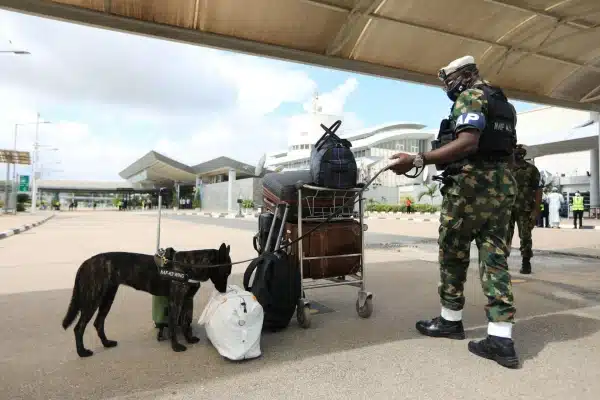
On the ground, security measures are expected to intensify. Residents and travellers in Abuja should anticipate heavy checkpoints and increased screening at airports. Major road corridors, including the frequently used Abuja-Kaduna route, will also see heightened patrols, along with greater surveillance around soft targets such as shopping centres, hotels, and places of worship.
The Nigerian government has sought to manage public concern. Information Minister Mohammed Idris described the security measures as “routine precautions,” a framing that sits uneasily alongside the scale of the international response and the level of behind-the-scenes coordination now under way.
Nigeria’s struggle against Boko Haram and ISWAP has, for more than a decade, been concentrated in the Lake Chad basin and the north-east. The 2022 Kuje attack demonstrated that the capital was not beyond reach. What the current intelligence suggests is that militants may now be planning to act on that lesson at scale.
If the Nigeria terror plot targeting Abuja’s airport and correctional facility is confirmed, it would represent a significant strategic escalation, one with consequences not only for public safety in the capital, but for Nigeria’s position as the anchor of West African stability. A successful urban strike of this nature would also carry a powerful propaganda value for the factions involved, potentially accelerating recruitment and emboldening affiliated cells across the Sahel.
The unfolding Nigeria terror plot will be closely watched in the coming days as authorities race to contain what could become one of the most significant security threats to the capital in recent years.


