



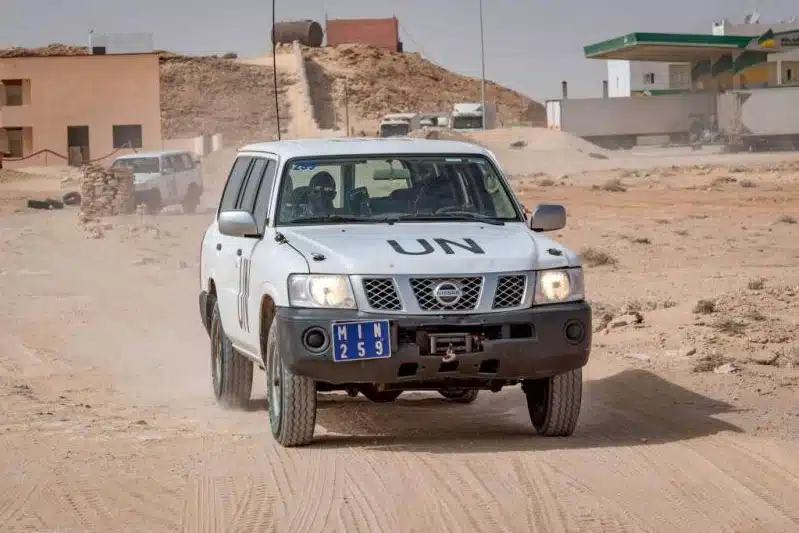

A newly released report from the United Nations is raising fresh concerns about the future of Western Sahara self-determination, warning that an evolving negotiation framework may quietly shift the goalposts of a decades-long peace process.
According to officials familiar with the discussions, the concern is not about whether talks are happening, but about what those talks are now designed to achieve.
For years, the international position on Western Sahara rested on a clear principle. The people of the territory should decide their own future through a referendum. That position underpinned the creation of the United Nations Mission for the Referendum in Western Sahara, better known as MINURSO.
What is changing in 2026 is the weight being given to that original idea.
A Shift That Is Not Being Stated Directly
Diplomats are increasingly pointing to language in United Nations Security Council Resolution 2797, which describes Morocco’s autonomy proposal as “serious and credible”.
On paper, that may sound like standard diplomatic phrasing. In practice, it is being interpreted as a narrowing of options.
Instead of a process built around a binary choice, independence or integration, current discussions are leaning towards how autonomy under Moroccan sovereignty might work.
That distinction is at the centre of the debate around Western Sahara self-determination.
Why This Matters Now
The shift has not gone unnoticed.
The Polisario Front continues to argue that any framework which does not include independence as an option falls short of international legal standards. From their perspective, removing that option changes the nature of the process entirely.
Human rights organisations have made similar points in recent briefings, warning that self-determination is not simply about consultation or administrative autonomy. It requires a genuine act of choice.
Without that, critics say, the process risks becoming outcome-driven rather than principle-driven.
Positions Have Hardened in 2026
There is also a wider geopolitical layer shaping how Western Sahara self-determination is being handled in 2026, and it is becoming harder to ignore.
In Rabat, officials have been consistent. Sovereignty is treated as settled, not something to reopen at the negotiating table. That position frames everything that follows.
The Polisario Front sees it very differently. Its representatives continue to push the same argument they have made for years, that any credible process must still include a referendum, and that independence cannot be removed as an option without emptying the idea of self-determination of its meaning.
External backing has only made the gap wider. The United States has maintained its recognition of Moroccan sovereignty first announced in 2020, a move that still shapes how discussions unfold behind closed doors. At the same time, Algeria’s support for the Polisario Front remains firm, reinforcing a regional rivalry that often spills into UN negotiations.
Put together, these positions rarely meet in the middle. Diplomats say this is why even when the United Nations Security Council agrees on language, deeper consensus is much harder to achieve in practice.
Inside the UN: Uneasy Alignment
Not all parts of the UN system appear to be moving at the same pace.
While the Security Council has leaned towards a more pragmatic approach, other UN-linked discussions continue to emphasise legal principles tied to decolonisation. Western Sahara is still listed by the UN as a non-self-governing territory, a classification that carries specific obligations.
That is why the latest report is being read by some observers as a warning from within the system itself.
There is concern that if Western Sahara self-determination is diluted here, it could set a precedent for how similar disputes are handled elsewhere.
Attempts to Bridge the Gap
The UN’s envoy, Staffan de Mistura, has been trying to move discussions forward by asking more detailed questions about Morocco’s autonomy plan.
The focus now is less abstract. What powers would a local government actually have. How would laws be made. What guarantees would exist for political expression.
So far, there are few clear answers that satisfy both sides.
Reality on the Ground Has Not Changed
Away from diplomatic language, the situation on the ground remains largely the same:
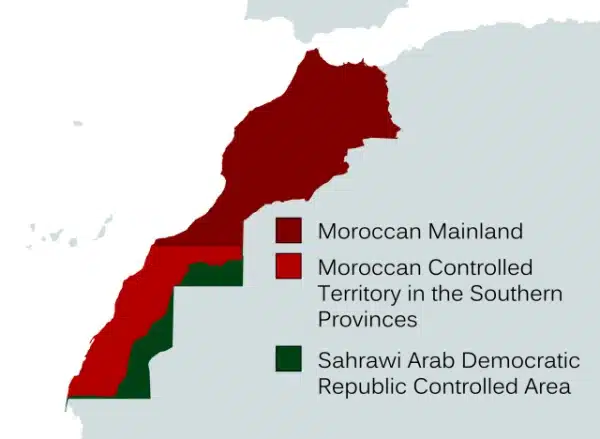
- Morocco controls most of the territory, including key urban centres
- The Polisario Front holds areas east of the defensive berm
- Tens of thousands of Sahrawis are still living in refugee camps in Algeria
- The ceasefire in place since 1991 has been under strain since 2020
For many Sahrawis, the debate around Western Sahara self-determination is not theoretical. It is tied to displacement, identity and the question of return.
What Comes Next
The UN has requested a broader review of MINURSO, a move that could signal deeper changes ahead. Some diplomats privately acknowledge that even the mission’s name now reflects a goal that feels increasingly distant.
Attention is also turning to upcoming diplomatic engagements expected later in 2026, where progress or further deadlock could shape the next phase of the process.
A Question That Remains Open
After decades of negotiations, ceasefires and stalled referendums, the core issue has not changed.
What has changed is how that issue is being approached.
If a solution emerges that does not include independence as a real option, it will raise a difficult question for the UN and its partners:
Can Western Sahara self-determination still be said to exist in full?


