



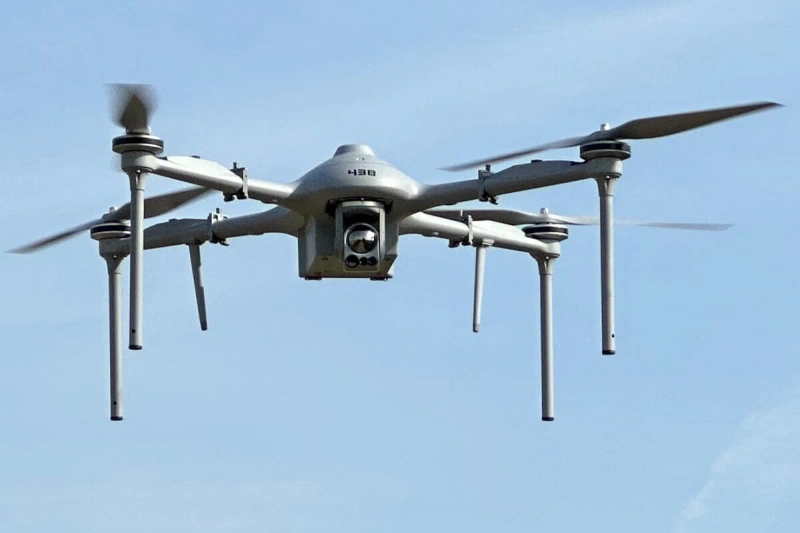

Terrorists using drones and cryptocurrency have deepened their grip on northern Nigeria and the wider Sahel, the United Nations has warned, as extremist groups grow more coordinated across borders.
The alert came from Leonardo Simão, the Special Representative of the UN Secretary-General for West Africa and the Sahel, who briefed the Security Council this week on findings from the Secretary-General’s latest report covering developments between November 2025 and June 2026. Simão told Council members that armed groups are increasingly using drones, sophisticated communications and cryptocurrencies while coordinating operations across borders.
He described the situation as especially acute in central Sahel and northern Nigeria, where terrorists using drones and cryptocurrency have blurred the line between insurgency and organised crime. According to Simão, these groups now administer territory, tax trade routes and control artisanal gold mines, blending criminal proceeds with digital financing tools to sustain their campaigns.
The Boko Haram offshoot ISWAP has carried out roughly ten armed drone strikes since 2024, including a coordinated four-drone assault on a Nigerian military base in December 2024. Blockchain analytics firm TRM Labs has separately confirmed that cryptocurrency is being used to purchase weapons and drones, while an ISWAP-linked media unit has publicly solicited bitcoin donations online.
Terrorists using drones and cryptocurrency are not confined to Nigeria. Research published under the title “Inside Boko Haram’s Wallet” found the group, once reliant on looting, ransoms and informal donations, has shifted towards mobile money, encrypted messaging and digital currencies for procurement and logistics. Nine African countries have now recorded terrorist drone use, and JNIM, the al-Qaeda-linked coalition active in Mali, Burkina Faso and Togo, is reported to have conducted at least 89 drone missions between 2023 and 2025.
Simão told the Council that Nigeria, Niger and Burkina Faso continue to bear the brunt of attacks, kidnappings and civilian casualties. He put the number of people displaced across the region at 6.8 million, with a further 1.28 million forced into refugee status or seeking asylum. Women, children and young people, he said, continue to suffer the greatest humanitarian consequences, with insecurity and funding shortfalls limiting access for aid agencies.
Despite the grim picture, Simão pointed to pockets of progress. He cited the reopening of the Kamba border crossing between Nigeria and Niger and continued work by the Cameroon-Nigeria Mixed Commission to implement the 2002 International Court of Justice ruling on their shared land and maritime boundary as examples of regional dialogue still bearing fruit.
He was firm, however, that military responses alone cannot defeat groups that have become this adaptable. Terrorists using drones and cryptocurrency thrive, he argued, where poverty and unemployment remain unaddressed, and he urged governments to treat socioeconomic investment as a core part of any counterterrorism strategy rather than an afterthought.
Council members broadly endorsed that view during the session, calling for closer regional cooperation and greater investment in governance alongside security operations. The briefing followed the Council’s decision to extend UNOWAS’s mandate to January 2029, with Denmark and Liberia serving as co-penholders on the file.
For Nigeria specifically, the warning lands amid ongoing military operations against terrorist networks in the north. Nigerian troops have continued offensives aimed at disrupting extremist networks, though the UN’s findings suggest that technological adaptation by these groups is outpacing conventional military gains in several areas.
The report’s timing also coincides with growing scrutiny of how non-state armed groups are financing themselves outside formal banking systems, a pattern UN officials say mirrors trends observed in other conflict zones where sanctions and financial monitoring have pushed illicit actors towards digital assets.
Whether regional governments and their international partners can match this shift in tactics remains an open question. For now, the UN’s assessment is unambiguous: terrorists using drones and cryptocurrency represent a security challenge that extends well beyond the battlefield, reaching into finance, technology and the digital economy that governments across the Sahel are still struggling to regulate.


