Al-Qaeda-linked fighters and Tuareg separatists have joined forces in northern Mali, driving the Mali security crisis to its worst point in years and leaving the ruling military government struggling to hold its northern regions.
Jama’at Nusrat al-Islam wal-Muslimin, known as JNIM, and the Azawad Liberation Front, known as FLA, once viewed each other as rivals. One is an al-Qaeda affiliate seeking Islamic governance. The other is a Tuareg nationalist movement demanding independence for the Azawad region. Their new battlefield partnership has reshaped the Mali security crisis and alarmed observers across the wider Sahel. Few predicted the Mali security crisis would take this shape when the two sides were still trading fire only a few years ago.
The alliance was not sudden. Talks between the two groups began in early 2025, brokered by senior Tuareg figure Alghabass Ag Intalla, who now leads the FLA, according to the International Centre for Counter-Terrorism. Ag Intalla opened direct communication with Iyad Ag Ghaly, the Tuareg-born commander of JNIM, drawing on tribal ties that outlasted years of mutual suspicion.
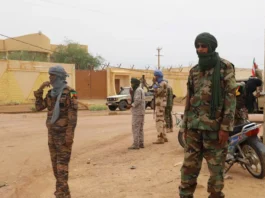
That coordination became public on 25 April, when JNIM and FLA fighters struck six locations at once, including Bamako, Kati, Gao, Kidal, Sevare and Mopti, according to researchers tracking the 2026 Mali offensives. Malian Defence Minister Sadio Camara was killed in a suicide bombing during the assault on Kati, and intelligence chief Modibo Kone was wounded. The FLA seized control of Kidal, the traditional heart of the Tuareg homeland, forcing Malian troops and Russia’s Africa Corps paramilitaries to withdraw from the city they had held since 2023.
Analysts describe the April offensive as the most serious challenge to Mali’s ruling military government since 2020, when soldiers first took power citing worsening insecurity. Since then, the Mali security crisis has widened rather than eased, with fighting spreading through Kidal, Gao, Tombouctou and the central Mopti region. Diplomats following the Mali security crisis say the loss of Kidal marked a symbolic and strategic blow to Bamako.
FLA spokesperson Mohamed Elmaouloud Ramadane told the Associated Press the relationship with JNIM amounts to tactical coordination focused on military operations. He said the two groups had agreed that once northern Mali secures independence, local communities would decide what form of governance follows.
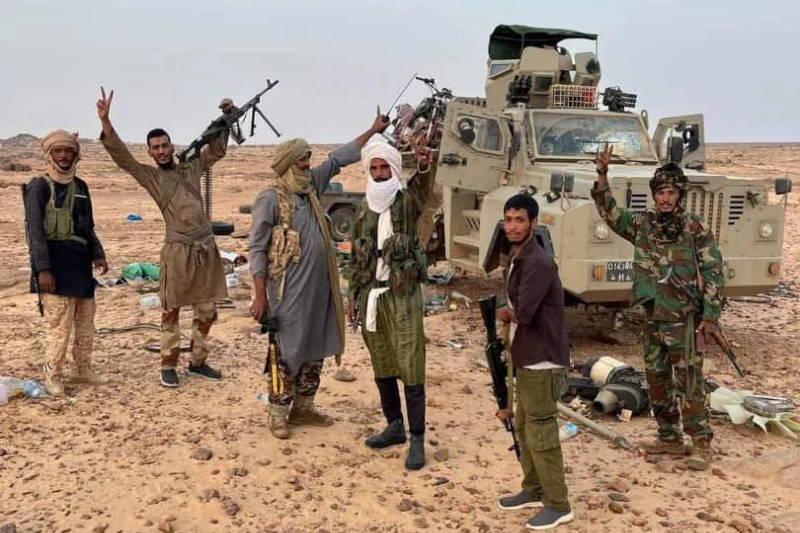
The partnership struck again on 18 July, when a joint force ambushed a Malian military convoy travelling from Anefis to Gao, killing or capturing dozens of soldiers, Ramadane said. Wrecked and captured armoured vehicles were shown in images released by the FLA. The Malian army confirmed the attack and said a counter-offensive was under way in the Sahara desert location.
Fatalities linked to the Mali security crisis have climbed sharply this year. Figures from the Armed Conflict Location and Event Data project, an independent conflict monitor known as ACLED, show 3,435 deaths from militant attacks in the first seven months of the year, a 35 per cent rise compared with the same period previously.
Heni Nsaibia, a senior West Africa analyst at ACLED, said JNIM and FLA function as force multipliers for each other because they share a common target. Both groups regard the Malian armed forces and their Russian-backed partner, Africa Corps, as the enemy to be defeated, he said.
Africa Corps replaced the disbanded Wagner Group after Bamako expelled French forces in 2022 and turned to Moscow for military support. The paramilitary force, which answers to Russia’s defence ministry, has faced accusations of serious human rights abuses while fighting alongside Malian troops.
JNIM, formed in 2017 from four al-Qaeda-aligned factions, has separately imposed a fuel blockade that continues to disrupt supplies into Bamako. Analysts at the Sahel-Sahara Security Strategies Centre say the group increasingly presents itself as an alternative authority in areas where the state has little presence.
The FLA traces its roots to Tuareg grievances dating back to Malian independence in the 1960s. It formed in November 2024 from remnants of earlier rebel movements after Bamako withdrew from a 2015 peace accord, reigniting hostilities that had been largely dormant for almost a decade.
The Sahel remains the deadliest conflict region in the world, accounting for close to half of all terrorism-related deaths worldwide, according to the Institute for Economics and Peace. With JNIM and FLA now coordinating rather than competing, the Mali security crisis is widely expected to intensify further before any political settlement becomes possible. Regional security officials monitoring the Mali security crisis warn that further coordinated assaults are likely in the coming months.