



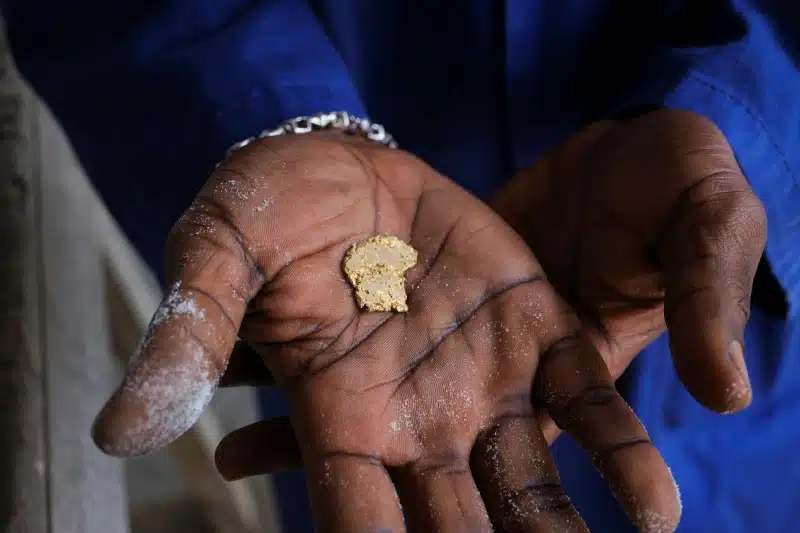

In towns like Obuasi, Tarkwa and Prestea, gold is not an abstract economic statistic. It shapes daily life. Trucks carrying ore pass through narrow roads. Small shops depend on the spending power of miners. And in many communities, the question has long been the same.
How much of Ghana’s gold wealth actually returns to the country?
That question has returned to the centre of policy debate after the government signalled plans to introduce changes to Ghana’s gold royalty regime. The proposed reform would adjust how mining companies pay royalties to the state, potentially increasing government revenue when global prices rise.
Supporters say reforming Ghana’s gold royalty regime could help the country capture more value from one of its most important exports. Critics, particularly within the mining industry, warn that poorly designed rules could discourage investment in a sector that remains central to the country’s economy.
What Ghana’s Gold Royalty Regime Reform Would Do
At present, the royalty paid on gold production does not move with the market. Companies pay a fixed share of their revenue to the state whether gold is selling at record levels or struggling on international exchanges.
Under the proposed changes to Ghana’s gold royalty regime, that arrangement would shift. Instead of a single rate, royalties would move alongside the global gold price. When the price climbs, the state’s share increases. When the market cools, the rate falls as well.
Officials involved in the discussions say the aim is simple. When mining profits surge, the public purse should see some of that upside. Further regulatory details about the mining sector are available through the Ghana Minerals Commission, the government body responsible for overseeing the country’s mineral resources.
The debate around Ghana’s gold royalty regime is taking place at a moment when gold has been trading near historically high levels. That has strengthened the government’s argument that the country should secure a larger share of the returns generated from its most valuable export without creating an entirely new tax regime.
Why the Debate Matters in Ghana
Few countries are as closely linked to gold as Ghana. Long before independence, British administrators referred to the territory as the Gold Coast because of the sheer volume of the metal that left its shores. Today the country remains one of the continent’s largest producers, with gold still dominating export earnings.
Large industrial mines operated by multinational companies stretch across parts of the Ashanti and Western regions. Yet the industry is not limited to major corporations. Across riverbanks and abandoned pits, thousands of small scale miners continue to search for gold by hand, often working in risky conditions with little formal oversight.
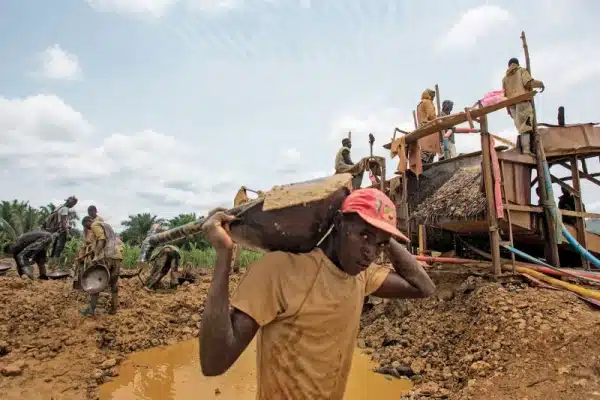
For many people, particularly in mining districts, the discussion about Ghana’s gold royalty regime comes down to a simple question. When gold leaves the ground, who actually benefits?
Resource economists have repeatedly pointed to a wider pattern across mineral producing countries. When global commodity prices surge, much of the profit tends to remain with operators and international investors unless tax systems are designed to capture part of the windfall.
Reform of Ghana’s gold royalty regime is one attempt to address that imbalance.
Potential Benefits for the Wider Public
If the policy works as intended, the most obvious impact will be higher government revenue during periods of strong gold prices.
Changes to Ghana’s gold royalty regime could provide additional funds that support investment in several areas that remain pressing national priorities.
Infrastructure
In many mining districts the gaps are easy to see. Roads deteriorate quickly under the weight of haulage trucks and electricity supply can still be unreliable outside major towns.
Public Services
Public services also feel the pressure when government revenue tightens. Hospitals, schools and local health programmes depend heavily on state budgets that rise and fall with commodity earnings.
Economic Diversification
For many economists, the longer term opportunity lies in investing resource income beyond mining itself. Strengthening agriculture, manufacturing and emerging technology sectors would help reduce Ghana’s reliance on commodities.
What ultimately matters is not just the size of the revenue generated through Ghana’s gold royalty regime, but how carefully it is handled once it reaches the treasury.
What Mining Communities Might See
Life in mining towns reflects both sides of the industry.
Mines bring jobs and new businesses, from equipment suppliers to roadside food vendors. Yet communities also deal with the downsides, including damaged farmland, polluted streams and long running disputes over land.
If changes to Ghana’s gold royalty regime increase government income, some of the funds could be directed towards community development programmes such as water systems, schools and local infrastructure.
But many community leaders argue that the real issue is not simply how much revenue is collected, but how much of it actually reaches the areas where mining takes place.
Industry Concerns
Mining companies have responded cautiously to the proposal.
Executives argue that Ghana must remain competitive with other gold producing countries when setting fiscal terms. Investors compare tax systems across jurisdictions before committing billions of dollars to new mining projects.
Industry groups have therefore called for clear rules and consultation before Ghana’s gold royalty regime is finalised.
A predictable regulatory environment, they argue, is just as important as the tax rate itself.
Is the Policy Economically Sound?
Ghana would not be the first country to experiment with such a system. A number of mineral exporters have introduced royalty structures that move with commodity prices.
Economists often see such models as more flexible than fixed royalty rates because they allow governments to capture greater value during commodity booms while easing pressure on producers when markets weaken.
Still, royalties are only one element in the wider tax system that governs mining operations.
Some analysts say the bigger opportunity lies in the broader fiscal framework. They argue that Ghana’s gold royalty regime could be paired with profit based taxes or long term resource funds that manage mineral income beyond the annual budget cycle.
Without those additional safeguards, critics say higher royalties alone may still leave a large portion of boom time profits outside the public purse.
The Real Challenge Ahead
In the end, the real test for Ghana’s gold royalty regime will not be the policy announcement itself but what happens after the rules are written and applied in practice.
Revenue collection systems must be robust. Production data must be accurate. And the public must be able to see clearly how resource income is used.
In mining towns across the country, the question remains straightforward.
Ghana has been rich in gold for generations. The real challenge has always been turning that wealth into lasting prosperity for the country as a whole.


