



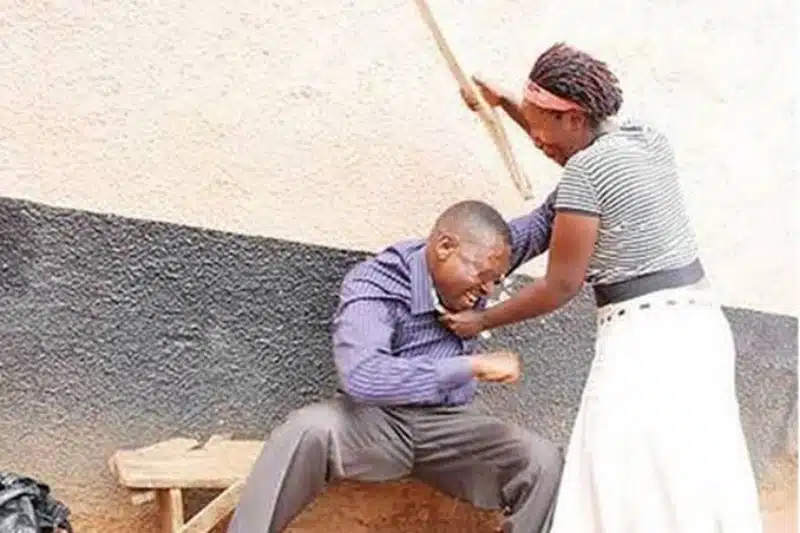

Seven in ten Ghanaian men have faced violence. That is what the Gender Ministry told the country on Thursday.
It is a startling number. It is also an old one, and the story of violence against men in Ghana is more complicated than the figure suggests.
The Ministry of Gender, Children and Social Protection released it in a statement for International Men’s Day on 19 November. It said about seven in ten men had experienced at least one form of violence in their lifetime. The message put violence against men in Ghana alongside shorter lives and higher suicide rates.
Start with where the number on violence against men in Ghana comes from. It was not collected this year. It comes from the 2016 report Domestic Violence in Ghana. The Institute of Development Studies, the Ghana Statistical Service and partners produced it from fieldwork done in 2015.
The survey covered 4,995 people aged 15 to 60. Graphic Online reported that then Gender Minister Nana Oye Lithur put the male figure for some form of violence at 71.4 per cent.
Now the part the headline leaves out. The same survey found that 71.5 per cent of women had faced violence too. The gap is a tenth of a percentage point.
That does not make the men’s figure false. It makes it a measure of how common violence is in Ghanaian life, at home and outside it, over a lifetime. It is not proof that violence against men in Ghana is worse than what women face. A 2018 paper in PLOS ONE that cited the survey described the count as covering both domestic and non-domestic violence.
The 12-month figures for domestic violence are easier to pin down. The IDS report found that 28 per cent of women and 20 per cent of men had experienced domestic violence in the year before the survey.
For men, psychological abuse was the most common form, at 7.9 per cent. Sexual violence was the least, at 1.4 per cent.
The Ministry added that men reported higher levels of physical violence than women, with most incidents involving perpetrators outside domestic relationships. On that reading, much of the violence against men in Ghana happens away from the family compound.
Then there is the health side. The Ministry said a boy born in Ghana today can expect to live 63.7 years, against 68.6 for a girl. It said studies using World Health Organisation data found men’s suicide rates higher than women’s in every year from 2000 to 2019.
University of Ghana research cited by the Ministry linked male suicidal behaviour to the pressure to provide and the shame of lost income. That is harm of another kind, and the Ministry said much of it goes unreported.
Silence surrounds violence against men in Ghana. A Ghana News Agency feature from Somanya in January told of Tawiah Emmanuel Sangmor, a 42-year-old civil servant. He stood outside a counselling centre for almost an hour before turning away. “I felt exposed just standing there,” he said.
Government Statistician Philomena Nyarko made a similar point in 2016. She told the launch that many people stayed quiet because “they see domestic violence as a family affair.”
The pattern is not new. Ghana’s first nationwide study of violence against women came in 1999. The country enacted the Domestic Violence Act, known as Act 732, in 2007.
At the 2016 launch, Lithur said the statistics had barely changed since 1999. She called the report the first of its kind to split domestic violence data by gender. A national baseline for violence against men in Ghana is therefore barely ten years old.
The Ministry was careful to look both ways. It said men must help end violence against women and girls.
It cited the 2022 Ghana Demographic and Health Survey. That survey found that two in five women who had ever had a partner reported emotional, physical or sexual violence from that partner. About one in ten men still believed wife-beating was sometimes justified.
That balance matters. Attention to violence against men in Ghana does not shrink what women face.
The Ministry reminded survivors of any gender that the Domestic Violence Act protects them. It urged them to report abuse to DOVVSU, the police Domestic Violence and Victim Support Unit, or to the nearest Department of Social Welfare office.
Callers can also reach the Orange Support Centre on 0800 111 222. The Helpline of Hope uses 0800 800 800 and 0800 900 900.
The 16 Days of Activism against Gender-Based Violence begins on 25 November. The Ministry wants men and boys to join as allies, and to speak up about their own struggles.
The data on violence against men in Ghana is a decade old. The hesitation outside that centre in Somanya is from this year.


