



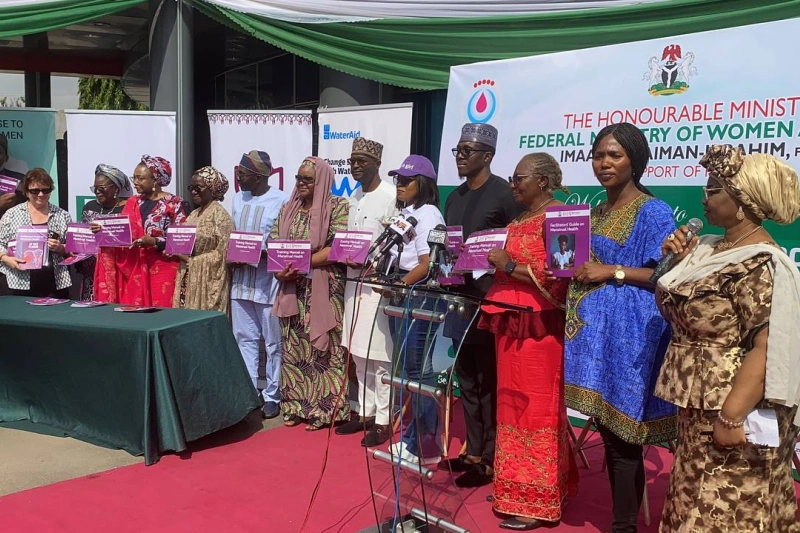

Nigeria has approved its first National Menstrual Health Policy, establishing a national framework for improving access to menstrual health information, affordable products and adequate sanitation facilities for women and girls.
In a statement issued in Abuja, WaterAid congratulated the Federal Ministry of Women Affairs, the National Technical Working Group on Menstrual Health and Hygiene Management (MHHM) and other stakeholders involved in developing the policy.
The National Menstrual Health Policy is intended to address persistent barriers to menstrual health, including inadequate access to accurate information, safe and affordable menstrual products, appropriate sanitation and hygiene facilities, and supportive environments in schools, workplaces and communities.
WaterAid said the approval followed sustained collaboration between government institutions, development partners, civil societies, technical experts and others.
The organisation highlighted its contribution to the policy development process, which included engaging a consultant, organising several stakeholder consultations and supporting the validation of the draft policy.
According to WaterAid, its involvement helped bring together the knowledge, expertise and experiences of different stakeholders to produce a policy document that can support the integration of menstrual health and hygiene management into national development.
However, the organisation stressed that the approval of the National Menstrual Health Policy alone would not address the challenges faced by women and girls without sustained action from government and other stakeholders.
WaterAid urge Federal Ministry of Women Affairs, the National Technical Working Group and other stakeholders to maintain the momentum generated by the approval, translate the policy commitments into operational plans and strengthen accountability for results at all levels.
WaterAid Nigeria Country Director Evelyn Mere said government and stakeholders must widely disseminate the policy and ensure the adequate deployment of human, material and financial resources for its implementation.
She also called for measures to ensure menstrual products are available, accessible and affordable so that every woman and girl in Nigeria can manage menstruation safely, with dignity and without stigma.
The approval of the National Menstrual Health Policy marks an important step towards recognising menstrual health as part of broader efforts to advance gender equality, health, education and the rights of women and girls.
Its impact, however, will depend on how effectively the government translates the policy into practical action, provides the resources needed for implementation and holds responsible institutions accountable for delivering its commitments.


