




Dia Hamadou Alhousseinou is a well-known blogger. He is also backing a government plan that would have sounded unthinkable from him a year ago. That contradiction says everything about where Mauritania has landed on children and social media.
On Wednesday 16 September, Mauritania’s Council of Ministers, chaired by President Mohamed Ould Cheikh El Ghazouani, adopted a joint communication setting out a national framework to govern how minors use social media platforms. It was presented by the Minister for Youth Empowerment, Employment, Sports and Civic Service, Mohamed Abdallahi Ould Louly, working alongside the digital transformation and social affairs ministries.
The plan sets 16 as the age for unrestricted access. Fifteen year olds would fall under a parental consent regime rather than an outright bar. Officials have described this as a tightening, not a softening, since it pulls a group of teenagers who currently browse freely into a supervised category for the first time under the proposed Mauritania social media rules.
The detail goes further than a simple age gate. Recommendation algorithms would be switched off for minors. Infinite scroll and autoplay would default to off. Advertising targeted at children would be banned. Messages from strangers would be blocked, live streaming restricted, and platforms would observe hours of night-time digital silence, a soft curfew rather than a hard lockout.
The proposed Mauritania social media rules would therefore affect not only access to platforms but also how young users experience them once they are online.
According to the government’s own account of the Council of Ministers meeting, reported by Agence Afrique, the plan is built around seven identified risks to children online: grooming, digital blackmail, cyberbullying, exposure to harmful content pushed by recommendation systems, commercial exploitation of children’s data and app addiction.
The urgency is demographic as much as it is technological. Close to half of Mauritania’s population is under 18, and internet use has climbed rapidly, from roughly a quarter of the population five years ago to around 37 per cent of Mauritania’s 5.3 million people today, according to DataReportal figures drawn from Kepios and GSMA data.
Facebook alone counts close to 1.7 million users in the country, most of them men under 35.
Those figures help explain why policymakers see Mauritania social media rules as an urgent response to a rapidly expanding digital audience.
None of this is happening in isolation. Australia’s under-16 ban came into force in December 2025 and set off a chain reaction that has now reached well beyond Europe. Indonesia and Malaysia followed with their own under-16 rules. Turkey has legislated against under-15 access. The United Kingdom has proposed a midnight-to-6am curfew for 16 and 17 year olds from 2027.
Closer to home, Gabon issued an ordinance in April requiring identity-based age verification, Kenya published child online safety guidelines in May 2025, Zimbabwe and Morocco both have proposals moving through government.
Mauritania social media rules place the country firmly inside a fast-growing African and global bloc, rather than out ahead of it or lagging behind.
Not everyone in Nouakchott is convinced restriction is the right tool. Samba Diop, a cybersecurity expert quoted by RFI, argues that protecting children is not the same thing as shutting them out. He wants parents held to their own responsibilities, platforms made accountable, and children taught to navigate the internet rather than simply blocked from parts of it.
“PROTECTING CHILDREN DOES NOT MEAN EXCLUDING THEM FROM THE DIGITAL WORLD. IT MEANS TEACHING THEM HOW TO USE IT SAFELY AND RESPONSIBLY.”
Critics argue that Mauritania social media rules should be matched with stronger digital literacy programmes rather than relying primarily on restrictions.
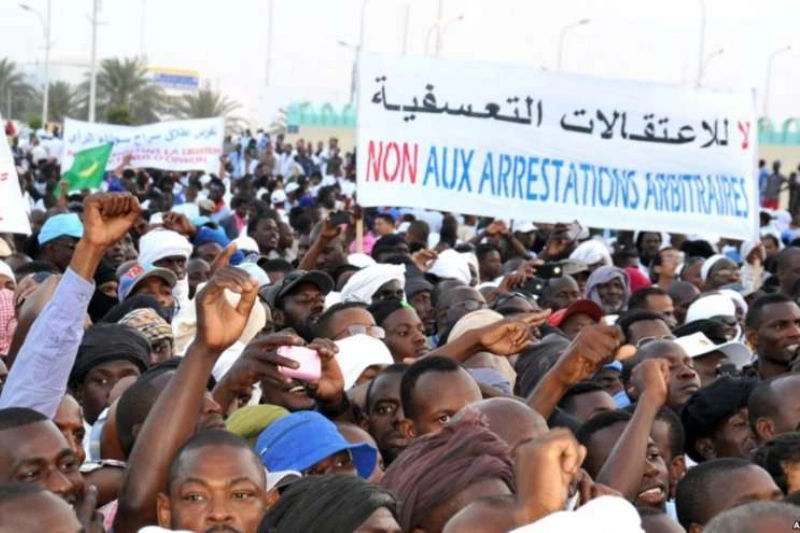
Alhousseinou’s worry cuts the other way. Social media in Mauritania is not a luxury or a distraction. It is one of the country’s real channels of public communication, a place where news travels and opinions are formed.
He supports the intent behind the Mauritania social media rules but fears the machinery built to protect children from harm could just as easily be turned toward limiting what anyone, of any age, is allowed to say.
That tension, between a government moving to shield its youngest citizens and a public wary of who controls the switch, is unlikely to be settled by one Council of Ministers meeting. A framework has been agreed. What gets built on top of it, and who it eventually reaches beyond the under-16s it was written for, is the part nobody in Nouakchott can yet answer.
How that question is resolved may ultimately determine whether Mauritania social media rules become a model for online child protection in Africa or a test case in the broader debate over regulation, rights and digital freedom.


