



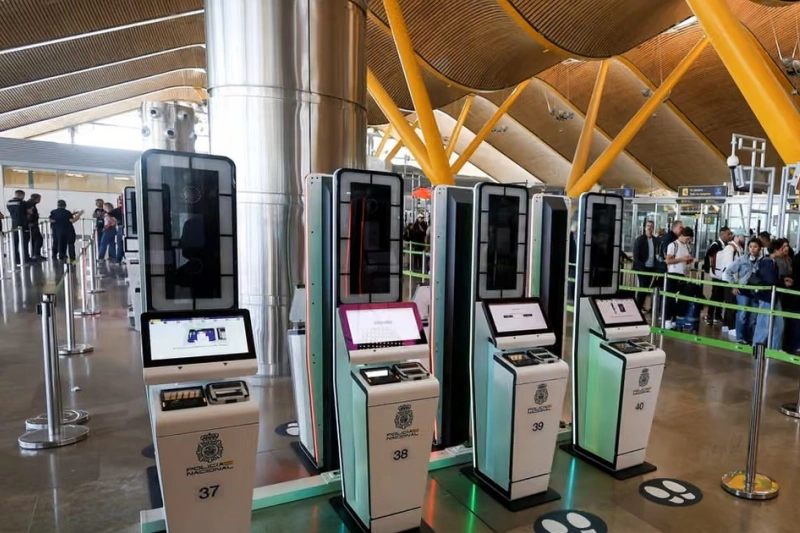

Travel operators, airlines and migration agencies across Africa are advising travellers to prepare for tougher biometric border checks. The warning follows a shift in how the European Union manages arrivals at its external frontiers.
The EU’s Entry/Exit System, known as the EES, has replaced manual passport stamping. It now covers 29 Schengen area border points. The system became fully operational on 10 April 2026. It applies to eligible non-EU nationals. That includes tourists, business travellers, students and people visiting family from across Africa.
Africanews reported on 8 September that temporary flexibility measures had expired. Those measures once allowed officials to suspend some biometric procedures during severe congestion. They ended on 6 September. Without that safety valve, African travellers now face the full weight of biometric border checks at every eligible crossing. There is little room left for manual workarounds when queues build up.
Under the system, travellers hand over passport details, facial images and fingerprints. First-time users can expect extra processing at a self-service kiosk or with a border officer. Anyone already fingerprinted for a Schengen visa should not assume this exempts them. Separate EES registration still applies, since the two records are not automatically linked.
Airlines have flagged the knock-on effects of biometric border checks on scheduling. Some passengers have missed flights and tight connections while queuing for registration, Africanews noted. Travellers are being told to arrive earlier than usual. Extra time should now be built into every journey plan.
Pressure is building on Brussels to soften the rules again. Biometric Update reported that Thomas Reynaert, senior vice president for external affairs at the International Air Transport Association, raised the issue at a briefing. He said the option to pause biometric border checks during peak congestion should stay available until the end of winter. Uneven performance between member states had already caused missed flights, offloaded passengers and reputational damage, he warned.
Nine EU countries have asked the European Commission to extend the suspension mechanism. France, Germany, Italy and the Netherlands are among them. Airports Council International Europe and the airline group Airlines for Europe have both reported queues running into hours at peak periods. That has added weight to calls for a rethink.
For African travel agencies, the practical response is preparation rather than panic. Clients heading to Europe this autumn are being told to check whether their destination airport has fully deployed biometric border checks. Printed backup documentation is recommended. Tight layovers through affected hubs should be avoided where possible.
A separate pre-authorisation scheme, ETIAS, is expected to launch later in 2026. It will require visa-exempt travellers to apply online before departure. It has not yet gone live, and no firm date has been confirmed. Until it does, biometric border checks under the EES remain the main hurdle facing African passengers bound for the Schengen area.
Migration agencies say the disruption is largely a rollout problem. It is not a permanent barrier. Staffing gaps and inconsistent kiosk performance are behind most delays, not the underlying technology. Even so, travellers with connecting flights or fixed appointments in Europe are being urged to treat the extra processing time as compulsory planning. It should never be treated as an optional buffer.


