



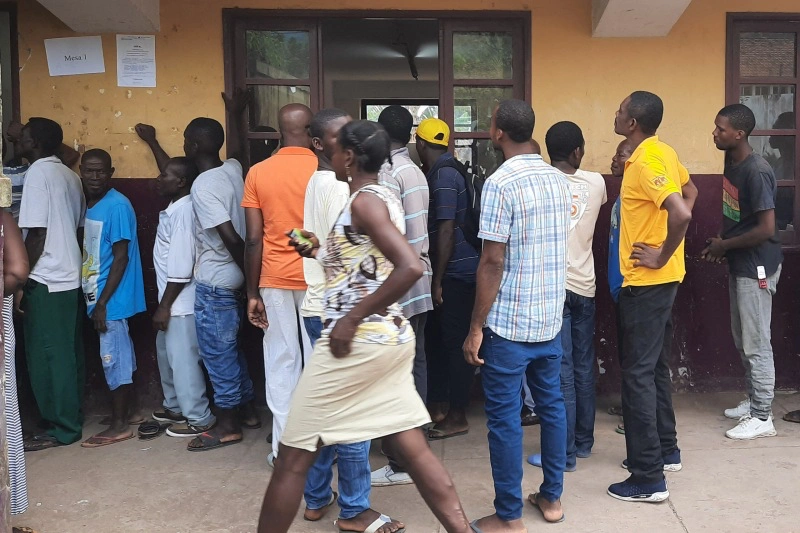

Sao Tome and Principe went to the polls on 19 July for a presidential vote that, on paper, looked like a routine multiparty contest. Beneath the count, the small Gulf of Guinea archipelago is wrestling with questions that will outlast whichever candidate eventually claims State House.
The vote was called after the worst institutional rupture Sao Tome and Principe has faced in years. In January 2025, President Carlos Vila Nova dismissed then Prime Minister Patrice Trovoada, a decision the Constitutional Court later ruled had exceeded his powers, according to the Africa Center for Strategic Studies. Trovoada rejected the move as illegal, and the rift split the ruling Independent Democratic Action party down the middle. It pushed Vila Nova to contest the election as an independent, running against his former ally’s chosen successor, Nito Viegas d’Abreu.
That fracture is really what is on trial this year, more than any single name on the ballot. The Robert Lansing Institute frames the election as a test of whether presidential authority can be converted into lasting legitimacy, whether Trovoada still commands the ADI’s grassroots, and whether a fragmented opposition can turn party infighting to its advantage.
Economic hardship sits close behind constitutional stability on the list of concerns. Sao Tome and Principe remains one of Africa’s smallest and most import-dependent economies, exposed to climate shocks, a narrow export base and thin institutional capacity, the Robert Lansing Institute notes. Voters interviewed by AFP on polling day spoke less about constitutional theory than about jobs, the cost of living and a steady exodus of young people leaving the islands in search of opportunity elsewhere.
That youth exodus has become a defining theme of the campaign. Nito Abreu, the 43 year old ADI-backed challenger, has pitched himself as the candidate of a generation born after independence in 1975, promising to create jobs and stem the outflow of young Santomeans, AFP reported. Vila Nova, 66, has run instead on continuity, casting himself as the guarantor of stability after a first term that survived a 2022 coup attempt against the government.
September brings a second test for Sao Tome and Principe. Legislative, regional and local elections are scheduled for 27 September, and the presidential result will shape how much political capital either camp carries into that contest, the Africa Center for Strategic Studies explains. A Vila Nova win would tighten his grip on the post-2025 order and weaken Trovoada’s claim over the ADI machine. A defeat would revive Trovoada’s influence and likely produce another stretch of uneasy cohabitation between president and parliament.
Offshore oil is quietly raising the stakes further. Brazil’s Petrobras acquired a stake in Block 4 of the country’s offshore acreage in 2025, a move the Robert Lansing Institute says has placed Brasilia among the outside actors now watching Sao Tome and Principe’s politics closely. A calm, credible election would reduce investor risk and keep exploration on track. A disputed one could delay decisions and unsettle an economy that already runs on thin margins.
Maritime geopolitics adds another layer still. Russia signed a military cooperation agreement with the country in 2024 covering training, arms supply and naval visits, part of a wider push to expand its footprint in the Gulf of Guinea, according to the Africa Center for Strategic Studies. Moscow has also offered to help monitor Sao Tome and Principe’s 160,000 square kilometre territorial waters with radar and drone technology, an offer that sits uneasily alongside the interests of Portugal, the European Union, the United States and China, all of which have their own stake in how the country’s politics evolve.
Portugal remains Sao Tome and Principe’s most influential outside partner through language, education and development ties, while China has expanded its footprint through infrastructure financing since the two countries restored relations in 2016, the Africa Center for Strategic Studies says. Washington and Brussels, meanwhile, are focused chiefly on maritime security and democratic governance in a stretch of ocean already troubled by piracy and illegal fishing.
The European Union has deployed an election observation mission led by Portuguese MEP Sergio Humberto to assess the vote against Santomean law and the country’s international commitments, the European External Action Service confirmed. A peaceful, credible process would reinforce the reputation Sao Tome and Principe has built as one of the more open democracies in Central Africa. A disputed one would complicate future donor support.
Early on polling day, localised boycotts held up the delivery of ballot boxes to the islet of Rolas and the beach of Messias Alves, though the National Electoral Commission’s Jeudiger Nascimento said turnout was expected to build as the day went on. The disruption was minor, but it underlined how thinly stretched electoral logistics can be across such scattered geography.
Whatever the final tally shows, the next government inherits the same list of unresolved problems facing Sao Tome and Principe: a fragile constitutional settlement, a small economy leaning heavily on outside support, a fresh wave of interest from oil investors, and a widening circle of foreign powers with a stake in its stability. The presidency may be, as the Africa Center for Strategic Studies points out, formally weaker than the premiership. But this vote has become the opening round in a longer contest over who gets to define the country’s direction before September’s legislative elections settle the rest.


