




Ghana’s parliament passed the Human Sexual Rights and Family Values Bill on Friday, 29 May 2026, sending the legislation to President John Dramani Mahama for his assent and signalling that West Africa’s most prominent democracy is standing firm on its own cultural terms.
The Ghana family values bill passed by a voice vote after the Constitutional and Legal Affairs Committee unanimously recommended its adoption, according to First Deputy Speaker Bernard Ahiafor.
The development was widely anticipated. Speaker of Parliament Alban Bagbin had publicly disclosed in April that President Mahama personally assured him he would sign the bill into law once parliament passed it, urging Ghanaians to “leave the rumour mongers.”
Deep roots in Ghanaian society
The Ghana family values bill did not emerge from nowhere. It was first introduced in parliament in 2021 by a group of lawmakers led by Ningo-Prampram MP Sam George, and drew support from religious groups, traditional leaders and conservative organisations across the country.
Lawmakers had passed an earlier version of the bill in 2024 under President Nana Akufo-Addo, but it faced legal challenges and Akufo-Addo never signed it into law.
Supporters of the legislation argue that it is necessary to protect Ghanaian cultural, religious and family values, and insist that the country should resist international pressure to recognise LGBTQ rights.
What is in the Ghana family values bill
The bill maintains the existing penalty of up to three years in prison for same-sex sexual acts. It also bans the funding, sponsorship or promotion of LGBTQ acts, with prison terms ranging from three to five years. It introduces a duty to report prohibited LGBTQ acts to a police officer or other authorities, with violators facing up to three years behind bars.
Lawmakers introduced amendments that exempt legal practitioners, media professionals and health workers who provide services to persons identified as LGBTQ from punishment under the law.
A statement ahead of a continental gathering
The timing of the vote carries considerable weight. Ghana’s parliament is set to host the 4th African Inter-Parliamentary Conference on Family and Sovereignty from 3 to 6 June 2026 at the Accra Ridge Church in Accra.
The high-level continental conference is expected to bring together lawmakers, policy experts, academics, civil society leaders and development partners from across Africa and beyond, deliberating on key issues affecting African societies. It will be held under the theme “Consolidating Parliamentary Consensus: Advancing the African Charter on Family Values and Sovereignty.”
President Mahama is expected to attend as Special Guest of Honour, a move parliament says reflects Ghana’s commitment to democratic cooperation and policy dialogue on the continent.
Passing the Ghana family values bill days before that gathering sends a clear message from Accra to the rest of the continent.
Religious and community backing
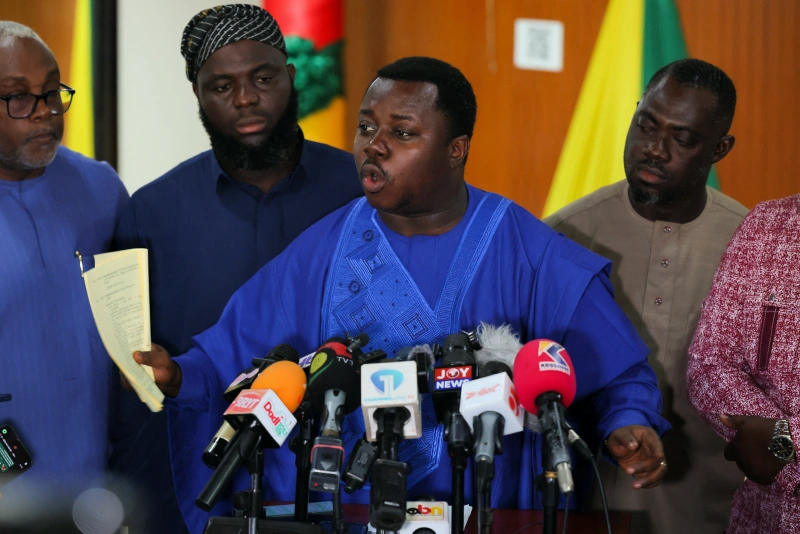
Religious bodies across Ghana’s faiths have thrown their weight behind the legislation. The Anbariya Sunni Community, at a news conference in Tamale, described the Ghana family values bill as both a religious duty and a constitutional necessity, urging President Mahama to resist both local and international pressure over the matter.
The group argued that the bill aligns with Ghana’s 1992 Constitution, particularly provisions relating to culture, religion and the protection of children, citing Article 26(1) and Article 28(1)(a) as supporting the state’s responsibility to preserve cultural values and protect the welfare of children.
Religious leaders backing the bill emphasise that Western nations imposing their values through funding conditionality represents neo-colonialism undermining African sovereignty on social and moral questions.
Sovereignty, not simply legislation
For many across Africa, the Ghana family values bill represents something larger than a single law. It sits within a long-running tension between Western diplomatic pressure and African self-determination on social policy.
Critics of that external pressure argue that tying vital developmental assistance, healthcare funding, or economic partnerships to the adoption of specific social policies forces African governments into a position where they must choose between the material well-being of their populations or their cultural and legal independence.
From that standpoint, Ghana’s parliament has made its choice, and it has done so with broad support. The bill aligns Ghana’s legal framework with deeply rooted cultural, religious and traditional beliefs and explicitly prohibits LGBTQ activities.
During a December 2024 interview with the BBC, Mahama characterised the bill not as targeting specific communities but as a family values bill addressing broader social concerns.
All eyes on Mahama
Lawmakers from Mahama’s own party, the National Democratic Congress, had been urged by religious leaders and other supporters of the Ghana family values bill to vote on it, and Mahama now faces pressure to sign it.
Given his public assurances to Speaker Bagbin, and the continental conference coming to Accra in days, the political arithmetic appears to point in one direction.
What Mahama signs, or declines to sign, will determine the immediate future of the Ghana family values bill and will be watched closely across the continent.


