



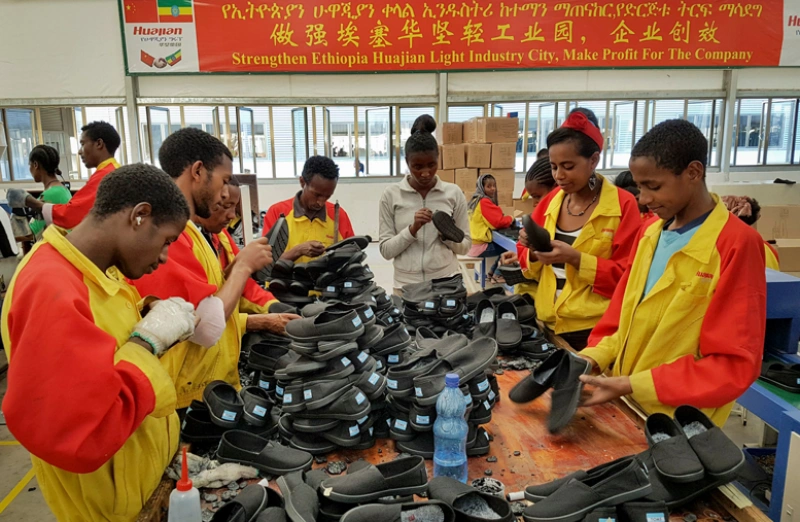

Ethiopia is moving toward membership of the World Trade Organisation with a target date in 2026, after more than two decades of negotiations. The push for Ethiopia WTO membership marks a turning point in how the country manages trade, investment and economic policy.
For officials in Addis Ababa, the goal is clear: build credibility, attract investment and stabilise an economy that has faced pressure in recent years. For businesses and workers on the ground, the picture is more mixed.
Where Africa stands
Ethiopia is one of the largest economies still outside the WTO. Most African countries are already members, including Nigeria, Kenya, Ghana, South Africa, Egypt and Morocco. Others such as Liberia joined more recently after long negotiations.
This means Ethiopia is not entering a new system for the continent. It is catching up with a framework that already shapes trade across Africa, including under the African Continental Free Trade Area.
Why Ethiopia WTO membership is being pushed now
The timing is driven by economic pressure as much as strategy.
Foreign exchange shortages, debt concerns and the need to restore investor confidence have accelerated reforms. The government’s Home-Grown Economic Reform programme is increasingly being shaped by WTO requirements, particularly in areas such as trade regulation, foreign investment and sector liberalisation.
Officials say aligning with WTO rules is intended to lock in reforms over the long term, reducing policy uncertainty and giving investors greater confidence in how the system will operate.
What is changing in practice
Ethiopia WTO membership will require changes that go beyond policy statements and into day-to-day economic practice.
Parliament is already reviewing new trade and investment laws, while negotiators are working with key partners to settle tariff rates and define which sectors will be opened to foreign competition. Sectors such as telecoms and finance are gradually opening to competition.
A trade official involved in the process, speaking on background, said the aim is to create consistency.
“Investors need to know the rules will not change overnight. That is what Ethiopia WTO membership helps to deliver.”
However, analysts argue that passing laws is the easier step. What matters more is how consistently those rules are enforced, and that remains uneven across institutions.
Voices from business and industry
For many local businesses, the shift is already being felt. It brings both opportunity and concern, depending on where they sit in the market.
A textile factory manager in Hawassa said increased competition is a real worry.
“We want access to export markets, but we also need time to grow. If imports rise too quickly, some factories may struggle to survive.”
On the other hand, a logistics operator in Addis Ababa welcomed the reforms.
“Clear rules and better trade systems will help companies like ours expand. It makes Ethiopia more connected to global supply chains.”
Not everyone sees it the same way. While logistics firms and exporters expect gains, some manufacturers say the pace of change could leave them exposed before they are ready.
The risks that cannot be ignored
Opening the economy creates pressure on sectors that have been protected for years.
Local manufacturers are likely to feel the pressure first. Many of these firms have spent years operating behind tariff protection. A rise in imports would quickly show which ones can compete and which cannot. There is also quiet concern within policy circles about how much revenue could be lost if those tariffs begin to come down.
The room for government support is expected to shrink as well. Government will be limited on what it can do to shield local industries. Measures such as subsidies or import restrictions become harder to rely on.
That has left some observers uneasy about how the transition will play out. Some economists say the timeline looks tight, especially given the scale of the changes already underway.
In Addis Ababa, one policy analyst said the bigger issue is not joining the WTO itself, but what comes after.
“You can sign the agreement,” he said, “but if the institutions are not ready, the benefits take much longer to show.”
Institutional capacity will decide the outcome
WTO membership is built on rules and enforcement. Trade disputes are handled through legal processes rather than political negotiation.
That ultimately comes down to capacity. Regulators, customs systems, even the courts all have a part to play, and not all of them are moving at the same pace.
There has been progress, but it is uneven. In some areas the systems are improving, in others they are still catching up.
Which is why some officials are cautious about what happens next.
Growth potential with conditions
Supporters of Ethiopia WTO membership argue that it can boost investment and support long term growth. It could also help shift exports away from commodities like coffee and gold, though that is likely to take time.
Whether that happens depends on more than trade rules. Infrastructure gaps remain, the currency is still under pressure, and the wider business environment is not yet stable.
Without these, the impact of WTO membership may be limited in the short term.
A defining moment for Ethiopia’s economy
Ethiopia is making a clear choice. It is moving toward a system based on predictable rules rather than flexible state control.
Ethiopia WTO membership is being framed as part of a wider ambition to grow its manufacturing base and expand trade.
At the same time, some sectors are not fully prepared for that level of competition.
For now, the outcome is still open.


