




Men were pulled from their beds in the dark. They were tied up and shot where they knelt. That is the detail from the Madegoua village attack that survivors keep repeating. It is the detail that turns a routine security bulletin into a story Cameroon’s Far North cannot ignore.
At around 2am on 17 September, armed men slipped into Madegoua, a small settlement near the town of Makary. A local vigilante member, speaking to Reuters on condition of anonymity because of security concerns, said the attackers moved house to house. They separated the men from their families. Then they killed them and slipped back into the darkness.
Thirteen bodies were counted by morning. Two more men later died from their wounds at Makary hospital, taking the toll from the Madegoua village attack to at least fifteen. The dead were buried on Thursday. A video reviewed by Reuters showed grieving relatives lowering the bodies into freshly dug ground.
No group has claimed the killings. The pattern is familiar though: a night raid, executions rather than an exchange of gunfire, and a swift retreat. A security analyst who reviewed the details for Reuters said it points toward Islamic State West Africa Province, a Boko Haram offshoot that has operated in the Lake Chad basin for over a decade.
But the official explanation is only half the story. Villagers who spoke to Reuters after the Madegoua village attack believe the raid was punishment, not random terror. Madegoua sits on a route that militants consider strategic, since it leads towards Makary. Residents say they had already been ordered to abandon the settlement weeks earlier.
That contrast matters. Officials tend to frame these raids as opportunistic strikes by a weakened insurgency. The people living through the Madegoua village attack describe something closer to territorial enforcement. A warning was ignored, then punished in the middle of the night.
This is not an isolated incident either. In August, suspected Boko Haram fighters killed at least eight people in Kangaleri village, in the neighbouring Mayo-Sava division. The gunmen entered under cover of night in a similar manner. Two of the injured later died in hospital, echoing what would happen weeks later in Madegoua.
For residents, the attack felt painfully familiar because the region has lived under the shadow of insurgent violence for more than a decade.
Cameroon’s Far North has carried this weight since 2014. That was when Boko Haram’s campaign against the Nigerian state spilled across a border that was never built to stop fighters, only to mark territory. The wider insurgency across the Lake Chad basin has displaced millions and killed thousands in Nigeria, Cameroon, Chad and Niger since 2009. The Madegoua village attack adds a fresh, painful line to that toll.
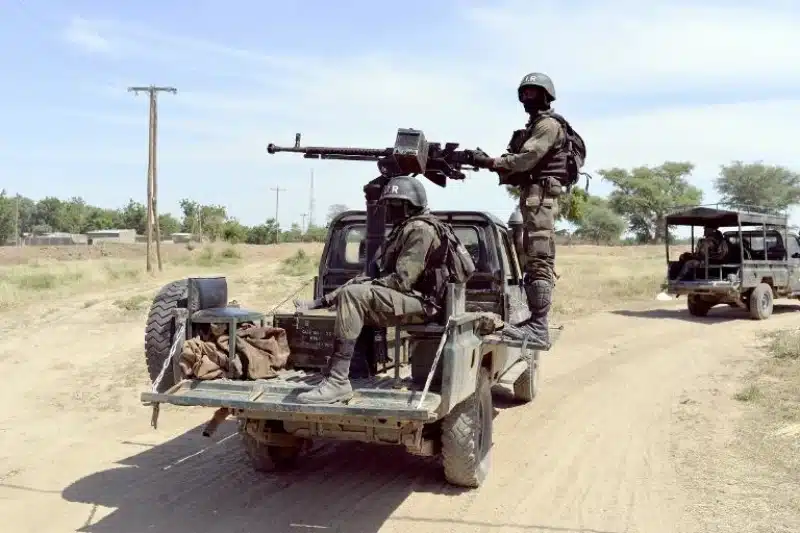
Administrative and military officials visited Madegoua after the attack. Soldiers have since been deployed to secure the area and search for people still unaccounted for, according to local media reports cited by Reuters. Families in nearby settlements are reportedly weighing whether to leave before nightfall rather than wait for another warning.
Here is the uncomfortable question the Madegoua village attack leaves behind. If militants are enforcing eviction orders rather than staging isolated raids, every village along that strategic corridor towards Makary is now a target, not a bystander. Security patrols can chase gunmen after the fact. They cannot easily protect a community that has already been told, in advance, that it must leave.
Grief in Madegoua will fade from headlines within days. The empty houses will not. Long after the Madegoua village attack stops trending, the families who buried their men on Thursday will still be deciding whether staying in the Far North is worth the wait for the next warning.


