



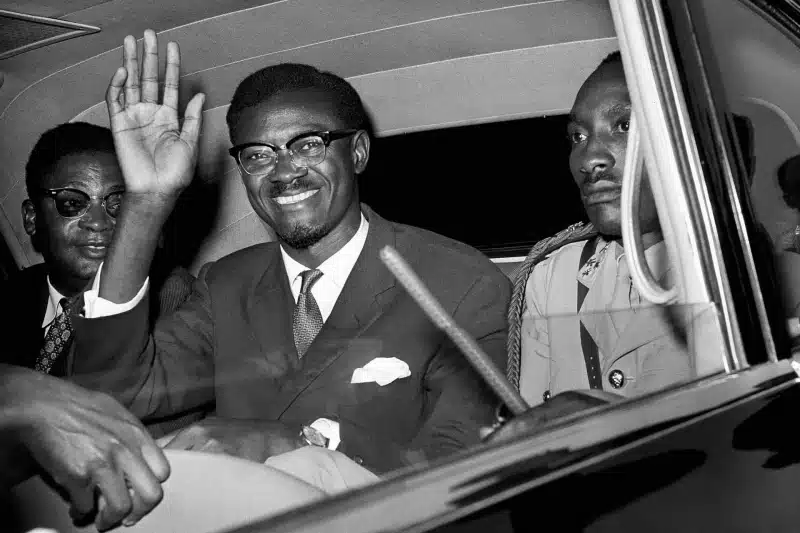

A Belgian court on Tuesday March 17, 2026 ordered former diplomat Étienne Davignon to stand trial in connection with a case dating back to 1961. Davignon, 93, a former Vice-President of the European Commission, is expected to face proceedings over his alleged involvement in events linked to Congolese leader Patrice Lumumba.
The case has drawn attention in the Democratic Republic of Congo and in Belgium, where it is seen as part of a broader effort to examine historical records from the period surrounding Congo’s independence. The Lumumba case in Belgium has become a focal point in these discussions.
The Original Crime: King Leopold’s Congo (1885–1908)
Any serious understanding of Lumumba’s assassination must begin with what many historians regard as the “original sin” of Congo’s modern history.
In 1885, following the Berlin Conference, the Congo was not awarded to Belgium as a colony. It became the personal property of King Leopold II. This distinction proved catastrophic.
Leopold’s administration reorganised the territory around the large-scale extraction of rubber and ivory. Communities were required to meet set production demands under the supervision of the Force Publique, the colonial security force.
To enforce quotas, strict punitive measures were used against areas that fell short of targets, with entire communities facing penalties tied to production levels.
The period had a significant demographic impact. Some historical estimates suggest the population declined by several million during these years, reflecting the broader effects of disease, displacement, and changing economic conditions. In 1908, following sustained international criticism, the Belgian government took over administration of the territory, ending Leopold’s personal control while maintaining a resource-driven system. This period is often referenced in discussions linked to the Lumumba case in Belgium.
The Illusion of Reform: The Belgian Congo and Rising Nationalism
Under Belgian state control, the Congo was rebranded as a “model colony.” Infrastructure expanded, and missionary education created a small African elite known as évolués.
Yet beneath this image of order lay a rigidly paternalistic system. Political participation for Congolese people remained virtually nonexistent. Economic power stayed firmly in European hands, particularly in the mining-rich regions like Katanga.
By the late 1950s, a new political consciousness was emerging across Africa. In the Congo, this found its most powerful voice in Patrice Lumumba. These developments form part of the broader background to the Lumumba case in Belgium.
Unlike more moderate figures, Lumumba demanded not only political independence but full economic and psychological liberation from colonial control.
On June 30, 1960, Independence Day, Belgium’s King Baudouin praised Leopold II’s “civilizing mission.” Lumumba, speaking unscripted, delivered a speech that would echo across history:
Independence was not a gift, but the result of struggle, a struggle of tears, fire, and blood.
From that moment, Lumumba ceased to be merely a political leader. He became a geopolitical problem.
Cold War Fault Lines: Why Lumumba Became a Target
The Congo’s independence coincided with the height of the Cold War. Its vast mineral wealth, including uranium used in the Manhattan Project, made it strategically critical.
Within weeks of independence, the country descended into crisis:
-
The army mutinied
-
Belgium intervened militarily
-
The mineral-rich province of Katanga, backed by Belgian interests, declared secession
Lumumba appealed to the United Nations for support. When the response proved limited, he turned briefly to the Soviet Union.
That decision sealed his fate.
To Western powers, particularly Belgium and the United States, Lumumba was no longer just a nationalist leader. He was perceived as a potential Soviet ally in the heart of Africa. These dynamics are among the issues now revisited in the Lumumba case in Belgium.
The current legal proceedings, often referred to as the Lumumba case in Belgium, focus on decisions taken during this period.
The Assassination: January 17, 1961
The events leading to Lumumba’s death were not spontaneous. They were coordinated within a volatile mix of local rivalries and international intervention.
After being dismissed and later captured following a coup led by Joseph Mobutu, Lumumba was transferred to Katanga, the breakaway state led by Moïse Tshombe.
This transfer is central to the current case.
Étienne Davignon, then a young Belgian diplomat, is accused of playing a role in facilitating Lumumba’s illegal detention and transfer, despite knowing the extreme danger he faced.
On January 17, 1961:
-
Lumumba and his associates, Maurice Mpolo and Joseph Okito, were beaten
-
They were executed by firing squad under the supervision of Belgian officers
-
Their bodies were later exhumed, dismembered, and dissolved in sulfuric acid
The intent was clear. It was to eliminate not just the man, but any physical site that could become a symbol of resistance.
In a chilling detail that resurfaced decades later, Belgian officer Gérard Soete kept a gold-capped tooth as a personal trophy. It was returned to Lumumba’s family only in 2022.
The circumstances surrounding these events remain central to the ongoing Lumumba case in Belgium.
From Silence to Accountability: Why the 2026 Trial Matters
For decades, Lumumba’s assassination existed in a space between acknowledgment and denial.
In 2002, Belgium formally accepted “moral responsibility” following a parliamentary inquiry. But no criminal accountability followed.
The 2026 trial changes that, marking a new phase in how the Lumumba case in Belgium is being addressed.
Key implications:
-
The Defendant: Davignon represents one of the last living links to the Belgian state apparatus involved in Congo’s decolonization
-
The Charges: Move beyond political regret into alleged war crimes, including unlawful detention and degrading treatment
-
The Precedent: A former colonial power allowing its own official to face criminal prosecution for actions tied to decolonization
A Nation’s Memory on Trial
For many in Kinshasa, this moment is less about one man in a courtroom and more about historical recognition.
Lumumba’s assassination symbolized the violent interruption of Congo’s first attempt at true sovereignty. His death paved the way for decades of authoritarian rule under Mobutu and prolonged foreign influence over the country’s resources.
The trial now underway in Belgium represents something long deferred. It is the possibility that history, however belatedly, can be confronted not just morally, but legally.
For many observers, the Lumumba cas


