



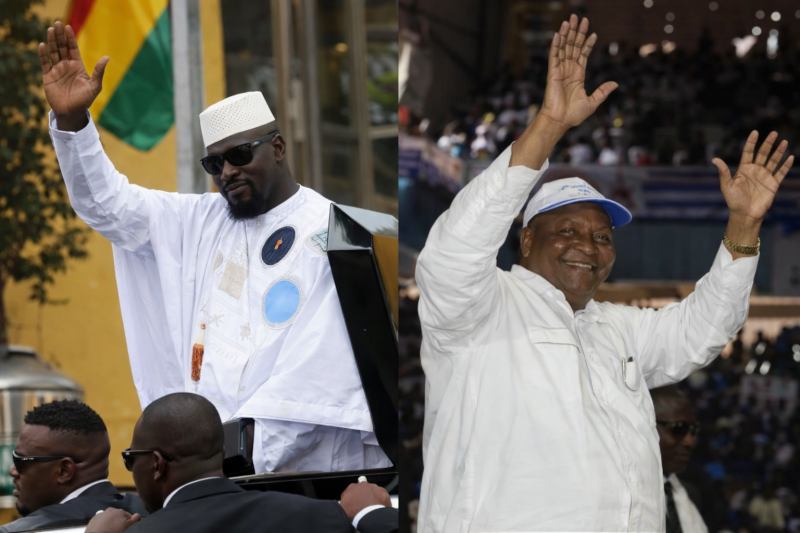

The Guinea and Central African Republic elections 2025 unfolded on December 28 as tightly managed political rituals, laying bare how constitutional engineering and militarised power have steadily drained democratic choice in two African states that now vote without genuine uncertainty.
As polling stations opened at first light on Sunday, voters in two countries separated by thousands of kilometres stepped into elections that appeared strikingly different on the surface but were driven by the same underlying logic. In Guinea’s capital, Conakry, queues formed beneath oversized campaign images of General Mamady Doumbouya, the former special forces officer who rose to power through a 2021 coup and now sought electoral validation. In Bangui, the Central African Republic’s capital, voters assembled under glowing billboards and banners bearing the face of President Faustin-Archange Touadéra, a soft-spoken academic pursuing a third term once barred by the constitution.
By the close of voting, one conclusion had already settled across both capitals. Ballots were cast, but power was never meaningfully contested.
Together, the twin elections offered a revealing portrait of Africa’s changing democratic crisis. These were not chaotic polls marked by open fraud or violence. They were orderly, observed, and legally framed. Yet they were hollow. Outcomes were engineered in advance, opposition was neutralised long before election day, and participation functioned less as choice than as confirmation. Democracy, critics argue, has not been abolished. It has been repurposed.
Elections Designed to Endure Power
The similarities were difficult to ignore. In both Guinea and the Central African Republic, incumbents rewrote constitutions to permit their continued rule, cleared the field of credible challengers, and faced only fragmented or symbolic opposition. Electoral commissions functioned smoothly, observers were deployed in large numbers, and voting proceeded with minimal disruption. Yet uncertainty, the defining feature of competitive democracy, was absent.
This is not electoral fraud in its traditional sense. Instead, it reflects a more adaptive authoritarianism, where power is secured through referendums, court rulings, eligibility rules, and administrative exclusions. The spectacle of voting remains intact, but its purpose has shifted. Elections no longer determine leadership. They legitimise permanence.
Guinea’s Strongman Rebranded
In Guinea, Doumbouya’s path to the presidency was cleared through constitutional recalibration. After toppling President Alpha Condé four years ago, he promised a short transition to civilian rule. That pledge gradually faded. In its place came a constitutional referendum held in September 2025, officially endorsed by overwhelming margins despite an opposition boycott.
The new framework lifted restrictions barring junta members from contesting elections, lengthened presidential terms from five to seven years, and introduced a Senate. It also imposed age limits that conveniently excluded key rivals. Alpha Condé, now in exile, was ruled out by age. Other prominent figures, including Sidya Touré, Cellou Dalein Diallo, Lansana Kouyaté, and Ousmane Kaba, were blocked or sidelined through legal and procedural means.
What remained was a field of challengers with limited reach or resources. Abdoulaye Yéro Baldé, a former minister respected for opposing Condé’s controversial third term, emerged as the most credible alternative, but he campaigned against an incumbent who controlled the institutions, security forces, and narrative of reform.
Voting unfolded quietly across more than 23,000 polling units, with roughly 6.7 million registered voters participating. In Conakry neighbourhoods such as Sonfonia, young voters spoke less about constitutional order and more about infrastructure, employment, and Guinea’s long-delayed Simandou iron ore project, which has finally begun exports. For many, development promises outweighed democratic process.
Doumbouya has tapped into a powerful demographic current. In a country with a median age under 20, he presents himself as a generational break from entrenched political elites. His language of renewal and modernisation resonates, even as public demonstrations are restricted, media freedoms narrowed, and dozens of protesters have been killed since his takeover. For supporters, order and progress are framed as worth the cost.
That appeal is reinforced by economic nationalism. Guinea’s vast reserves of bauxite and iron ore have become central to Doumbouya’s political brand. His administration has revoked mining licences and tightened state oversight, moves popular domestically but unsettling for foreign investors. Control of resources is cast as sovereignty reclaimed, even if its benefits remain unevenly distributed.
Power Fortified by Foreign Arms
In the Central African Republic, the route to electoral dominance was less about youth appeal and more about security. Touadéra’s grip on power rests on a dense web of constitutional revision and external military backing. A 2023 referendum abolished presidential term limits, extended mandates, and redefined eligibility rules, clearing his path to a third term.
Citizenship requirements became a potent political weapon. Opposition figures were accused of holding foreign nationality, stripped of documents, or entangled in legal disputes. Anicet-Georges Dologuélé renounced his French citizenship only to have his Central African passport revoked. Former prime minister Henri-Marie Dondra faced similar accusations, alongside the detention of relatives. Though courts later overturned some exclusions, the chilling effect was unmistakable.
Sunday’s elections combined presidential, parliamentary, regional, and municipal contests, the first local polls in nearly forty years. The scale was historic. The substance was not. Touadéra campaigned before large crowds, while rivals operated under tight constraints, limited visibility, and constant pressure.
Underlying this dominance is Russia’s expanding role. Since 2018, Russian security contractors, initially Wagner and now operating as Africa Corps, have provided presidential protection and combat support against armed groups. Alongside Rwandan forces and UN peacekeepers, they have helped stabilise Bangui and key corridors. In return, Russia has secured access to valuable mineral concessions. Touadéra has credited Moscow with preserving democracy, even as national sovereignty has become increasingly transactional.
Stability Without Choice
Both elections unfolded amid heavy security deployments. Guinea stationed nearly 12,000 police officers nationwide. In CAR, national forces were reinforced by Russian contractors, UN peacekeepers, and Rwandan troops. Logistical problems surfaced, including late polling station openings and voter registers accessible mainly online, but voting proceeded without major unrest.
International responses were cautious. Observer missions noted irregularities and structural concerns but stopped short of outright condemnation. Regional bodies treated Guinea’s election as preferable to renewed instability, while global powers prioritised security, access, and continuity over democratic depth. Stability, once again, took precedence over substance.
Democracy Reduced to Ritual
What occurred in Guinea and the Central African Republic is no anomaly. It reflects a broader continental shift. Across Africa, incumbents are entrenching power through legal revision rather than force, maintaining democratic rituals while hollowing out accountability. Rights erode through courts and commissions. Violence is formalised. Opposition is neutralised by procedure.
This is how democracy now fades, not through abrupt collapse, but through gradual exhaustion. Ballot boxes remain. Observers file reports. Turnout figures are announced. Yet the core promise of choice is absent.
Guinea and the Central African Republic are not isolated cases. They are signals. Until citizens regain not only the act of voting but the power it is meant to confer, elections like these will continue to shimmer on the horizon, convincing from afar, empty up close.


