




In a bold move that has sharply escalated political tensions across the Democratic Republic of Congo, the People’s Party for Reconstruction and Democracy (PPRD) announced Tuesday it was resuming operations despite an ongoing government ban, setting the stage for what many observers fear could become a constitutional crisis in East Africa’s largest nation.
The PPRD, founded by former President Joseph Kabila who ruled the country for 18 years until 2019, has effectively challenged President Felix Tshisekedi’s administration by arguing that the Interior Ministry’s suspension order automatically expired after 15 days without a formal court ruling to extend it.
“This is not merely a legal technicality but a fundamental question of democratic rights,” said Emmanuel Ramazani Shadary, a senior PPRD official, speaking to a packed room of supporters in Kinshasa. “The government cannot silence political opposition through administrative orders that circumvent proper judicial process.”
You may also like:
- US-backed Congo, Rwanda peace deal promises economic transformation
- Congo, Rwanda to sign peace pathway accord in US , sources say
- Red Cross escorts stranded Congolese soldiers from Goma to Kinshasa
The government’s suspension order, issued last month, specifically targeted Kabila himself, accusing the 53-year-old former leader of “overt activism” and implicit support for the M23 rebel group that currently controls significant portions of North and South Kivu provinces in eastern DRC. The ministry’s statement highlighted Kabila’s “reluctance to condemn” the rebels who have waged a devastating campaign across the mineral-rich eastern regions.
Public polarisation along political lines
The political standoff has elicited passionate responses from citizens across the country, with reactions largely falling along existing political divisions.
In Kinshasa, where support for President Tshisekedi remains strong, government supporters have organised rallies backing the ban. “Kabila is a traitor working with foreign powers to destabilise our country,” said Marie Mbemba, a 34-year-old teacher attending a pro-government demonstration. “His party should remain banned until he publicly denounces M23 and reveals his connections to Rwanda.”
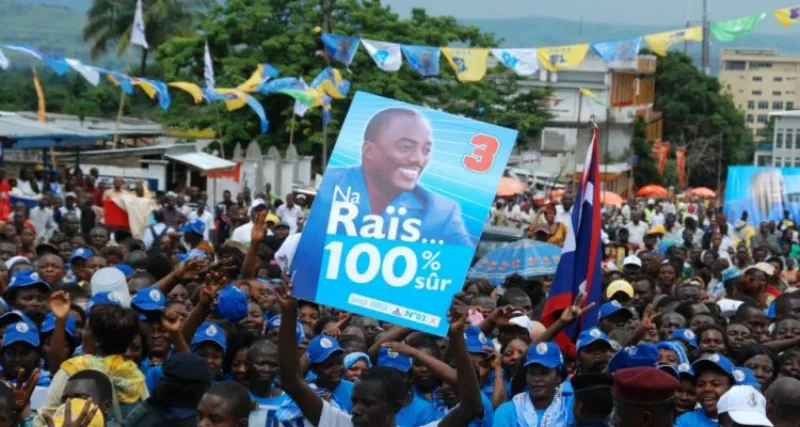
However, in provinces where the PPRD maintains significant support, particularly Katanga in the southeast, thousands have taken to the streets protesting what they view as political persecution. “This ban is nothing but President Tshisekedi eliminating his competition before the next elections,” said Claude Mwamba, a PPRD youth coordinator in Lubumbashi. “They talk about M23, but this is really about silencing any opposition.”
Civil society organisations have expressed concern about the precedent set by banning a major political party through administrative means. “Regardless of one’s political affiliation, the suspension of any party without proper judicial oversight threatens democratic institutions,” noted Justine Masika of the Congolese Association for Civil Rights. “Both sides must respect constitutional processes.”
Adding to the intrigue surrounding the political crisis is Kabila’s mysterious April return to Congo after years of self-imposed exile since 2023. According to multiple sources, the former president entered the country through Rwanda and arrived in Goma, the capital of North Kivu province currently controlled by M23 rebels.
This unconventional entry has fuelled government allegations that Kabila is collaborating with both Rwanda and M23, claims that have resonated with many citizens frustrated by decades of conflict in the east. Government spokesperson Patrick Muyaya stated in a press conference: “What legitimate former head of state returns to his country through a backdoor, assisted by those waging war against his people?”
Since his arrival, Kabila has maintained an unusually low profile, with no public appearances recorded. His representatives claim security concerns justify his discretion, but rumours about his activities and whereabouts continue to circulate widely on social media and local radio stations.
The political tension has broader implications for the volatile Great Lakes region. International observers warn that the deepening crisis could further destabilise eastern DRC, where over 120 armed groups currently operate.
“The government’s allegations against Kabila regarding M23 support cannot be separated from the complex regional dynamics involving Rwanda and Uganda,” said Dr. Pascal Kambale, a Congolese analyst with the Open Society Initiative. “This political dispute in Kinshasa has direct consequences for peace prospects in the east.”
The African Union has called for dialogue between all political actors in DRC, expressing concern that escalating tensions could undermine already fragile democratic institutions in a country with a history of political violence.
Markets across DRC have reacted negatively to the heightened tensions, with the Congolese franc experiencing volatility and several international mining companies expressing concern about political stability. The mining sector, which accounts for approximately 80% of the country’s export revenue, remains particularly sensitive to political disruptions.
“Investors require predictability and rule of law,” noted economic analyst Jean-Pierre Okenda. “The current dispute over party legality creates exactly the kind of uncertainty that discourages long-term investment in Congo’s economy.”
As the PPRD resumes its activities in defiance of government orders, many Congolese citizens are preparing for what could be weeks or months of intensified political confrontation. While government ministers have threatened “consequences” for those violating the ban, the PPRD leadership appears determined to force a political showdown.
“This is ultimately a test of whether Congo is truly a multi-party democracy or whether we’re returning to the one-party mentality of the past,” said Pierre Lumbi, a veteran political observer. “The way this crisis is resolved will define our democratic future.”

