




One letter helped sink a 35-year-old UN peacekeeping mission on Friday.
The letter was the R in MINURSO, which stands for referendum. Washington wanted it removed. Moscow wanted it kept. By nightfall, the mission had no renewed mandate at all.
The Western Sahara veto came at the Security Council in New York on 30 October. Russia blocked a United States draft that 11 of the 15 members supported.
The UN’s record of the meeting shows that China, Pakistan and Somalia abstained. The Council then failed to adopt a Russian text that would have renewed the mission unchanged for another year. It received three votes in favour, one against from the United States and 11 abstentions. Nine affirmative votes were required.
The existing mandate expires today, a day after the Western Sahara veto. Reuters, citing a UN report, put the mission’s strength at 155 military personnel and its cost at about $62 million for the current fiscal year.
So what was the fight really about? Not spelling.
Reuters reported that the US text would have made Morocco’s autonomy plan the only basis for negotiations. Under the plan, Western Sahara would manage its internal affairs but remain under Moroccan sovereignty. The Security Council had already accepted the proposal as a basis for negotiations in Resolution 2797 last October, although that resolution also explicitly referred to the self-determination of the Sahrawi people.
The Western Sahara veto was Moscow’s response to what it considered a further narrowing of that political framework. The disagreement was not simply about whether the mission should continue, but also about whether the Council should endorse a negotiating process that left little room for an alternative to Moroccan sovereignty.
US envoy Ambassador Mike Waltz told the Council that some members had used their veto “to preserve the letter ‘R’ for referendum”. He argued that the UN had done no work towards such a vote in decades.
Russia saw it differently. Envoy Vassily Nebenzia argued that one-sided solutions lead to a dead end. He said that dropping a single letter from the mission’s name betrayed the people in the Tindouf camps. In the UN’s record of the debate, he described his vote as a “life-saving veto, so to speak”.
There is a wider issue behind the disagreement, and it extends beyond the immediate dispute between Morocco and the Polisario Front. The Western Sahara veto has brought renewed attention to a principle that has long been recognised in international law: the right of peoples to determine their own political future.
Self-determination is not a concession that powerful countries can grant or withdraw. Article 1 of both the International Covenant on Civil and Political Rights and the International Covenant on Economic, Social and Cultural Rights affirms that all peoples have the right to self-determination and may freely determine their political status and pursue their economic, social and cultural development.
For the Sahrawi people, that right has remained unresolved for decades. A referendum was central to the original UN settlement framework established in 1991, but it has never taken place.
Removing the referendum reference and endorsing a framework that effectively treated autonomy under Moroccan sovereignty as the only basis for negotiations would have raised serious questions about whether the people concerned still had a meaningful opportunity to determine their future. The concern was not that autonomy could never be a legitimate settlement, but that it should not be treated as the predetermined outcome of a process intended to respect self-determination.
The implications of the Western Sahara veto therefore extend beyond the territory itself. Other peoples in unresolved decolonisation and self-determination situations could reasonably question whether their right to choose their political future remains meaningful when powerful states endorse a framework that excludes some of the choices originally contemplated. Such an approach risks sending the message that a right recognised under international law can gradually be reduced to a negotiating formula shaped by the interests of more powerful countries.
This is particularly important because the principle of self-determination has long been central to the international system’s response to colonial rule and unresolved territorial questions. Allowing a political framework to close off meaningful choices without the consent of the people concerned could weaken confidence in the consistency with which that principle is applied elsewhere.
That does not mean a referendum is the only possible mechanism for exercising self-determination, or that autonomy cannot form part of a settlement. It means that any proposed solution must respect the underlying right and provide a genuine opportunity for the people concerned to determine their future. The Western Sahara veto, in that sense, prevented the Council from endorsing a more restrictive framework without resolving the fundamental question of Sahrawi self-determination. It did not, however, guarantee a referendum or produce a settlement.
The outcome carries another irony. Moscow says its veto protected the Sahrawi people’s right to a say. Yet Morocco’s royal palace welcomed the failure of the American proposal. Reuters reported that Rabat wants the mission’s staff, vehicles and equipment out within days and the Western Sahara file removed from the Council’s agenda.
Morocco added that it remains committed to the ceasefire. Its position also highlights the difference between welcoming the failure of a proposed mandate and agreeing on what should replace the mission’s monitoring role.
Algeria, which hosts the Sahrawi refugee camps near Tindouf, took the opposite view. Its delegate thanked Russia and described the outcome as a failure of the Council. Morocco’s representative replied that camp residents should be free to return to Morocco.
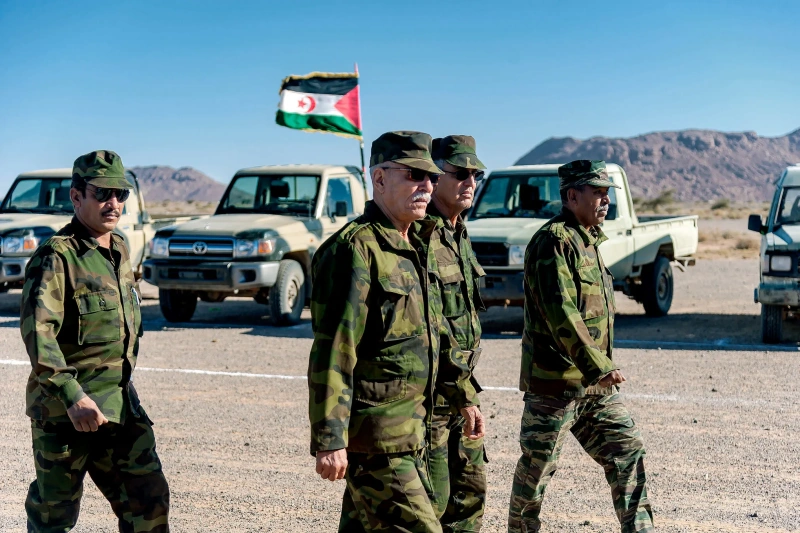
The Polisario Front, which seeks an independent state, also welcomed the Western Sahara veto. Its UN representative, Sidi Omar, told reporters that the US text would have undermined Sahrawi self-determination.
Even the camp population is disputed. Algeria’s delegate spoke of hundreds of thousands of refugees, while Reuters reported that tens of thousands are estimated to be living in the camps. The US mission to the UN said its draft asked the UN refugee agency to register them, highlighting another unresolved issue in the dispute.
The consequences of the Western Sahara veto are not only diplomatic or constitutional. Oxfam warned, in a reaction carried by Reuters, that losing the mission’s monitoring and de-escalation role risks civilian safety and the prospects for a peaceful settlement. Low-level fighting has continued since the Polisario announced in November 2020 that it was resuming armed struggle.
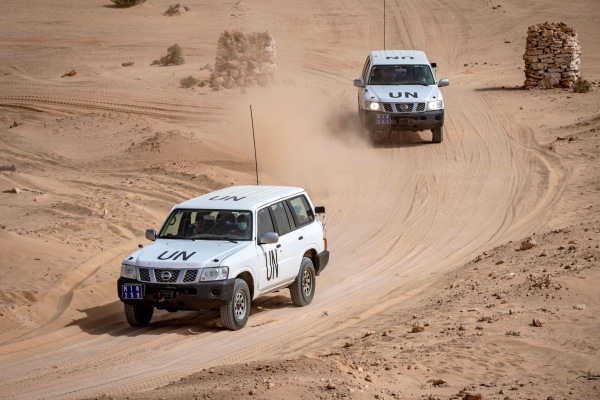
MINURSO has served as an important channel for monitoring developments and helping prevent tensions from escalating into a wider confrontation. Its absence could leave fewer mechanisms for observing violations, communicating between the parties and responding to incidents along the ceasefire arrangements. Whatever the political disagreements over its mandate, the loss of that monitoring capacity creates an immediate concern for civilians and regional stability.
Western capitals were blunt after the vote. France warned that an abrupt closure would be alarming at a time of renewed tension. Britain voiced immense disappointment at Russia’s decision.
Washington has since turned its fire on Moscow. Waltz’s statement, issued by the US mission to the UN, described the lapse as “all Russia’s choice”.
He added that the United States was ready to help Secretary-General Antonio Guterres manage an orderly withdrawal and protect UN staff. Washington also said it would continue working with envoy Staffan de Mistura and the parties.
Yet the United States had written the text that would have renewed the mission for a year, albeit with significant changes to its mandate and identity. It also voted against the Russian proposal that would have extended the existing arrangement unchanged. The Western Sahara veto has therefore exposed a contradiction in Washington’s position: it blames Moscow for the mission’s impending closure, while its own proposed framework was the subject of the dispute and it rejected the alternative that could have preserved the existing mandate.
Both capitals now blame each other for an outcome neither says it wanted. But the immediate consequence is that the mission faces the loss of its mandate while the political dispute remains unresolved.
AfricanQuarters could not find an announcement of a new Council meeting or a fresh draft at the time of writing. Nor could we find a UN statement explaining what the lapse of the mandate means for the 155 personnel on the ground.
Neither failed draft changes Resolution 2797, which remains the Council’s existing framework for negotiations and explicitly retains the principle of self-determination. The Western Sahara veto has left the peacekeeping mission without a renewed mandate, but it has not resolved the dispute or extinguished the Sahrawi people’s claim to self-determination.
Reuters reported that Moroccan flags and lights went up in Laayoune, the largest city in the territory, for Unity Day. The palace created the holiday last year to mark the 2025 vote. This year, the same date marks the expiry of the UN mission’s mandate.
The Western Sahara veto has thus left two important questions unanswered. The first is how the parties can return to negotiations without further narrowing the right of the Sahrawi people to determine their future. The second is who will monitor the ceasefire and help prevent renewed fighting now that MINURSO has no renewed mandate.
Both capitals fought over a word. But the bigger question is whether the international community can preserve the right of a people to determine its own future while allowing the mechanism established to help protect that right to disappear. Who watches the ceasefire now?


