



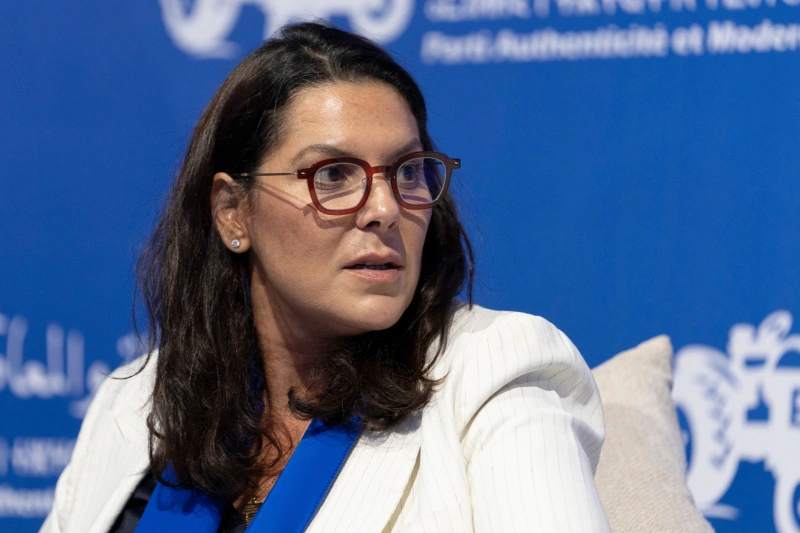

Morocco has never had a woman at the head of its government. On Tuesday, King Mohammed VI changed that by naming Fatima Zahra Mansouri as prime minister.
Morocco operates a constitutional monarchy in which the prime minister leads the government, while King Mohammed VI remains head of state and retains broad powers over key areas including defence and foreign affairs.
The Royal Palace said in a statement that the 50-year-old lawyer, who was also mayor of Marrakech until her nomination, has been asked to form a new government.
According to the Associated Press, she becomes only the second woman to serve as prime minister in the Arab world, after Tunisia’s Najla Bouden.
The call came quickly. In 2021, Aziz Akhannouch was named two days after his party won. Fatima Zahra Mansouri had to wait six days after voting on 23 September.
Her party earned the job. Interior Minister Abdelouafi Laftit announced that the Authenticity and Modernity Party (PAM) took 97 of the 395 seats in parliament. That is 10 more than in 2021.
It is still a long way from the 198 needed for a majority. Article 47 of the constitution tells the king to pick the head of government from the party that finishes first, but it leaves the choice of person to him.
Akhannouch’s National Rally of Independents (RNI) fell from 102 seats to 66. Al Jazeera’s tally shows the Islamist Justice and Development Party (PJD) jumping from 13 seats to 54.
So who is the woman now holding the biggest job in Moroccan politics?
Fatima Zahra Mansouri was 33 when she won the Marrakech mayoralty in 2009, becoming the first woman to run the city. She had joined PAM the year before, when it was created by Fouad Ali El Himma, a close friend and adviser of the king.
She studied law at the University of Montpellier in France. Her father, Abderrahmane El Mansouri, was a senior local official in Marrakech and later Morocco’s ambassador to the United Arab Emirates.
She became urban planning minister in Akhannouch’s government in 2021 and moved into PAM’s top leadership in 2024.
Her rise has not been free of controversy. A group of unidentified hackers claimed she had used her office for personal gain in Marrakech land deals. She denied it, called the claims defamatory and went to court.
The bigger question is who Fatima Zahra Mansouri will speak for. Only 38.02 per cent of registered voters turned out, down from 50.86 per cent in 2021. The AP reported that PAM received roughly one million votes from the country’s 15.8 million registered voters.
One voter told the AP on his way to the polls: “Protesting like the Gen Z youth will not bring any change.”
Those protests hang over her new job. The Gen Z 212 movement marched last autumn over hospitals, schools and jobs, with youth unemployment running above 35 per cent according to official statistics. In an open letter, the group asked the king for “a profound and just reform.”
Fatima Zahra Mansouri’s party has promised one million new jobs, according to Al Jazeera’s report on its $37 billion platform.
Then there is the money. The next government will oversee billions of dollars of spending as Morocco prepares to co-host the 2030 World Cup with Spain and Portugal, and some are already calling it a World Cup government. Protesters accused leaders of caring more for stadiums than clinics.
Her first task is a coalition. PAM, the RNI and Istiqlal together hold 228 seats, more than enough. But PAM ruled out staying with the RNI during the campaign after both traded blame over food prices.
Fatima Zahra Mansouri has said she is open to talks with all parties. Whether that includes the PJD, which has long accused PAM of being founded to hold it back, is another matter.
She also governs inside limits. The king keeps sweeping powers over foreign policy and defence, and major policies need palace approval. Akhannouch learned how that works last year, when protesters demanded his resignation and never got it.
Fatima Zahra Mansouri now occupies an office no woman in Morocco has ever held before. Whether it comes with the power to answer the street is untested.
Morocco waited 70 years after independence for a woman prime minister. Its young people say they cannot wait that long for a job.


