



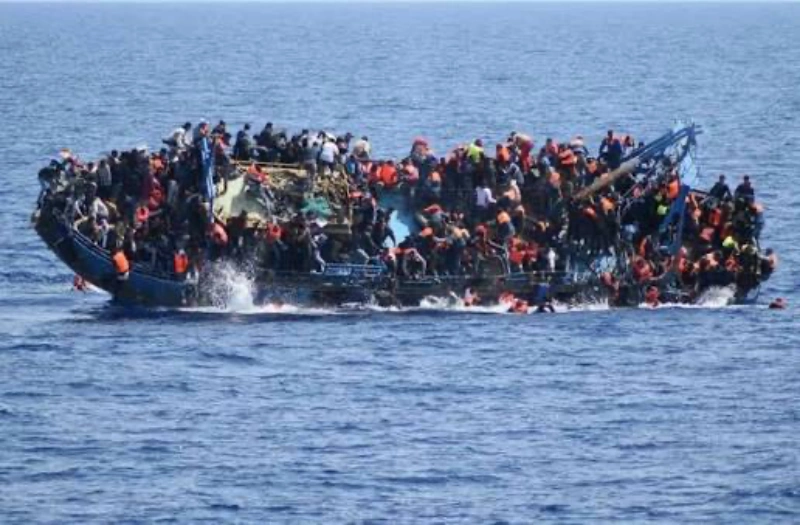

The United Nations says 144 refugees and migrants are dead or missing following a string of tragic incidents off the coast of Mauritania last week, in one of the deadliest episodes on the Atlantic migration route this year.
UNHCR, the UN refugee agency, confirmed the toll on Tuesday, describing itself as deeply saddened by the Mauritania migrant boat disaster. The agency said the victims had been attempting to reach Europe through one of the world’s most dangerous sea corridors.
Three rescue and disembarkation operations were carried out between 14 and 18 July in Nouadhibou, a port city in northern Mauritania. Those operations brought 387 people of various nationalities safely to shore, with UNHCR staff present alongside Mauritanian authorities and humanitarian partners throughout.
The single deadliest incident behind the Mauritania migrant boat disaster involved a vessel that left Bufalo in The Gambia, bound for Spain’s Canary Islands, roughly 1,677 kilometres away. The boat drifted at sea for nearly 25 days before it was finally rescued on Saturday.
Only 38 people survived. A further 143 were reported dead or missing from that single vessel alone.
Among the survivors were two children who had lost every member of their family during the journey. Their case has drawn particular concern from aid workers tracking the scale of the Mauritania migrant boat disaster.
A separate death was recorded on another boat that disembarked in Nouadhibou on 14 July, adding to the overall toll linked to last week’s operations.
UNHCR spokesman Matthew Saltmarsh briefed reporters in Geneva on the tragedy, telling journalists it highlighted the continued human cost of these dangerous routes. He said the migrants and refugees had been attempting a perilous sea journey from West Africa towards Europe when disaster struck.
Officials say the Atlantic route from West Africa to the Canary Islands remains one of the world’s deadliest mixed movement corridors. Long distances, unpredictable ocean conditions and overcrowded, unseaworthy boats all combine with limited access to timely rescue, making journeys like the one at the heart of the Mauritania migrant boat disaster especially perilous.
Despite the scale of this latest tragedy, overall crossing numbers have fallen sharply. Arrivals to the Canary Islands dropped 61 per cent this year compared with the same period in 2025, with around 4,400 recorded by 15 July. Sea arrivals to Europe across major routes have also declined, from 65,407 last year to more than 40,000 so far this year.
Even so, UNHCR has repeatedly warned that fewer arrivals do not mean fewer deaths. The agency says disappearances at sea continue at alarming levels, with many incidents occurring far from public attention and entire boats sometimes vanishing without trace.
The Gambia has featured prominently in recent departures along this corridor, underlining how the Mauritania migrant boat disaster fits into a wider pattern of West Africans risking the Atlantic crossing in search of opportunity abroad.
UNHCR is calling for concerted action to address the root causes pushing refugees and migrants towards these journeys. The agency wants quicker access to legal pathways, including higher resettlement quotas, expanded labour migration opportunities and stronger education programmes across the region.
For now, the Mauritania migrant boat disaster stands as a grim reminder of how costly the search for a better life can become, even as the numbers attempting the crossing continue to fall.


