



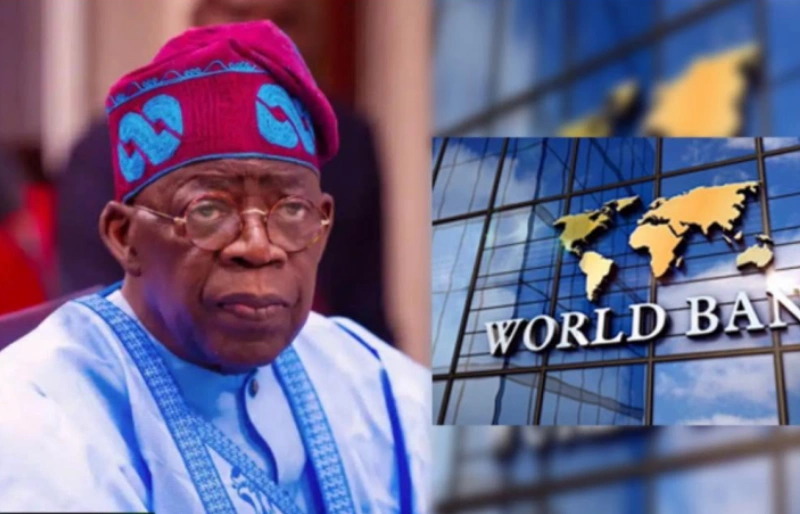

The World Bank has approved a fresh $1.25 billion loan for Nigeria, unveiling a new Country Partnership Framework that will guide its support for the country until 2032.
The approval was announced on Wednesday alongside the launch of the framework, which the World Bank says marks a shift toward creating more and better private sector jobs. The World Bank loan falls under the Nigeria Actions for Investment and Jobs Acceleration programme, known as NAIJA DPF.
Nigeria’s Federal Government had faced public criticism in the weeks before the announcement, with many Nigerians questioning why fresh borrowing was needed when previous loans had yet to translate into improved living standards. Critics have argued that the latest World Bank loan must deliver measurable benefits if it is to avoid the concerns that greeted earlier borrowing programmes.
The World Bank maintains that the new framework builds on recent macroeconomic reforms that have driven growth, strengthened external reserves and improved investor confidence.
The World Bank Country Director for Nigeria, Mathew Verghis, said the framework sets out how the institution will support the country over the coming years. He said the focus rests firmly on helping to create more and better jobs, particularly through private sector-led growth, and that recent macroeconomic gains have been critical in helping stabilise the economy.
Verghis added that translating improved macroeconomic conditions into better living standards will require addressing structural constraints that hold back private investment and job creation. According to the institution, the World Bank loan will help underpin reforms intended to remove some of those barriers.
The framework carries specific targets. It aims to expand broadband connectivity to 58 million Nigerians, extend electricity access to 32 million people, improve health and nutrition services for 40 million citizens and support 9.5 million farmers with better inputs and market access.
The World Bank loan itself supports a set of government reforms aimed at strengthening the foundations for growth and competitiveness. These include deepening capital markets, modernising the regulatory framework for the digital economy and e-governance, advancing power sector reforms to accelerate electrification, and lowering trade barriers in line with Nigeria’s ECOWAS and AfCFTA commitments. The reforms also target improved access to quality agricultural seeds and stronger domestic revenue mobilisation.
The International Finance Corporation’s Divisional Director for Nigeria, Dahlia Khalifa, said Nigeria’s reform agenda has created fresh opportunities to attract private investment. She said the country’s long-term growth potential will be shaped by its ability to attract investment, raise productivity and unleash private sector job creation, building on the capital of a rapidly growing population.
The latest approval is the second-largest single World Bank loan Nigeria has secured under President Bola Tinubu, behind the $1.5 billion Reforms for Economic Stabilisation to Enable Transformation financing approved in June 2024.
Nigeria’s debt to the World Bank has been climbing steadily, adding to public scrutiny surrounding the new World Bank loan. Figures from the Debt Management Office show the debt rose from $17.81 billion at the end of 2024 to $19.89 billion by December 2025, an increase of $2.08 billion, or 11.7 per cent.
Loans from the International Development Association rose from $16.56 billion to $18.51 billion over the same period, while debt owed to the International Bank for Reconstruction and Development climbed from $1.24 billion to $1.38 billion.
By the end of 2025, the World Bank accounted for 38.36 per cent of Nigeria’s total external debt stock of $51.86 billion, according to the Debt Management Office figures.
The new Country Partnership Framework replaces the outgoing 2021-2025 strategy, which was built around four pillars: human capital development, job creation and economic diversification, resilience and fragility reduction, and public sector strengthening. The World Bank’s active portfolio in Nigeria already stands at more than $16.4 billion, with significant financing channelled through IDA and IBRD.
Whether the World Bank loan delivers the living standards improvements officials have promised will depend on implementation, a point Verghis himself acknowledged when he stressed that macroeconomic gains alone will not be enough without action on the structural barriers facing ordinary Nigerians.


