




For years, Lagos was Africa’s undisputed tech capital. International investors flew in, backed a payments startup or neobank, and called it an Africa strategy. That era is over.
New data shows Kenya has pulled decisively ahead in African startup funding, raising $984 million in 2025 alone, according to Africa: The Big Deal. That figure accounts for nearly a third of all startup capital raised across the continent last year.
Nigeria, once the continent’s dominant force, slipped to fourth place among Africa’s “Big Four” markets.
The numbers that changed everything
Funding in Kenya rose 52 per cent year over year, reaching close to $1 billion, the largest amount raised by any African market since 2022.
Egypt followed with $614 million, up 51 per cent from 2024. South Africa ranked third with $600 million, also growing 51 per cent year on year.
Nigeria’s position was starkly different. According to Partech Africa‘s 2025 VC Report, Nigerian startups saw equity funding fall 21 per cent year on year, with deal count dropping 19 per cent to 83 rounds. Africa: The Big Deal reported total funding of $343 million, down 17 per cent from the prior year.
Nigeria’s share of total African startup funding fell to 11 per cent, the lowest level recorded since 2019.
Five companies. One dominant bet.
Kenya’s rise in African startup funding was not built on a broad wave of new startups. It was built on five companies in a single sector.
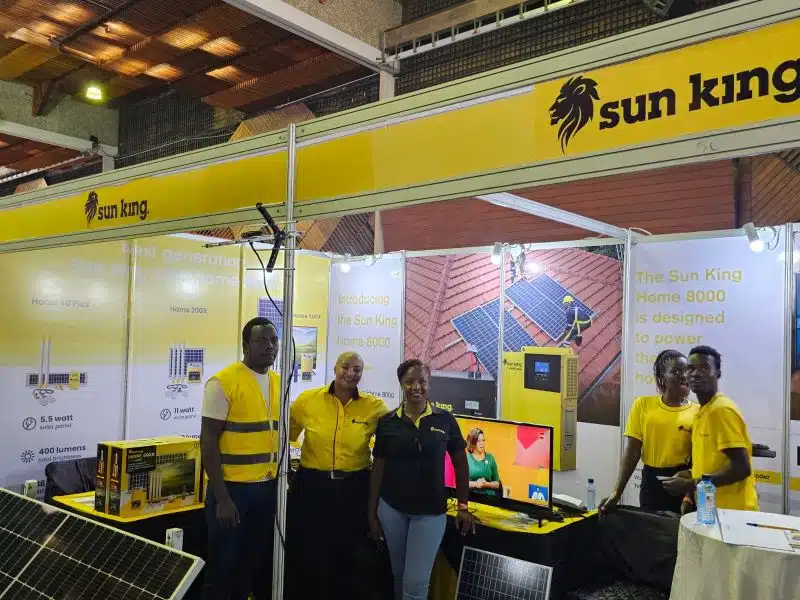
Five key players, d.light, Sun King, M-Kopa, Burn, and PowerGen, secured 82 per cent of Kenya’s total funding. All five operate in off-grid energy and clean technology.
D.light expanded its receivables financing facility by $300 million, the largest single transaction in Kenya’s 2025 pipeline. Sun King followed with the equivalent of $156 million through a mix of debt and equity, drawing backing from the International Finance Corporation and London-based investor Lightrock.
This was not conventional venture capital. When debt accounts for 60 per cent of total capital, the ecosystem is not primarily being funded by venture capital. It is being funded by lending against proven cash flows.
How Clean Energy Reshaped African Startup Funding
The mechanism behind Kenya’s surge in African startup funding matters as much as the headline figure.
Debt represented 60 per cent of the total raised, while the amount of equity raised almost doubled year on year.
Clean energy companies made this possible. When d.light or Sun King lend a solar kit to a rural household on a 24-month instalment plan, they generate a receivable. That receivable is bankable. It can be securitised, priced, packaged, and sold to institutional investors.
Sun King’s $156 million securitisation deal, structured by Citi and backed by a consortium of commercial banks including Stanbic Bank Kenya, KCB Bank, and Absa, was the largest and first majority commercial-bank-backed securitisation of its kind in Sub-Saharan Africa outside South Africa.
Software startups, the backbone of Nigerian tech, simply cannot replicate that model.
Nigeria’s uncomfortable reality
Deal volume is the one trophy Nigeria still holds. The country logged 205 transactions in 2025, more than any other African market.
But volume told only part of the story. The average ticket size sat at just $1.6 million, against Kenya’s $6.9 million and South Africa’s $9.2 million. Lots of small bets, no big wins.
Kenya closed four major rounds in energy and climate tech. Nigeria did not land a single megadeal all year.
The currency did further damage. The naira sat at roughly 1,420 to the dollar by early 2026, with inflation between 25 and 30 per cent. For founders earning naira and reporting returns in dollars, that gap was brutal.
Fintech, once the engine of Nigerian tech, had its share of African equity funding fall from 60 per cent in 2022 to just 25 per cent in 2025. Nigeria has not found a replacement sector. It has yet to secure major deals in energy, a particular irony given the country’s chronic electricity shortages.
By mid-2025, Nigeria had raised roughly $186 million, trailing Kenya, South Africa, and Egypt.
A continent in motion
Kenya’s rise sits inside a much larger shift in African startup funding.
The Partech Africa Tech Venture Capital Report, published in January 2026, put total African tech fundraising at $4.1 billion in 2025, up 25 per cent year on year and the continent’s strongest showing since 2022.
Eastern Africa took 34 per cent of that total, reversing the Western African dominance that had defined the continent’s funding map since 2021.
Egypt and Morocco pushed North Africa into a stronger position, while Francophone West Africa and Southern Africa built out their early-stage pipelines. Climate and infrastructure deals increasingly crossed borders rather than staying confined to single markets.
The lesson from Kenya’s ascent is not simply that Nairobi beat Lagos. It is that African startup funding has moved on from copying Silicon Valley’s software-first playbook. The capital is now following hardware, energy infrastructure, and predictable cash flows.
Nigeria still has 200 million consumers, a deep talent pool, and the continent’s highest deal volume. But the dependency on foreign capital has not been addressed, and while other Big Four markets grew in 2025, Nigeria shrank.
Whether that contraction proves temporary depends largely on whether the naira stabilises and whether Nigerian founders can build the kind of asset-backed, revenue-generating models that have made Nairobi the new centre of gravity in African startup funding.


