Kenya’s Orange Democratic Movement is no longer managing routine internal disagreements. What is unfolding inside the party is far more consequential than a personality clash. The ODM crisis after Raila Odinga’s departure from domestic politics has become a battle over legitimacy, power and the soul of the country’s most prominent opposition movement.
And it has a very specific spark.
The Statement That Started It All
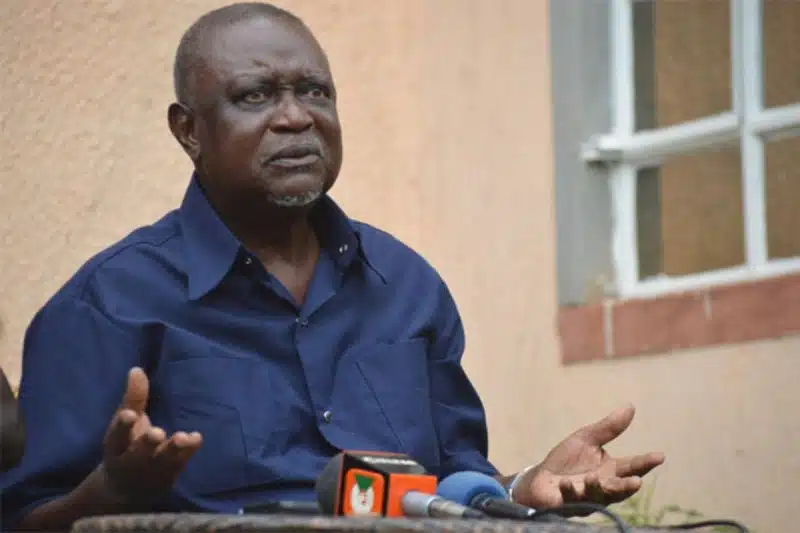
Oburu Oginga, the veteran ODM leader and elder brother of the late Raila Odinga, has publicly claimed that Raila had grown “fed up” with Nairobi Senator Edwin Sifuna before his death. That claim, which Oburu has not retracted, reframed what many thought was a personal dispute into something far more charged.
By invoking the authority of the late his late brother, Oburu has positioned himself as a guardian of Raila’s legacy. In the same move, he cast Sifuna as someone whose loyalty to the party’s founding leadership was questionable.
It was a calculated political manoeuvre, not an offhand remark.
Old Guard Versus New Guard in the ODM Crisis After Raila
The ODM crisis after Raila is at its core a generational conflict playing out in public.
The Oburu’s faction is rooted in the party’s original structure, prioritises discipline, hierarchy and continuity. Those who belong to this bloc view internal dissent as destabilising, particularly at a moment when ODM is trying to hold itself together without its founding leader.
Sifuna’s base is a different political animal altogether. It is urban, vocal and unapologetic in its willingness to challenge leadership publicly. His supporters argue that the old structure is no longer fit for purpose in the political reality that followed Raila’s exit from centre stage.
Neither side is inclined to back down.
A Party Built Around One Man
For decades, Raila Odinga was not simply ODM’s leader. He was the reason the party held together. His departure exposed what insiders and analysts had long suspected: ODM has weak internal conflict resolution mechanisms, no agreed succession structure and competing centres of authority with no referee.
The ODM crisis after Raila is, in many respects, a crisis that was always waiting to happen.
The Legal Dimension
The conflict has now moved into the courtrooms, deepening the ODM crisis after Raila and exposing institutional weaknesses within the party. The removal Edwin Sifunaas Secretary-General has been challenged through legal proceedings, and a number of party decisions are now being contested or delayed.
The result is a growing confusion over who speaks for ODM, with parallel power structures beginning to harden on both sides.
Why 2027 Is Driving Everything
Kenya’s next general election, scheduled for 2027, is shaping the current ODM crisis after Raila right now.
Without Raila as a unifying figure, there is no undisputed candidate to anchor the party’s strategy. Sections of the party are reported to be considering working alongside the ruling United Democratic Alliance bloc, a prospect that has deepened the existing fault lines. One camp favours negotiation and accommodation; another insists on hard opposition politics.
That disagreement is now existential.
What Happens Next
Political analysts watching the ODM crisis after Raila have broadly outlined three possible trajectories. The first is an internal crackdown in which Sifuna and his allies are sidelined, leaving the party more centralised but potentially alienating its younger urban base. The second is a formal split, producing a breakaway faction that weakens ODM’s standing as Kenya’s primary opposition force. The third is a fragile, unresolved coexistence that carries the tensions all the way into the 2027 election cycle.
None of these scenarios is without serious cost.
The Bottom Line
Oburu Oginga represents continuity, control and a direct line to Raila-era politics. Edwin Sifuna represents disruption, transition and a different vision of what ODM should be.
The ODM crisis after Raila is not simply about two politicians in dispute. It is the defining test of whether the party can survive the man who built it.
This article is based on publicly reported statements by Oburu Oginga and on developments arising from ongoing legal proceedings and party proceedings within the Orange Democratic Movement.