



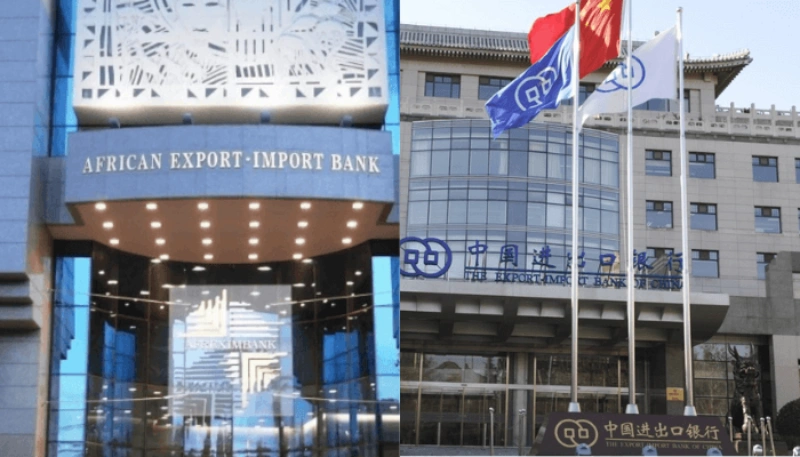

The launch of the Afreximbank $10bn crisis fund comes at a moment when pressure on African economies is no longer building quietly. It is already visible in fuel prices, in exchange rates, and in the cost of moving goods across borders.
Announced on April 7, 2026, the programme is meant to act as a financial buffer against the fallout from the Middle East crisis, with details of the intervention outlined by African Export-Import Bank and reported by Reuters.
A Shock That Is Not Distant
For many African countries, the Gulf is not an abstract geopolitical space. It is a core supplier of energy and agricultural inputs. When disruption happens there, the effects show up quickly at home.
Prices are rising. Supply chains are tightening. Currencies are slipping.
That combination is difficult to manage all at once.
Pressure on Costs
Higher oil prices are feeding directly into transport and food costs. In some cases, governments are already having to make difficult choices about subsidies and spending.
Trade Uncertainty
Shipping routes have become less predictable and more expensive. Delays are increasing, and so are insurance premiums.
Currency Strain
Several African currencies have weakened since the crisis escalated, adding pressure on foreign reserves and making imports more expensive.
Holding the System Together
At its core, the Afreximbank $10bn crisis fund is designed to do something simple but critical. Keep essential systems functioning.
By providing foreign exchange and short-term liquidity, it allows countries to continue importing what they cannot do without. Fuel. Food. Medicines.
Without that support, the adjustment would be sharper and far more disruptive.
There is also a timing issue.
The Fertiliser Window
The planting season is already underway in many parts of the continent. Disruptions to fertiliser supply, particularly from the Gulf, could affect yields later in the year.
That risk is not immediate in appearance, but it is serious. A poor harvest would extend the impact of this crisis well beyond the current moment.
Not Just Defensive
There is another side to this.
While some economies are absorbing the shock, others may be able to take advantage of it. Higher global prices for energy and minerals create an opening for exporters.
The Afreximbank $10bn crisis fund includes support to help scale production, particularly through pre-export finance and working capital. Countries like Nigeria, Angola and Mozambique are likely to be watching that closely.
It is a reminder that external shocks are rarely uniform in their impact.
Sectors Under Pressure
The effects are also being felt in less obvious places.
Aviation and Tourism
Airlines are dealing with higher fuel costs and longer routes. For countries that depend on tourism, that is not a small issue. Travel becomes more expensive, and demand tends to soften.
The knock-on effects can spread quickly into employment and service sectors.
Thinking Beyond the Immediate Crisis
Part of what makes this Afreximbank $10bn crisis fund notable is that it is not only focused on short-term relief.
There is a growing awareness that repeated exposure to external shocks requires a different kind of response.
Investment in logistics, energy systems and alternative trade routes is part of that thinking. Reducing reliance on fragile corridors is no longer just a long-term ambition. It is becoming a necessity.
A Different Kind of Signal
The Afreximbank $10bn crisis fund also carries a message.
It suggests that African institutions are increasingly willing to step in early rather than wait for external support. That shift may matter as much as the money itself.
Markets tend to react not just to risk, but to how prepared systems are to manage it.
This is, in many ways, a holding operation.
The Afreximbank $10bn crisis fund buys time. It eases pressure. It keeps key sectors moving.
But it does not remove the underlying risk.
Much will depend on how the situation in the Middle East evolves and how long the disruption lasts. For now, the response is clear. Africa is trying to stay ahead of the shock rather than chase it.


