




More than 320,000 Nigerians now have improved or restored access to water services following two years of coordinated investment in WASH systems across Kano and Cross River States. The investments were designed to strengthen WASH systems at state and local government levels while improving long-term service delivery.
Self Help Africa brought together government officials, development partners, donors, civil society organisations, and journalists in Abuja on Monday to assess those gains at a National Results and Learning Workshop.
The programme, known as WASH Systems for Health (WS4H), is funded by UK International Development from the UK Government and implemented by Self Help Africa.
Joy Aderele, Country Director of Self Help Africa, told the workshop that the results from the past two years demonstrate what targeted investment in WASH systems can achieve.
“The WS4H programme has demonstrated that lasting WASH improvements require strong systems, committed leadership, adequate financing, and effective collaboration,” Aderele said. “The results achieved over the last two years provide evidence that investments in systems strengthening can significantly improve service delivery and create pathways for long-term sustainability.”
Beyond water access, the programme supported the construction of more than 5,520 household toilets in Yala and Makoda Local Government Areas, directly addressing open defecation in both communities.
Budget figures released at the workshop underline a shift in political commitment. Cross River State increased its WASH budget by 211 per cent in 2026, while Kano State recorded a 169 per cent rise. Dedicated budget lines have also been established across 40 Ministries, Departments and Agencies in both states.
Jamilu Habu, Director of Water Quality Control and Sanitation at the Federal Ministry of Water Resources and Sanitation, represented the Permanent Secretary at the workshop. He said the evidence, innovations, and best practices generated through the programme are assets that should guide future policy and investment decisions.
“The experiences gathered over the years offer important insights into what works, what challenges remain, and how we can continue to improve the effectiveness and sustainability of WASH interventions across the country,” Habu said.
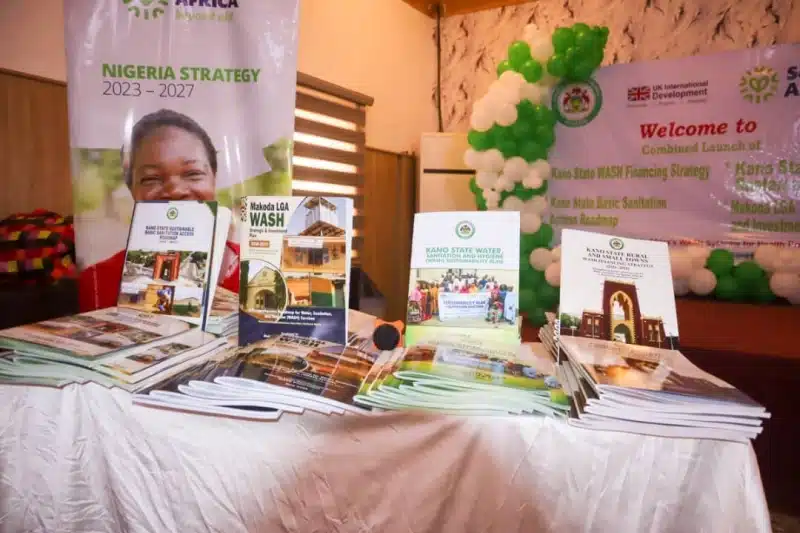
At the policy level, both Kano and Cross River States reviewed and adopted updated WASH policies during the programme period. Key planning documents, including WASH Finance Strategies, Basic Sanitation Access Roadmaps, and Local Government WASH Strategic Plans, were developed to guide sector investments going forward. Officials said stronger WASH systems governance and financing frameworks were critical to sustaining progress beyond donor-funded interventions.
Cross River State also passed the Open Defecation Prohibition Bill, a legislative step that strengthens the framework for sanitation delivery in the state.
Lessons from implementation are already informing expansion efforts. The WS4H approach piloted in Yala Local Government Area is now being adapted for rollout in Obubra Local Government Area in Cross River State.
Aderele acknowledged in her remarks that challenges remain, including institutional capacity gaps, resource constraints, climate-related pressures on water resources, and the risk that political transitions could slow reform momentum if systems are not sufficiently embedded.
She called on the federal and state governments, local government authorities, development partners, and civil society to sustain the momentum built under the programme.
“The policies, strategies, financing mechanisms, and institutional capacities established through WS4H must now be fully implemented, funded, and scaled,” Aderele said.
Habu echoed that call, urging participants to focus discussions on sustaining the gains made and identifying opportunities to replicate successful WASH systems approaches beyond the current programme lifecycle.
The WS4H programme, which commenced in 2024, was implemented in partnership with federal, state, and local government institutions across Kano and Cross River States to strengthen water, sanitation and hygiene systems and improve long-term service delivery. Participants also discussed ways to strengthen WASH systems through continued collaboration


