





The Atlas Mountains provide the backdrop as Africa’s footballing elite converge on Morocco for an unprecedented experiment. As the TotalEnergies Africa Cup of Nations pauses for breath before Thursday’s mouthwatering quarterfinals, the 35th edition of the tournament has delivered everything except predictability, and perhaps a few things the organisers did not bargain for.
From the mountain peaks to the Atlantic coast, 24 nations descended on six Moroccan cities with dreams of continental glory. Now, with 106 goals rattled in across 43 matches, only eight teams remain standing. The Round of 16 has sorted the wheat from the chaff, though not without controversy, drama, and the kind of off-pitch theatre that reminds us football tournaments are never just about what happens on the grass.
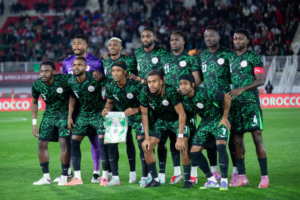
Nigeria have been the tournament’s clearest statement-makers. Their 4–0 demolition of Mozambique was a masterclass in clinical finishing, with Victor Osimhen bagging a brace and looking every inch a man possessed. The Super Eagles are one of only two teams to maintain a perfect record, sweeping through every opponent with authority that whispers “contenders” in capital letters.
Behind the swagger, however, familiar administrative questions have re-emerged. Delays and uncertainty around player bonuses have become a talking point within the Nigerian camp, creating an undercurrent of distraction ahead of a heavyweight quarterfinal against Algeria. It is a recurring theme in Nigerian football, where moments of brilliance on the pitch are too often accompanied by avoidable off-field complications.
Algeria, the only other unbeaten side, edged past DR Congo 1–0 with the kind of defensive discipline that wins tournaments. When these two perfect records collide in Marrakech on Friday, something has to give. It is the quarterfinal purists will savour, a tactical chess match between sides that know exactly who they are.
The hosts, Morocco, continue to navigate treacherous waters with a blend of quality and fortune. Their 1–0 win over Tanzania rested on Brahim Díaz’s fourth consecutive goal, a historic feat for the Atlas Lions, but the match will be remembered as much for what did not happen. A penalty appeal for Tanzania, judged obvious by many neutral observers, was waved away, triggering fury on the Tanzanian bench and a flurry of yellow cards.
The controversy adds edge to Morocco’s campaign, though sentiment alone will not suffice when they face Cameroon’s Indomitable Lions in Rabat. Five-time champions against hosts desperate for a defining triumph: it is the sort of tie that shapes reputations.
Egypt were pushed to their limits by Benin, scraping through 3–1 after extra time. Mohamed Salah’s late heroics once again carried the weight of a nation’s expectations, keeping the Pharaohs alive. Their reward is a quarterfinal against defending champions Ivory Coast in Agadir. The Elephants’ emphatic 3–0 win over Burkina Faso suggested a side peaking at precisely the right moment, championship muscle memory beginning to reassert itself.
Elsewhere, Mali edged Tunisia on penalties, while Cameroon required late drama to dispatch South Africa. Senegal, powered by goals from Seck, Diallo, and Ndiaye, dismantled Sudan 3–1 and now meet Mali in Tangier, guaranteeing a West African semifinalist. The final eight reads like a roll call of African football royalty, with none of the continent’s traditional heavyweights yet missing.
Beyond the football, this AFCON, the first ever staged across Christmas and New Year, has unfolded in unfamiliar rhythms. The December scheduling, forced by conflicts with FIFA’s expanded Club World Cup, has created a peculiar atmosphere. Morocco’s gleaming, newly renovated stadiums, built with an eye on co-hosting the 2030 World Cup, stand ready. Yet the tournament has not yet captured the wider Moroccan public’s imagination in the way organisers anticipated.
The reasons are layered: festive distractions, the weight of host-nation expectation, and the simple reality that AFCON has historically thrived in January and February, once the European club season pauses. This December edition exists slightly outside African football’s natural calendar.
Logistics have added their own subplot. In Marrakech, heavy rains turned a post-match departure into a survival exercise, with vehicles trapped in mud, sinkholes opening abruptly, and fans trekking kilometres through gridlocked streets. For a country preparing to welcome the world in 2030, it was an uncomfortable reminder that infrastructure ambition must be matched by operational readiness.
Still, Morocco’s security operation has impressed international observers. Reports of foreign agencies studying the tournament’s drone surveillance and coordination systems speak to a host nation learning, adapting, and testing itself under pressure.
The human stories remain the tournament’s emotional core. Tanzania’s first-ever knockout appearance, though ending controversially, marks a milestone for East African football. Sudan’s run, achieved while their country endures devastating conflict, has offered rare moments of collective joy. AFCON crowns champions, but it also reminds the continent, and the world, why football matters beyond silverware.
As the quarterfinals approach, the permutations are rich. Morocco and Nigeria could yet meet in the final from opposite sides of the draw. Senegal or Mali will guarantee West African presence in the semifinals. Egypt or Ivory Coast will ensure another heavyweight advances. Algeria, unbeaten and unglamorous, remain perfectly positioned to spoil every prediction.
An average of 2.47 goals per match suggests attacking football has flourished, and with each knockout round distilling quality further, the drama should only intensify. The semifinals on January 14 will be played under genuine continental pressure. The third-place playoff follows on the 17th, with the final on the 18th in Rabat or Tangier set to crown a champion as this unprecedented December experiment draws to a close.
Already, AFCON 2025 has delivered historic individual performances, collective excellence, administrative chaos, infrastructural lessons, and enough twists to fill a streaming series. The coming fortnight will decide whether this scheduling gamble becomes a triumph to remember or a cautionary tale about tampering with tradition.
One certainty remains. Between Nigeria’s bonus disputes, Morocco’s refereeing controversies, and Egypt’s recurring late drama, the Africa Cup of Nations is once again gloriously, maddeningly unpredictable, exactly as it has always been.


