Maputo’s official statement directly contradicts President Chapo’s assertion last month that no Mozambican nationals in South Africa had been harmed
The Mozambican government has officially confirmed that seven of its citizens have died following xenophobic attacks in the South African coastal city of Mossel Bay. Making them the first deaths to be formally linked to a widening wave of anti-immigrant violence that has convulsed South Africa in recent weeks. The confirmation of deaths among Mozambican nationals in South Africa marks a significant escalation
In a statement issued on Monday and received by journalists on Tuesday, Mozambique’s government press office confirmed that five of its nationals died as a direct consequence of the xenophobic attacks, while two others perished in a road accident as they were travelling in a private vehicle back to Mozambique.
About 800 Mozambican nationals in South Africa were caught up in violence that broke out in the southern coastal city of Mossel Bay on Friday. Mossel Bay sits roughly 380 kilometres east of Cape Town along the country’s southern coast.
The announcement is particularly striking given that President Daniel Chapo stated on 5 May, during a visit to Pretoria, that there had been no recorded cases of Mozambican citizens being killed or injured in xenophobia-related incidents in the neighbouring country — and on that occasion also criticised the circulation of false information on social media regarding the issue. His own government’s statement this week renders that position untenable.
Repatriation Under Way for Mozambican Nationals in South Africa
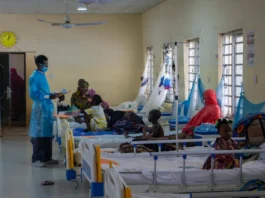
The violence prompted about 300 Mozambicans to return home by their own means over the weekend. The remaining just over 500 nationals had been sheltered in a safe location in the Western Cape Province, with their formal repatriation already under way as of 1 June.
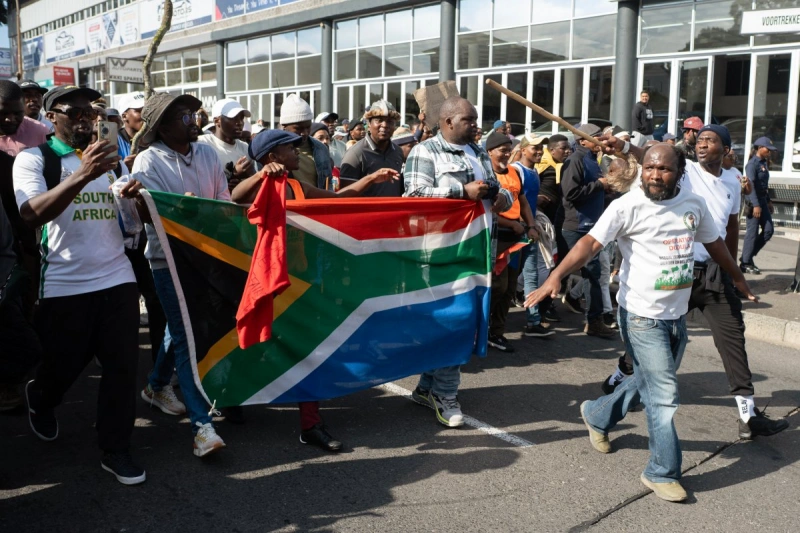
Maputo also warned that the situation was volatile and expected to worsen ahead of 30 June, and said it was working on measures to support remaing Mozambican nationals in South Africa. The 30 June date carries weight: a citizen-led organisation had demanded that undocumented foreign nationals exit the country by that deadline, a call analysts say has accelerated vigilante activity across the Western Cape and beyond.
A Discrepancy in the Death Toll
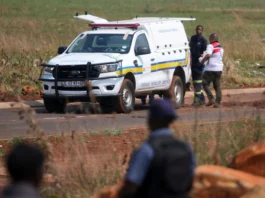
A notable gap exists between the figures provided by Maputo and those confirmed by South African authorities. South African police told AFP that only two Mozambique nationals, aged 27 and 43, were killed in an informal settlement attached to Mossel Bay, both from multiple injuries sustained in an assault. In the early hours of Sunday, police in the same area also found the body of an 18-year-old South African who had been stabbed to death in unclear circumstances.
The discrepancy has not been publicly resolved. Mossel Bay mayor Dirk Kotze did not dispute the broader picture, however, voicing deep concern over killings, torched homes and displaced families during the attacks.
Manuel Chicanhane, leader of the Mozambican community in the Western Cape, told Rádio Moçambique that the Mozambican nationals in South Africa who were killed were victims of extreme violence, attacked with instruments, machetes and stones.
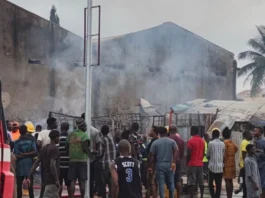
Survivors described scenes of terror. Mozambican national Dolinda Mabunda told the Mossel Bay Advertiser: “We were still inside when people started burning down our house.” Another migrant, Silvino Chauque, told the national broadcaster SABC he had lost all his possessions and intended to return home because “we are not safe.”
Diplomatic Fallout Widens
The confirmation adds to mounting diplomatic pressure on Pretoria from across the continent. Nigeria and Ghana had already raised the issue formally with the South African government, and Mozambique was widely expected to become the latest African country to lodge a complaint over the mistreatment of its citizens.
Foreign Minister Ronald Lamola said he had held talks with his counterparts in Nigeria and Ghana, while President Cyril Ramaphosa met President Chapo in early May specifically to discuss the safety of Mozambican nationals in South Africa. Following those talks, Ramaphosa’s spokesman said both presidents had agreed that “South Africa is not xenophobic,” describing the violence as “pockets of protest” and calling on law enforcement to prevent harm to any individual.
That framing has done little to stop the bloodshed. Human Rights Watch documented attacks in April and May 2026 carried out by a citizen-led movement called March and March, which organised demonstrations against undocumented migrants in Pretoria, Johannesburg and Durban, with violent and sometimes fatal results, and said police response had been insufficient.
Displaced migrants, mostly from Malawi and Mozambique, took refuge in community halls across the Western Cape, with some having hidden in mountains or on the beach overnight as protests gathered momentum. The treatment of Mozambican nationals in South Africa has now become a regional diplomatic issue.
South Africa has experienced recurring bouts of anti-immigrant violence for nearly two decades. In 2008, 62 people, including 21 South Africans, were killed in anti-immigrant riots and thousands were displaced, with further outbreaks following in 2015 and 2016.
Sources: AFP/France24, Al Jazeera, eNCA, Daily Maverick, Human Rights Watch, GroundUp, Club of Mozambique