



Southern Africa Floods 2026: Climate and Humanitarian Fallout
MAPUTO / ANTANANARIVO — The rain did not arrive all at once. It built slowly over weeks, soaking farmland, swelling rivers and cutting off roads long before the winds came.
By the time Tropical Cyclone Gezani made landfall in eastern Madagascar on 10 February, large parts of Southern Africa were already under water, deepening what officials now describe as one of the most severe flooding emergencies in years.
As of Thursday, more than 1.3 million people across the region have been affected by flooding linked to seasonal downpours intensified by La Niña conditions. Mozambique and Madagascar have suffered the heaviest impact, though the crisis now stretches far beyond their borders, reflecting the widening reach of the Southern Africa floods 2026.
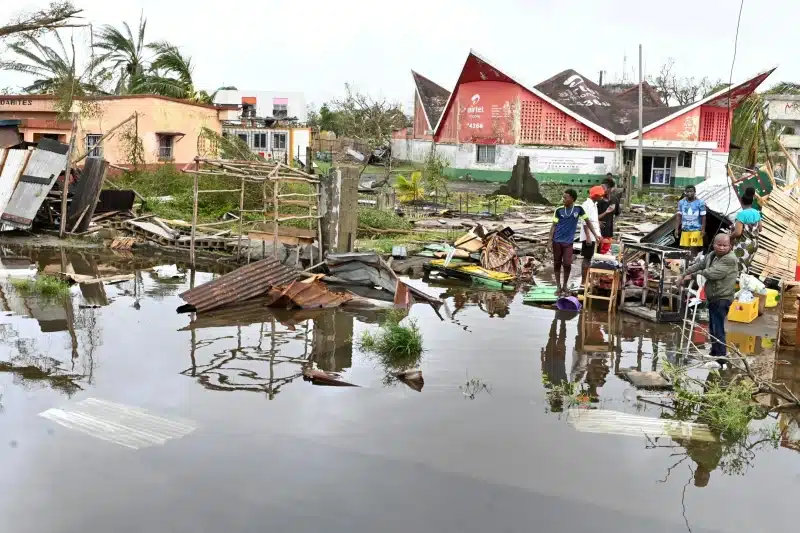
Gezani struck near the port city of Toamasina with winds exceeding 195 kilometres per hour, tearing off rooftops and knocking down electricity lines across entire districts. By the following morning, the death toll in Madagascar had risen to 36. Thirty-two of those fatalities were recorded in and around Toamasina, according to local authorities.
Entire neighbourhoods remain inaccessible. More than 18,000 homes have been destroyed or severely damaged according to reports, forcing families into temporary shelters that were set up in schools and government buildings. President Michael Randrianirina has declared a national state of disaster and appealed for international support, warning that the scale of destruction exceeds the country’s immediate response capacity.
Across the Mozambique Channel, the disaster has unfolded differently but no less severely. Heavy rainfall has battered Mozambique since mid-December, well before the cyclone formed offshore. Rivers burst their banks gradually, then violently, as catchment areas reached saturation point.
The National Institute for Disaster Management reports that more than 724,000 people have been affected nationwide. At least 146 deaths have been confirmed, many resulting from drowning and collapsed structures weakened by weeks of saturation. Lightning strikes have also claimed lives in rural districts.
In Gaza, Maputo and Sofala provinces, floodwaters have swallowed fields and cut transport corridors. Officials say more than 380 roads and bridges have been damaged or destroyed, isolating communities and slowing relief deliveries. In some districts, residents are relying on small boats to reach food distribution points.
The humanitarian concern is now shifting beyond immediate rescue operations.
Health officials are monitoring the risk of cholera outbreaks as sanitation systems remain submerged and displacement centres grow more crowded. Cases have already been reported in Malawi, Zimbabwe and Zambia following related storms.
Agriculture may prove the most lasting casualty. Authorities estimate that roughly 717,000 hectares of farmland in Mozambique have been affected. The floods arrived just weeks before the main harvest period, wiping out crops that many rural families depend on for both food and income. Aid agencies warn that food shortages could deepen into next year if replanting efforts fail.
The ripple effects are visible across the region. Zimbabwe has reported 118 deaths linked to prolonged storms that damaged public infrastructure, including schools and clinics. In South Africa, a national state of disaster remains in force in Limpopo and Mpumalanga provinces, where 39 people have died and thousands have been displaced.
The United Nations has launched a $187 million emergency appeal to support approximately 600,000 of the most vulnerable people across the region with food, shelter, clean water and medical supplies.
Seasonal flooding is not new to Southern Africa. What has unsettled officials this year is the intensity and duration of rainfall, which climate specialists attribute in part to elevated Indian Ocean temperatures and persistent La Niña-driven weather patterns.
For now, the forecast offers little comfort. Rivers remain swollen, the ground is saturated, and in many districts, recovery cannot begin until the water recedes.

