



ABUJA, May 12, 2025 – Nearly two years into President Bola Tinubu’s administration, Nigeria has made significant strides in its ambitious push toward solar energy adoption, positioning the West African nation as a potential renewable energy leader on the continent.
In a country where over 85 million citizens lack reliable electricity access, the government has prioritised solar power initiatives as a cornerstone of its energy policy since taking office in May 2023, with several key projects now underway.
The centrepiece of Nigeria’s solar strategy is a new solar PV modules assembly plant in Ihunekwagu, Akpugo, Nkanu-west in Enugu State. Launched by the Energy Commission of Nigeria last July, the facility aims to reduce the country’s dependence on imported solar panels, which currently costs Nigeria approximately ₦200 billion annually.
“This plant represents a critical step toward energy sovereignty,” said Dr. Abubakar Ibrahim, an energy policy analyst based in Abuja. “By manufacturing panels locally, Nigeria can create jobs while making solar technology more affordable for its citizens.”
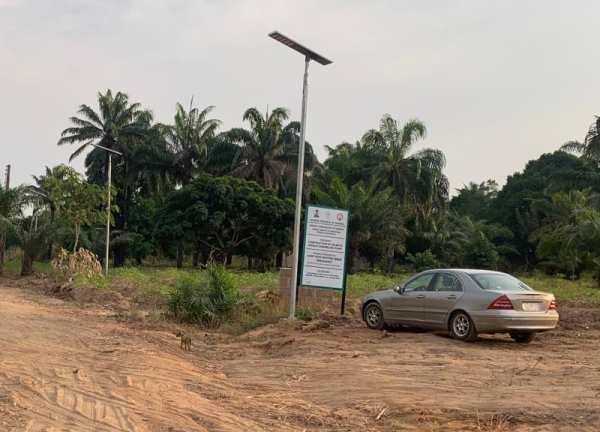
The Enugu facility, still under construction, aligns with Tinubu’s emphasis on local content development, formalised in Executive Order No. 5.
Complementing local manufacturing efforts, Nigeria secured a substantial $2.2 billion agreement with Sun Africa LLC in 2023 to develop 961 MWp of solar photovoltaic capacity and 455 MWh of battery storage, with financial backing from ING Bank, Citibank, and the US Export-Import Bank.
The deal represents one of Africa’s largest renewable energy investments in recent years, though specific completion timelines remain unclear as implementation continues.
In a move to create a complete solar ecosystem, Nigeria has also established two lithium processing plants in Nasarawa State. The Avatar New Energy Materials Company facility now produces 4,000 metric tonnes of lithium daily, while Canmax Technologies has invested $200 million in processing operations.
These developments position Nigeria to potentially enter battery manufacturing—a critical component for solar energy storage and a valuable export opportunity in the global transition to renewable energy.
The World Bank has thrown its weight behind Nigeria’s solar ambitions through the $750 million Distributed Access through Renewable Energy Scale-up (DARES) project launched in 2023. Building on earlier successes, DARES aims to electrify 17.5 million Nigerians through distributed solar solutions.
“The project demonstrates growing international confidence in Africa’s renewable energy potential,” noted Oluwaseun Adeyemi of the Renewable Energy Association of Nigeria. “It’s particularly significant that the initiative expects to mobilise over $1 billion in private capital.”
Despite these advances, Nigeria’s solar revolution faces significant hurdles. The country’s national grid, operating at just 4,500 MW, cannot yet support large-scale solar integration, forcing a reliance on off-grid solutions.
Policy inconsistencies also threaten progress. While the government has proposed a 2025 ban on solar panel imports to boost local manufacturing, industry experts warn that domestic production capacity remains insufficient to meet demand.
“The planned import ban, though well-intentioned, could backfire if implemented before local manufacturing catches up,” warned energy consultant Amina Yusuf. “We need a phased approach that balances protecting infant industries with ensuring affordable access to solar technology.”
Financial barriers persist as well. Despite the removal of fossil fuel subsidies—a move that should theoretically make renewable alternatives more competitive—high interest rates and currency volatility have kept solar systems unaffordable for many Nigerians.
Nigeria’s push for solar energy independence reflects a broader trend across Africa, where countries are increasingly turning to renewable resources to address chronic power shortages.
According to the International Renewable Energy Agency, Africa could meet nearly a quarter of its energy needs from indigenous and clean renewable energy sources by 2030, with solar leading the way in many regions.
“What’s happening in Nigeria is particularly significant given the country’s size and influence,” said Dr. Kofi Mensah, an energy researcher at the University of Ghana. “Success here could create a blueprint for other African nations facing similar energy challenges.”
As Nigeria continues its solar journey, experts recommend a multi-faceted approach: accelerating local manufacturing while delaying import restrictions, expanding financing options for consumers, building technical capacity through training programs, and ensuring policy coherence across government agencies.
The stakes are high in a country where energy poverty has long constrained economic development. If successful, Nigeria’s solar initiatives could transform not just its own energy landscape but potentially serve as a catalyst for renewable energy adoption across the continent.
“We’re witnessing the early stages of what could be Africa’s renewable energy century,” said Adeyemi. “The question isn’t whether solar will play a major role in Nigeria’s future, but how quickly and equitably we can make that transition.”
