




Generators have always marked the rhythm of Lagos. But in 2025, a different pulse ran through the streets. It came from bustling co-working spaces, crowded conference halls, and the flurry of startups, investors, and officials all moving toward the same goal. The city had caught a new kind of energy.
Thousands filled conference halls. Millions of pounds in pledges circulated. Artificial intelligence became more than a buzzword. Nigeria’s tech ecosystem had officially entered a new era.
Lagos remained the centre of attention, but other cities were stepping up. Enugu, Abuja, and Port Harcourt began showing their own momentum. Enugu’s first Tech Festival, called “Coal to Code,” captured this change. Could a city long known for coal mining truly transform itself into a digital hub?
Attendees seemed to think so. Over three days in May, the International Conference Centre thrummed with activity. More than 28,000 participants attended in person, while 15,000 more joined virtually. The excitement was palpable. You could almost feel it in the air.
Developers showed off AI tools for agriculture. Fintech founders debated new regulations. Officials talked about digitising land systems that had been analogue for decades. And yet, for all the numbers and presentations, it was the small moments that mattered most. A student laughing nervously while demoing her first prototype. An investor scribbling notes furiously, clearly impressed. The festival’s $1.7 million investment pledge was important, yes, but the energy in the room hinted at something bigger: belief.
Federal ministers rubbed shoulders with state officials. Hackathons produced apps for waste management, healthcare appointments, and more. This wasn’t Silicon Valley copy-paste. This was Nigeria solving Nigeria’s problems, and it felt raw and exciting.
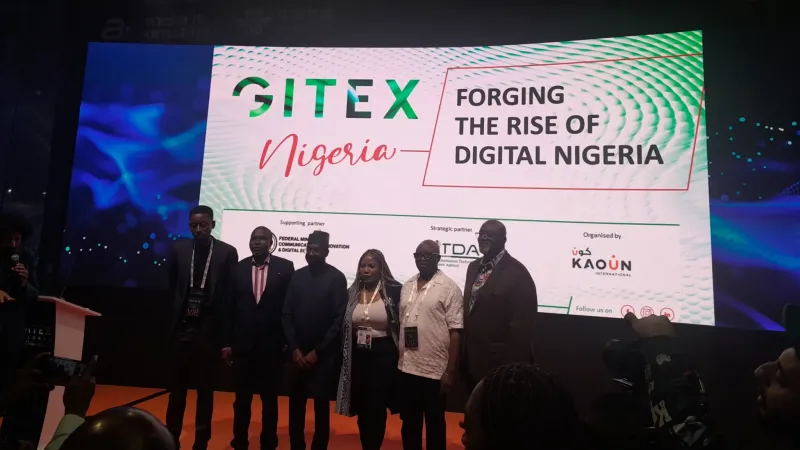
By September, GITEX Nigeria brought a new rhythm to the scene. Abuja hosted policy sessions; Lagos held the main expo. Over 3,000 professionals attended. More than 1,000 startups pitched their ideas. Investors weren’t just listening; they were writing cheques. Founders came prepared. Traction data, metrics, and clear expansion plans replaced vague promises. The tone had shifted: Nigerian innovators were no longer supplicants. They were equals.
October brought Moonshot by TechCabal. This wasn’t for beginners. It was for people who had seen the startup rollercoaster and wanted to scale. Panels on AI, climate tech, and fintech ran simultaneously. Deal rooms matched investors with founders using AI-powered algorithms. Meanwhile, music and art installations kept the space alive and human. Innovation, after all, is messy. It’s social. It’s loud. It’s fun.
Climate tech stole some attention. Solar-powered cold storage for farmers. Flood prediction tools for Lagos neighbourhoods. Startups were solving problems, and investors were noticing. Impact and profit, side by side.
Just two days later, DataFest Africa transformed Lagos into an AI hub. Over 4,000 attendees, 50 speakers, and countless coffee-fuelled conversations. “AI in Africa: Solving Today’s Problems, Building Tomorrow’s Systems” was the theme, and it wasn’t just a slogan. Hackathons ran alongside keynote sessions.
Teams prototyped solutions for diagnostics, credit scoring, and public services. Startups demonstrated natural language processing for local languages, computer vision for pest detection, and recommendation engines for informal retail. It was practical. It was messy. It was human.
Ethical AI dominated discussions. Privacy. Surveillance. Inequalities. Could technology reinforce problems instead of solving them? Civil society representatives didn’t hold back. Founders listened. They nodded. They argued. They learned. Progress isn’t clean. It isn’t linear.
November brought DevFest Lagos. Community-driven. Developer-focused. Inclusive. Over 100 speakers. Students learned hands-on. Experienced developers shared war stories. Collaboration and mentorship emerged naturally. People exchanged ideas, made friends, and sometimes just stared at a screen, wondering how a small team could solve a problem affecting millions.
Meanwhile, Lagos Tech Fest focused on fintech, payments, cryptocurrency, and e-commerce. Mastercard sponsored 2,000 attendees. Executives, mobile operators, and blockchain startups discussed regulation, compliance, and innovation. These weren’t speeches; they were conversations. Heated ones at times. Real ones.
Small events dotted the calendar. Web3 conferences explored DAOs and tokenomics. Meetups in Ibadan, Kaduna, and beyond spread coding culture. Corporate innovation summits connected large firms with startups. The ecosystem was no longer fragmented; it was becoming coherent.
The result? Nigerian startups now command global attention. Investors keep offices locally. Universities update curricula in data science and AI. Government officials speak fluently about cloud infrastructure, APIs, and digital strategy. Things that once seemed abstract or foreign are now part of daily conversation.
Yes, challenges remain. Power is unreliable. Bandwidth is limited. Regulation lags innovation. Capital is concentrated in Lagos. But workshops, mentorships, and government engagement are addressing these hurdles. Step by step, city by city.
Looking toward 2026, plans are ambitious. GITEX Nigeria aims to double its exhibition space. Moonshot booked a waterfront venue. DataFest Africa may expand to multiple cities. DevFest will grow its student programming. Vertical-specific events in health tech, edtech, and agritech promise deeper expertise.
The ecosystem’s maturity is visible. Panels tackle concrete go-to-market strategies. Pitch competitions weigh unit economics and retention metrics. Networking is efficient. Participants recognise each other. Shared language, values, and aspirations are taking shape.
International observers are watching. Correspondents are on the ground. Global VCs send senior principals. Neighbouring governments attend. Nigeria is not just talking about tech; it’s showing the way.
2025 was more than a series of events. It captured decades of hustle, diaspora engagement, educational reform, and a cultural shift. The coal-to-code narrative from Enugu now inspires the whole nation: ingenuity and knowledge are powering growth.
The path ahead still has challenges. Global economic pressures, competition, and brain drain remain concerns. Yet the energy witnessed at 2025 tech events shows that a turning point has been reached. Talent, capital, and institutional support are coming together. Nigerian innovators are shaping a future that is tangible, dynamic, human, and global.


