



As darkness fell across Uganda’s capital Kampala on Thursday evening, vote counting in the Uganda 2026 presidential election began in polling stations shrouded not just by night, but by a government-imposed internet blackout that plunged the East African nation into an information vacuum.
The election, which pits 81-year-old President Yoweri Museveni against 43-year-old opposition challenger Robert Kyagulanyi, known globally as Bobi Wine, has unfolded amid accusations of systematic repression, technical failures, and the deliberate silencing of digital communication channels.
By Friday morning, as ballot counting continued across the country’s more than 50,000 polling stations, preliminary results from just 133 stations showed a familiar pattern. Museveni led with 14,232 votes representing 61.7 per cent of the tally, whilst Bobi Wine trailed with 7,753 votes or 33.64 per cent. The early numbers, representing a mere 0.26 per cent of total stations, were far too limited to be predictive, yet they reinforced entrenched expectations about the likely direction of the final outcome and fed competing narratives that have defined Uganda’s electoral landscape for decades.
The Uganda Electoral Commission, led by chairperson Justice Simon Byabakama, acknowledged that counting had concluded in most polling centres by late Thursday. Final results are constitutionally mandated within 48 hours of polls closing at 5pm local time, meaning an official declaration should arrive by Saturday at 5pm. Yet the path to that announcement has been marked by obstacles that opposition figures say may have suppressed voter turnout and created conditions vulnerable to electoral manipulation.
One of the issues raised during the voting process concerned reports from election observers and voters about difficulties encountered with biometric voter verification equipment at some polling stations. In parts of Kampala and in sections of western Uganda, devices used for fingerprint and facial recognition were reported to have experienced technical challenges, after which officials in those locations relied on manual verification using voter registers.
Even Museveni himself experienced the failures at his polling station in Rwakitura, western Uganda, where devices failed to recognise his fingerprints. He suggested the problems stemmed from incomplete uploading of staff biodata, though he hinted darkly at possible deliberate manipulation by some Electoral Commission officials.
Bobi Wine, voting in Magere, Wakiso district with his wife beside him, offered a starkly different interpretation. The technical glitches, he insisted, were being weaponised to disenfranchise voters and manipulate outcomes. His accusations gained traction from the apparent concentration of failures in opposition-leaning areas across central Uganda. The Electoral Commission’s solution, reverting to manual voting by checking names in paper registers, extended queues and delayed the start of voting at numerous stations. In Makindye Ssabagabo, presidential candidate Joseph Mabirizi left his polling station without voting after officials failed to begin the exercise by 10am.
The biometric failures occurred against the backdrop of a comprehensive internet shutdown that began two days before the election. On 13 January, the Uganda Communications Commission ordered mobile operators and internet service providers to suspend public internet access, citing recommendations from security agencies. The official justification spoke of preventing misinformation, electoral fraud and incitement to violence. Opposition figures argued the true effect was to blind citizens and observers to irregularities unfolding in real time.
Bobi Wine captured the mood with characteristic directness. “We are holding elections in the dark,” he said after casting his vote. “This is done in order to facilitate the intended rigging of the regime.” His campaign documented what it described as massive ballot stuffing, the abduction of polling agents, and the arrest of key party leaders. Among those detained was Jacklyn Jolly Tukamushaba, the National Unity Platform’s deputy president for the western region, reportedly driven to army barracks along with other agents and electoral materials.
The internet blackout, whilst devastating for transparency, proved only partially effective in suppressing information flows. Many Ugandans turned to virtual private networks and offline messaging applications, including one launched by Twitter co-founder Jack Dorsey, to communicate. International media continued to report from the ground, and the diaspora maintained a steady stream of commentary on social media platforms accessible outside Uganda’s borders. Yet the shutdown succeeded in making it nearly impossible for opposition parties to coordinate responses to irregularities or for citizens to share evidence of electoral fraud in real time.
The repression extended well beyond digital censorship. The United Nations Human Rights Office released a report days before the election documenting what it described as widespread repression and intimidation against opposition figures, journalists, human rights defenders and dissenting voices. The report detailed how security forces, including police and military units, had in several instances reportedly used live ammunition to disperse peaceful assemblies. Unmarked vans, colloquially known as drones, were deployed to abduct opposition party members, holding them incommunicado in unauthorised detention sites euphemistically referred to as safe houses.
The campaign period itself had been marked by relentless state violence. In December 2025, Bobi Wine and several supporters were attacked and beaten by security forces whilst campaigning in Gulu. Amnesty International characterised the election campaign as marked by a brutal pattern of repression, citing tear gas, pepper spray, beatings and arbitrary arrests. President Museveni, in a New Year’s Eve address, defended the dispersal of opposition rallies with tear gas, stating that it does not kill and is preferable to the use of live bullets.
Perhaps no figure has come to symbolise the personal cost of opposing President Museveni more than Kizza Besigye, a four-time presidential candidate who has spent much of the past year in custody. According to his lawyers and party officials, Besigye was detained in Nairobi in November 2024 while attending a book launch and subsequently returned to Uganda.
Authorities subsequently initiated proceedings against him before a military court. After a Supreme Court decision addressing the jurisdiction of military tribunals over civilians, the case was later moved to civilian courts. In February 2025, state prosecutors formally filed treason charges against him under Uganda’s criminal law framework. He has since remained at Luzira Prison, with supporters citing concerns about his health and the repeated denial of bail.
Besigye’s detention removed from contention a figure who had secured over 337,000 votes in the 2021 election. His lawyer and acting leader of the Forum for Democratic Change Katonga faction, Erias Lukwago, described the incarceration as a calculated strategy to fragment opposition unity during a critical election cycle.
Beyond the repression of individuals, the election highlighted the structural advantages that have sustained Museveni’s rule since 1986. Constitutional amendments eliminated presidential term limits in 2005 and age limits in 2017, clearing the path for an octogenarian incumbent to seek a seventh term. His campaign slogan, “protecting the gains,” appealed to voters who credit him with restoring stability after years of post-independence turmoil.
Supporters cite Uganda’s role in regional security operations, its hosting of a large refugee population and expectations of economic change linked to planned oil production from mid-2026. Energy projects involving France’s TotalEnergies and China’s CNOOC are expected to attract significant investment, factors that analysts say contribute to Uganda’s strategic importance.
Critics insist that these developments have been tainted with persistent corruption concerns, widening inequality and an increasing concentration of political and economic power among a small governing elite. Museveni’s son, Muhoozi Kainerugaba, now the country’s top military commander, is widely viewed as a potential successor despite official denials of dynastic ambitions.
Bobi Wine’s campaign offered a sharply contrasting vision under the banner “A New Uganda,” promising political freedoms, anti-corruption reforms and jobs for a population in which more than 70 per cent are under the age of 35. His rise from Kampala’s informal settlements to national prominence resonated deeply with young voters who have known no other president.
Yet his popularity also attracted intense repression. Wine campaigned wearing protective gear following repeated assaults and a previous shooting. In the aftermath of the 2021 election, at least 54 people were killed in election-related violence, many of them opposition supporters. As votes were counted this week, reports again emerged of security forces surrounding his home, a move authorities denied constituted house arrest.
Six other candidates contested the election but commanded minimal support. Former army commander Mugisha Muntu, economist Nathan Nandala Mafabi and four others collectively accounted for a small fraction of early tallies, underscoring the binary nature of Uganda’s political contest.
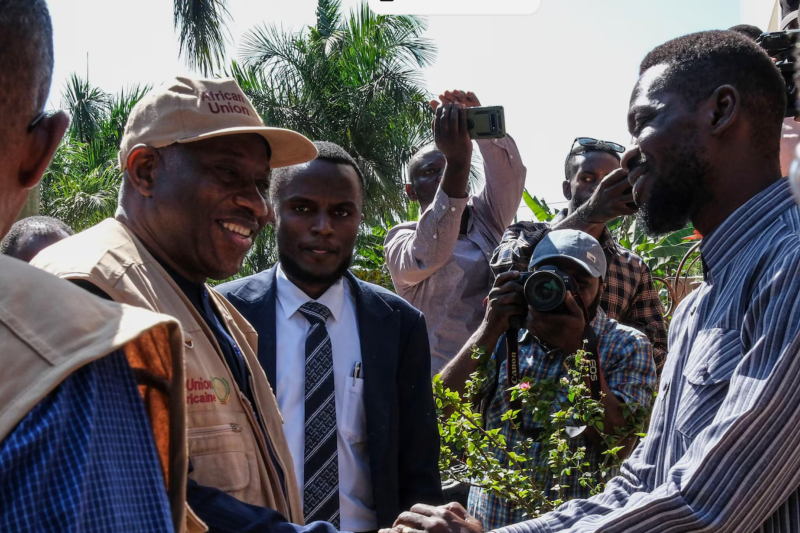
International reaction has been restrained. The United Nations condemned repression and urged respect for political rights, while observer missions from the European Union, African Union and East African Community faced operational constraints due to the internet shutdown. The United States, which strongly criticised the 2021 election, appeared unlikely to issue similar statements this time, reflecting Uganda’s geopolitical value as a security partner and refugee host.
As counting continued into Friday, the outcome appeared largely predetermined. Analysts overwhelmingly expect Museveni to secure victory with a margin approaching 70 to 80 per cent, extending his rule toward four decades. The central question is not whether he will win, but what the manner of that victory will mean for Uganda’s democratic legitimacy.
For millions of young Ugandans who see in Bobi Wine the possibility of political renewal, the election has reinforced a sense of exclusion from formal power. A victory declared under blackout conditions, alongside reports of arrests, intimidation and technical challenges during the process, risks deepening generational divides and reinforcing public scepticism toward democratic institutions.
The days ahead will shape whether Uganda once again moves toward uneasy acceptance of the outcome or whether accumulated grievances evolve into sustained pressure for political reform. Once internet access is restored, further documentation and testimony are likely to emerge. It remains unclear whether such material will lead to accountability or simply add to the growing record of disputed elections across the continent.
What is clear is that Uganda’s 2026 presidential election unfolded under severely constrained conditions for transparency. The questions raised by those circumstances are likely to persist beyond the formal declaration of results, ensuring that the country’s political debate continues well after the final ballots are tallied.

