



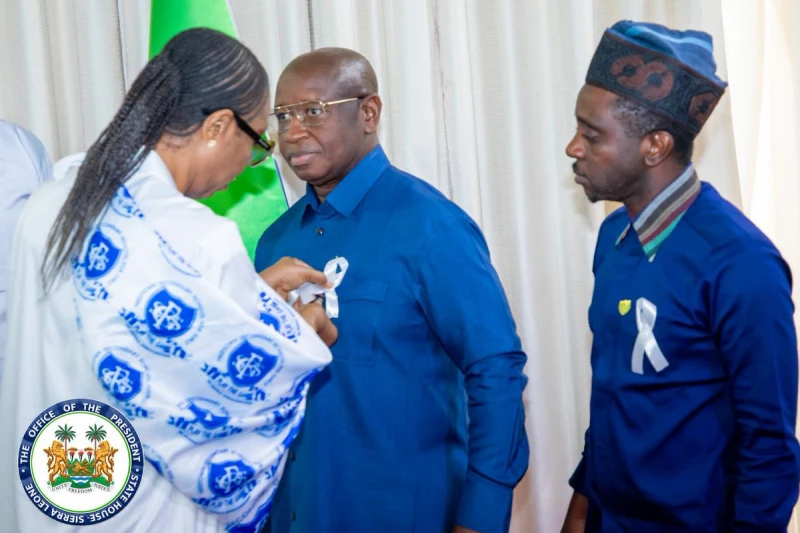
The Sierra Leone National Day of Remembrance was observed for the first time on January 18, 2026, as the country fell silent at noon to honour those who died during its civil war.
The clocks struck noon across Sierra Leone on January 18, 2026, and the country fell silent. Market vendors in Freetown stopped mid-sale, schoolchildren stood still at their desks, and farmers paused in their fields. For two minutes, the entire nation held its breath.
This was not mourning for a single leader or celebrating independence. This was something deeper, rawer, and long overdue. Sierra Leone was remembering its dead.
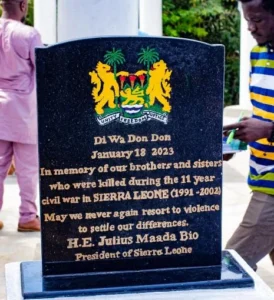
Twenty-four years after former President Ahmad Tejan Kabbah declared the end of a civil war that had torn the country apart for 11 brutal years, Sierra Leone observed its first National Day of Remembrance. The date was no accident. January 18, 2002, marked the day the guns finally fell silent after a conflict that claimed tens of thousands of lives, with estimates often exceeding 100,000, and left countless others scarred, both physically and mentally.
Between 1991 and 2002, Sierra Leone became synonymous with atrocity. Rebel forces mutilated civilians, abducted children to serve as soldiers, and destroyed entire villages. Families were torn apart. Trust collapsed. The wounds cut so deep that even two decades of peace could not fully heal them.
Yet on this January morning, the nation was trying. Not with celebration or spectacle but with reflection and truth.
President Julius Maada Bio spoke to the nation, recognising the immense human cost of the conflict and the lasting pain carried by survivors. He encouraged Sierra Leoneans to confront difficult truths about the war years and to pursue dialogue as a pathway toward healing and reconciliation. His address was broadcast nationwide and shared widely online under hashtags such as #SaloneDaeMemba and #SaloneRemembers, reaching Sierra Leoneans at home and across the diaspora.
It was not a public holiday. Markets remained open, offices functioned, and buses followed their usual routes. The government deliberately avoided shutting down daily life, instead asking citizens to pause, reflect, and participate. The two-minute silence at noon became the symbolic centre of the day, a shared moment of grief, dignity, and resilience.
Across towns and villages, survivors gathered to tell their stories. Survivors spoke quietly about lives upended by the war — of families broken, livelihoods lost, and the lasting physical and emotional consequences that continue to shape daily life decades later. These testimonies were painful, but necessary. They transformed statistics into human lives, turning abstract numbers into neighbours, relatives, and friends.
Churches and mosques opened their doors for interfaith services. Faith communities gathered in churches and mosques across the country, where religious leaders emphasised peace, national unity, and the importance of preventing a return to conflict. The services reflected Sierra Leone’s plural spiritual identity and a shared determination that the past must never be repeated.
In the weeks leading up to the observance, the Ministry of Information and Civic Education ran nationwide campaigns using radio programmes, posters, videos, and community outreach to explain the day’s significance. Particular emphasis was placed on younger Sierra Leoneans, many of whom were born after the war ended and had only heard fragments of its history. Officials warned that without collective memory, the lessons of the past risked being lost.

The establishment of the National Day of Remembrance was itself a political act. Sierra Leone remains fragile. Regional instability persists, and internal divisions occasionally surface. The observance establishes remembrance as a national practice, encouraging reflection that cuts across ethnic, regional, and political differences without prescribing a single interpretation of the past.
The observance draws inspiration from the work of the Truth and Reconciliation Commission, which operated from 2002 to 2004, and the Special Court for Sierra Leone, saddled with prosecution of those most responsible for wartime atrocities. Both institutions addressed wartime abuses through documentation and prosecution. The National Day of Remembrance introduces a recurring civic observance linked to that period.
For survivors, the day represented long-overdue recognition. Many had felt that nobody noticed them in a society eager to move on. Now, the state was acknowledging their suffering and affirming that their pain mattered.
For those who had committed crimes and later reintegrated into society through reconciliation programmes, the day raised difficult questions. Could a nation forgive acts of extreme violence? Could former child soldiers, now adults striving for ordinary lives, find redemption within a society that remembers?
These questions remain unresolved. But the willingness to ask them publicly signals progress. Sierra Leone is choosing to confront its past rather than bury it beneath development plans and political rhetoric.
International observers watched closely. Countries emerging from conflict adopt different approaches to public remembrance, ranging from permanent memorials to limited official observances. In Sierra Leone, January 18 has been set aside as the National Day of Remembrance without a public holiday.
By evening, normal activities had resumed. Streets grew lively again, markets wound down, and households settled into their nightly routines. Yet social and economic pressures remain, and assistance for many war-affected individuals is still limited.
However, something had shifted.
By pausing together, by speaking truths together, by remembering together, Sierra Leone had taken a step towards the reconciliation it so desperately needs. The day acknowledges that healing is not linear, rather, that wounds this deep cannot be rushed, but that facing them collectively remains essential.
January 18 will now stand permanently on the national calendar, a reminder that peace is both fragile and precious. Year by year, new generations will be drawn into the circle of remembrance, ensuring that those who died are not forgotten and those who survived are honoured.
In a region repeatedly scarred by civil conflict, Sierra Leone is attempting something ambitious. Whether the National Day of Remembrance will fully achieve its goals remains to be seen. But in choosing remembrance over silence, the nation has taken a step that honours both its dead and its living.
The silence at noon lasted only two minutes. Its echoes will endure far longer.

