



Story by: Oruruo Samuel Okechukwu and Yusuff Moseray Suma (Sierra Leone)
In the diamond-rich hills of Sierra Leone’s Kono District, a crisis is unfolding that reveals the dark underbelly of resource extraction in West Africa. Over 900 workers at Koidu Holdings, one of Sierra Leone’s largest diamond mines, were dismissed in a single day, leaving thousands of families facing destitution and highlighting a troubling pattern of exploitation that has persisted for nearly a century.
What makes this crisis particularly alarming is not just the mass dismissals, but the secretive manner in which Koidu Limited has been dismantling its operations. According to Suleiman Mansaray, Secretary General of the Koidu Limited Workers Union, the company has been moving equipment under cover of darkness in what appears to be a calculated effort to avoid paying worker benefits.
“Koidu Limited has started moving its equipment… they actually move them at night,” said Mansaray. “When Koidu Limited came to Sierra Leone, they came with all their equipment in broad daylight, but now they are moving their equipment as if they are nocturnal animals.”
Most valuable equipment had already been removed before authorities could intervene. “We just fortunately found some at midnight while they are moving them,” Mansaray explained. “We brought this particular movement of this equipment to the government. And as we speak, they have stopped those movements, but the valuable ones have already left.”
Voices from the mines
The current crisis at Koidu Holdings is the latest chapter in a long history of labor disputes that have repeatedly turned deadly. The workers’ grievances paint a disturbing picture of systematic exploitation that goes far beyond the recent mass dismissals.
Severe wage underpayment and systemic discrimination
Documentation reveals workers received only about 29% of their contractually entitled wages. While contracts stipulated monthly salaries of $1,350 (approximately 30,240 Leone at market exchange rates), workers received just 8,775 Leone due to manipulated currency conversion rates.
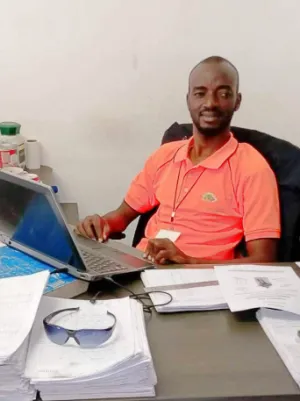
Secretary General Koidu Limited Workers Union.
“If you are giving me $789, we want the equivalent of $789 to be given to me as my salary. But you cannot give me $789 at the end of the month, you give me $130,” said Mansaray, detailing the wage manipulation.
The discrimination extends beyond wages to basic workplace amenities. The company provides bottled water for expatriates but not for Sierra Leonean employees, while underground workers lack mobile toilet facilities despite working eight-hour shifts. “These are just basic things we asked for,” Mansaray emphasized. “We did not ask them to give us an increment of salary.”
Dangerous working conditions and history of violence
Koidu Holdings’ reaction reflects a longstanding strategy of suppression. In 2007 and again in 2012, worker protests ended in deadly violence — with four killed and military intervention required. The 2025 mass dismissals follow this disturbing pattern, reinforcing a corporate culture that favours force over dialogue.
Community devastation
Madam Kumba King, Tankoro Queen Mother and representative of the Marginalised Affected Property Owners Association, stated in 2019: “Koidu Limited has destroyed our lives. We used to farm and live in peace, but now our lands and water sources are poisoned and covered in rubble. Our homes are shaken by explosives every day.” Her testimony reveals how the mining operation has fundamentally undermined the entire community’s ability to sustain itself.
The strike that led to these mass dismissals was a desperate last resort for workers who had repeatedly attempted to negotiate through formal channels, only to be rebuffed or ignored.
Profits over people: A pattern of exploitation
Koidu Holdings’ response to the worker strike epitomises what critics describe as a neo-colonial approach to resource extraction. The company exports approximately $350 million in diamonds annually – equivalent to nearly 60% of Sierra Leone’s entire education budget – while the communities where these gems are mined remain among the poorest in West Africa.
Mansaray’s account reveals how the company’s approach demonstrates complete disregard for local workers: “Looking at what the company is doing, it’s like they just want Sierra Leonean employees to work without getting any benefit out of what they are working for. And this has been our problem.”
When workers organised to demand better conditions, the company’s reaction was swift and severe:
Mass terminations and corporate flight
Over 900 employees were dismissed on March 3, 2025, with the company citing “gross misconduct” and participation in an “illegal strike action.” However, the union leader’s testimony suggests this was part of a premeditated plan to abandon operations while avoiding financial obligations.
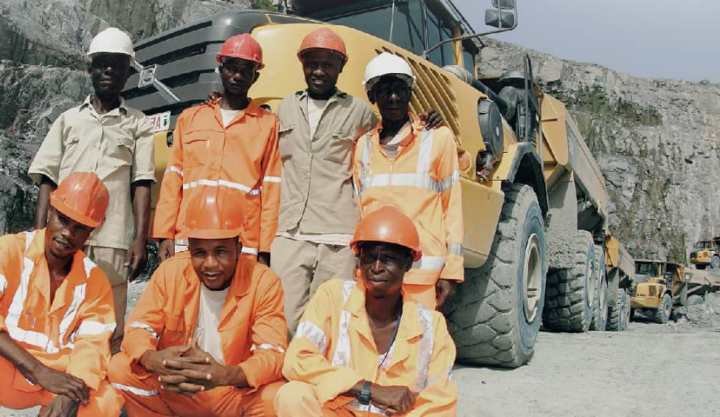
“They have dismissed all their expatriate staff, and we don’t have any expatriates, as we speak, in the concession,” said Mansaray. “Most of their equipment, valuable ones, are gone. We don’t know the whereabouts of those equipment.”
The abandonment particularly affects long-term employees: “We have employees who have worked for them for over 20 years, over 25 years, and now the companies have just released a statement that they have terminated, they have dismissed every employee without benefit.”
Legal technicalities as weapons
Koidu Holdings justified the dismissals by claiming the strike violated Sierra Leone’s labor regulations, specifically the requirement for a 21-day written notice through a registered trade union with a valid “bargaining certificate.” A bargaining certificate is a formal government-issued document that allows a union to officially represent workers during negotiations. Without it, even organized labor actions can be dismissed as unofficial.
However, Mansaray said the company showed no willingness to engage in genuine negotiations: “They are the ones proven tough because they own the company. According to them, they have their money. They are doing things on their own. They don’t want to follow. They don’t want to listen to what the government is saying.”
Problem of State capture
Perhaps most troubling is Mansaray’s allegation that the company has effectively captured state institutions, making it difficult for workers to receive fair treatment from government officials.
“The annoying part of this whole story, it is like our state was captured by this mining company,” said Mansaray. “Even when we were expressing some of the grievances we have against the mining company, some of our state officers were looking at us as if we are the bad people.”
This alleged state capture extends to local authorities: “Most of our district authorities were not even listening to what we are saying… They were not seeing it as bad things. In fact, they were seeing us as the bad people.”
Mansaray places this in a broader African context: “This is the problem we have in Africa. When we allow corporate entities to come in and capture our state, most of the wealth of our nation will go out to those entities. They will be benefiting while the nation will be crumbling in poverty.”
Exhausted negotiation efforts
The union made extensive efforts to resolve the dispute through official channels before the situation escalated. “We have engaged with them in several meetings with the Ministry of Employment, Labour and Social Security. We move on to the Vice President. We went to the First Lady of the Republic of this country,” said Mansaray, detailing the range of negotiations attempted.
Despite these efforts, the company remained intransigent: “But they are the ones proven tough because they own the company… They don’t want to follow. They don’t want to listen to what the government is saying.”
First Lady’s intervention
What might have remained a localised labour dispute gained national prominence when Dr. Fatima Maada Bio, Sierra Leone’s First Lady and a native of Kono District, became involved in the conflict.
Dr. Bio participated in protests against Koidu Holdings, publicly highlighting the company’s alleged exploitation of workers. In a dramatic escalation, she shared audio recordings allegedly capturing Koidu’s ownership demanding the dismissal of the Minister of Mines and Mineral Resources, Julius Daniel Mattai, referring to him as “useless.”
“The First Lady spoke for us when nobody else would listen,” says community elder Mariama Bangura. “Now they want to silence her too, just as they silenced us.”
Legal escalation and corporate retaliation
The company responded by issuing a notice of intended legal action against Dr. Bio on May 10, 2025, claiming her interventions caused financial losses of $6-8 million. This defamation lawsuit – a legal claim seeking compensation for damage to reputation through false statements – alleged that the First Lady had made untrue and harmful statements about the company.
Dr. Bio countered with her own defamation lawsuit demanding $50 million to be deposited into the National Revenue Authority’s account. Her legal team, comprising 13 lawyers, maintains that her intervention was actually requested by Koidu’s management before they turned against her for supporting the workers.
Caught between capital and citizens
The Sierra Leonean government’s response to the crisis has been criticised as inadequate and contradictory. While the Ministry of Mines and Mineral Resources acknowledged the strike’s impact on national exports, concrete action to protect workers’ rights has been limited.
“Our government fears challenging these companies because they need the foreign investment,” explains Dr. Ibrahim Sesay, an economist at Fourah Bay College. “But this creates a dangerous imbalance where corporations feel they can operate above the law.”
This tenuous position is illustrated by allegations that Koidu Holdings is under investigation by Sierra Leone’s Anti-Corruption Commission for tax evasion while simultaneously holding enough influence to allegedly demand a cabinet minister’s dismissal.
The Ministry of Labour and Social Security issued joint statements with Koidu Holdings on March 12 and 20, 2025, urging workers to return, but failed to address the underlying grievances that sparked the strike. This approach has fuelled perceptions that government institutions prioritise corporate interests over citizens’ welfare.
A fight for justice, not revenge
Despite the company’s actions, the union maintains they are not seeking to force Koidu Holdings to continue operations against their will. “We are not pushing the company to close,” said Mansaray. “We cannot force them to mine. We cannot force them to work whilst they are not ready to work. But what they owe us, let them give it back to us. That’s our terminal benefit.”
The union leader emphasises that this is fundamentally about corporate responsibility: “If they are tired, they can go… But what they owe us, let them give it back to us.”
His broader reflection on the African context provides a sobering assessment: “This is exactly what we’ve seen happening now in Koidu because whilst we are expressing the odd things that were happening at Koidu Limited, state officers and local authorities were seeing us as the bad people and now the company is gone. They leave us with nothing — just a pittance after decades of labor.”
Century of extraction without development
The current crisis at Koidu Holdings cannot be understood without acknowledging the painful historical context in which it unfolds. Diamonds were first discovered in Kono District in 1930, yet nearly a century later, the region remains one of Sierra Leone’s poorest.
The company’s response to labor disputes has been consistently harsh, with protest-related deaths in 2007 and 2012 showing a troubling pattern. Each time workers stand up for their rights, the response seems calculated to instill fear rather than address legitimate grievances.
As Madam Kumba King has long argued, the company’s blasting operations have polluted water sources and decimated farmland, leaving entire communities in economic ruin. The destruction of farmland and water sources she describes has eliminated traditional livelihoods, creating a dependency on mining jobs that leaves workers vulnerable to exploitation.
This historical exploitation created the conditions for Sierra Leone’s devastating civil war (1991-2002), which was fuelled partly by conflict over diamond resources – the infamous “blood diamonds” that financed atrocities. The war claimed over 50,000 lives and displaced more than two million people.
Post-war rebuilding promised new approaches to resource governance, but as the Koidu crisis demonstrates, many fundamental issues remain unresolved:
- Communities still see minimal benefits from the wealth extracted from their lands
- Foreign corporations continue to dominate local economies and political agendas
- Workers’ rights remain precarious, with enforcement of labor protections inconsistent at best
- Labor disputes continue to turn deadly, with little accountability for those responsible
The recurring pattern of exploitation, protest, violence, and suppression suggests not isolated incidents but rather a systemic approach to managing labour that prioritises intimidation over dialogue.
A pattern across resource-rich Africa
The situation at Koidu Holdings is not unique in West Africa or the broader continent. Similar patterns of exploitation, resistance, and corporate highhandedness can be observed across resource extraction industries:
In the Democratic Republic of Congo, cobalt miners – including children – work in dangerous conditions extracting minerals essential for smartphone and electric vehicle batteries, often earning less than $2 per day despite cobalt’s critical role in the global tech economy.
Nigeria’s oil-producing Niger Delta region has seen decades of environmental devastation and community impoverishment despite generating billions in revenue, leading to ongoing cycles of protest and repression.
Ghana’s gold mining sector has witnessed similar disputes over labor conditions and environmental impacts, with foreign companies often prioritising shareholder returns over local development.
What makes these parallels particularly troubling is the consistent failure of regional bodies to intervene effectively. The Economic Community of West African States (ECOWAS), which champions itself as a guardian of regional stability and development, has remained notably silent on the Koidu crisis and similar disputes across member states.
“ECOWAS intervenes quickly in political crises but remains passive when corporations exploit our citizens,” notes political analyst Dr. Aminata Jalloh. “This silence effectively gives mining companies permission to continue these practices.”
The human cost
The immediate impact of the mass dismissals extends far beyond the 900+ workers directly affected. In Kono, where extended family networks are the primary social safety net, each mining job typically supports between 5-10 dependents.
The current crisis is exacerbating conditions that were already desperate. As Madam Kumba King, Tankoro Queen Mother, poignantly expressed in 2019: “Koidu Limited has destroyed our lives. We used to farm and live in peace, but now our lands and water sources are poisoned and covered in rubble. Our homes are shaken by explosives every day.”
This testimony reveals the cruel paradox facing Kono’s residents: traditional livelihoods have been rendered impossible by mining operations, forcing dependency on the very company that exploits them. Now, with hundreds of breadwinners suddenly unemployed, families face impossible choices:
- Children being withdrawn from school as families can no longer afford fees
- Healthcare becoming inaccessible as treatment costs exceed available resources
- Food insecurity rising as household incomes plummet
Local businesses have also been devastated as the economic ripple effects spread:
- Small shops report sales declining by up to 70% as families cut spending to bare essentials
- Schools face declining enrollment as families can no longer afford fees
- Healthcare facilities report patients unable to pay for necessary treatments
Community leaders warn that the economic desperation could eventually threaten the fragile peace in a region still recovering from civil war. The deadly incidents during previous labor disputes at Koidu in 2007 and 2012 serve as grim reminders of how quickly economic desperation can turn violent in a region with recent memories of conflict.
Call for international intervention
Mansaray emphasises that the union’s fight is not just local but requires international attention and intervention. “This is Alarming, and I believe this is not the kind of thing we expect from corporate entities,” he stated. “We want the international community to come in so that people can get at least their benefit, their terminal benefits.”
The union leader describes the current behaviour as fundamentally criminal: “This actually shows how criminal these people are, how fraudulent these people are, because this kind of fraudulent acts cannot go unnoticed. We’ll be raising our voices on this matter, but we have not gotten the attention that it requires.”
Way forward
As legal battles between Koidu Holdings and the First Lady capture headlines, there are growing calls for solutions that address the underlying structural issues:
- Stronger Regulatory Frameworks – Labour advocates are pushing for reforms that would strengthen workers’ protections and make it harder for companies to exploit legal technicalities to dismiss employees en masse.
- Community Benefit Agreements – Some leaders propose mandatory agreements ensuring that a fixed percentage of mining revenues directly benefit local communities through infrastructure, education, and healthcare investments.
- Independent Monitoring – Civil society organisations are calling for independent oversight of mining operations to ensure compliance with environmental and labor standards.
- International Pressure – Activists are working to connect Sierra Leone’s mining practices to global consumers, arguing that “conflict-free” diamond certifications should include labor rights considerations.
“What we need is not charity but justice,” emphasises community organiser Fatmata Kamara. “The wealth beneath our feet should create prosperity for our children, not just for shareholders in distant countries.”
Conclusion: A Test for Corporate Accountability
The union’s position, as articulated by Mansaray, reflects a desire for resolution rather than confrontation: “We want the thing to be resolved. That, of course, we want… We are left with no option than to ask the government and international community to hold this corporate body responsible so that they can come back and pay our benefit.”
His broader reflection on the African context provides a sobering assessment: “This is exactly what we’ve seen happening now in Koidu because whilst we are expressing the odd things that were happening at Koidu Limited, state officers and local authorities were seeing us as the bad people and now the company is gone. They have not benefited anything because all that we are receiving is just a mere pittance.”
As Koidu town waits for resolution, the broader questions this crisis raises about resource extraction, corporate accountability, and government responsibility remain urgent not just for Sierra Leone but for resource-rich communities across Africa.
“These diamonds shine on wealthy fingers around the world,” says dismissed miner Joseph Koroma, looking at the scarred landscape of his hometown. “But for us who dig them from the earth, they have brought only tears.”
If justice is to be more than a slogan in Kono, then policymakers — in Sierra Leone and abroad — must ensure that the cost of exploitation is no longer borne by the poor alone. The nocturnal flight of Koidu Holdings’ equipment serves as a stark reminder that without strong enforcement mechanisms, corporate promises remain as ephemeral as the darkness under which they choose to operate.
