



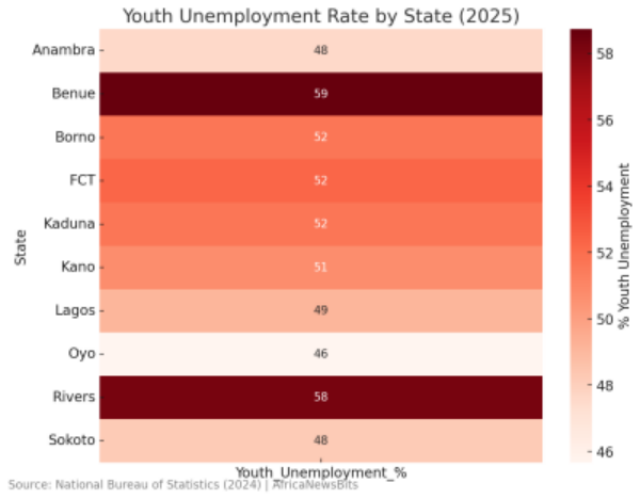
With 53% youth unemployment according to NBS, soaring food prices, young Nigerians are hustling to survive and they are also demanding to be heard.
Oluseyi wipes sweat from his brow as he rides past Mokola roundabout, trying to beat the afternoon traffics and the task force patrol. Seyi is 27, a graduate of political science, from one of Nigeria premier University – the University of Ibadan but his degree sits idle while he makes a living as an okada rider, conveying people and sometimes goods in and around Ibadan.
On good days, which sadly are far in between due to repairs and other factors, Seyi brings in ₦9,000 – ₦12,000. But after spending about ₦6,000 on fuel, handing ₦500 to OYRTMA (Oyo State Road Traffic Management Authority) officials at one checkpoint, ₦200 or more to Amotekun patrols on another road, and ₦800 in “Owo-Ita” to agberos stationed at Sango and Bodija, he’s left with barely enough to buy dinner and data.
“Area boys no dey gree make you pass without something,” he says. “Even Amotekun dey collect. Police go stop you say na ‘helmet violation’, them just want cut their own.”
According to a post on an online public forum – Nairaland, One Sheu, a marwa (tricycle) driver was quoted saying:
“We pay ₦300 official ticket, but we still pay another ₦800 every day to agberos and policemen. And that one no get receipt.”
These are not isolated voices. They reflect a generation struggling not only with unemployment but with daily exploitation, rising prices, and eroding trust in the system.
Economic Frustration Driving Discontent
According to World Bank Nigeria economy grew by 3.4% in 2024, driven mostly by agriculture and services. But this growth has not translated into meaningful opportunities, especially for the young people. The National Bureau of Statistics (2024) puts youth unemployment at 53%, while informal underemployment is even higher.
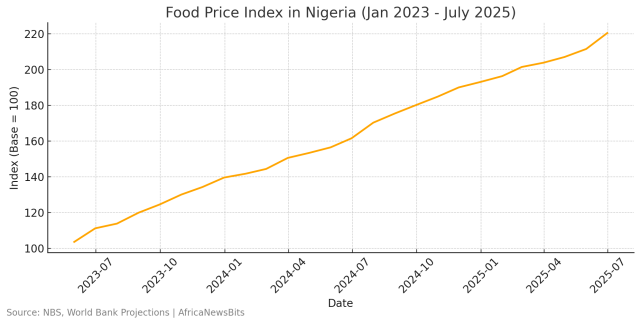
As of November 2024, overall inflation stood at 34.6%, with food inflation at 40%. Prices for essentials goods like; rice, garri, bread, pepper and tomatoes, have more than doubled or tripled in some areas. A recent social media post by @PremiumTimesng estimated that over 135 million Nigerians are now multi-dimensionally poor, with young adults bearing the brunt.
“We’re not lazy. We just don’t have options,”
said Amina, 24, a university graduate turned roadside fashion vendor in Kaduna. “Even our hustle is hustling.”
Digital Protest and Online Consciousness
Nigerian youth have turned to social media as a way out, to vent their frustrations, organise, and sometimes resist.
Platforms like X (formerly Twitter), Telegram, and TikTok from to time get buzzing with varying hashtags like #SiriNiNumbers and #10DaysOfRage, digital campaigns that reflect both despair and defiance. The August 2024 protests across several cities, organised mostly online, were driven by frustration over economic policy, insecurity, and fuel prices.
“We watched Kenya’s youth protest and force change. It gave us hope,”
said @sweetsixtien during a June 2025 X Space.
These aren’t centrally coordinated protest movements, they’re loose, agile, and often anonymous. Still, they indicate a generational political awakening happening in real time.
A Crisis of Trust
While government initiatives like the 2025 National Youth Conference and job creation schemes have been launched, most young Nigerians view them with skepticism. In their eyes, these programs often come without transparency, clear timelines, or measurable outcomes.
Monetary policy has also tightened, with the Central Bank of Nigeria (CBN) maintaining a 27.50% interest rate to curb inflation. The Naira now trades around ₦1,500–₦1,600 / $1; a sharp decline from ₦460.72 / $1 on May 29, 2023, marking a depreciation of approximately 230% in just over two years.
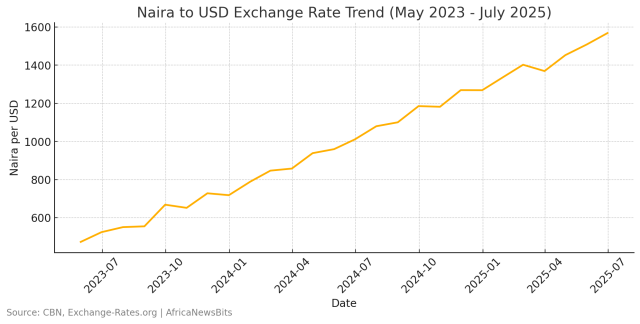
The slide didn’t happen overnight. The Naira weakened rapidly through late 2023, falling from around ₦460 to ₦899 by December 2023, then continued, slipping through 2024 and into mid‑2025, reaching the current range. While these steps aim to restore macroeconomic stability, many young Nigerians say they don’t feel the impact where it matters; at the market stalls, fuel stations, and job centres.
“I hear about growth on radio,” said Chuka, a student activist in Enugu. “But how does that help me when one derica of beans is ₦1,000?”
Building and Resisting at Once
Despite adversity, Nigerian youth are not passive. In cities and towns across the country, they are creating businesses, launching apps, selling goods online, and teaching digital skills. Entrepreneurship has become both an escape and a protest, building something new when the system offers little.
“We can’t wait for government jobs. We’re building our own economy,” said Damilola, a freelance designer in Abuja.
This dual response, innovation and resistance, defines the current youth moment: determined, digitally savvy, but deeply frustrated. Some have also been forced into a life of crimes; like internet fraud, kidnap for ransom and even ritual killings.
Nigeria stands at a pivotal moment. The youth are speaking online, on the streets, and through their choices. The question is whether the political system is prepared to listen, not just with rhetoric, but with policy that addresses food insecurity, joblessness, and structural injustice.
The risks of inaction are real. But so is the opportunity to build trust and reform from the bottom up.
Hidden Toll of Extortion in Ibadan
|
Culprits |
Role |
|
OYRTMA |
Enforces traffic laws, often impounds bikes and fines riders |
|
Operation Amotekun |
Regional security outfit, sometimes requests “security support” |
|
Agberos/Area Boys |
Informal touts at motor parks and junctions who charge “Owo-Ita” fees |
“Before you even reach Bodija, you don pay almost ₦1,000 to different people.” — Seyi, Ibadan rider
