We have a curated list of the most noteworthy news from all across the globe. With any subscription plan, you get access to exclusive articles that let you stay ahead of the curve.
We have a curated list of the most noteworthy news from all across the globe. With any subscription plan, you get access to exclusive articles that let you stay ahead of the curve.
We have a curated list of the most noteworthy news from all across the globe. With any subscription plan, you get access to exclusive articles that let you stay ahead of the curve.
We have a curated list of the most noteworthy news from all across the globe. With any subscription plan, you get access to exclusive articles that let you stay ahead of the curve.
The Federal Government, in partnership with Self Help Africa, has launched two pilot projects aimed at improving water safety in rural Nigeria through chlorine dispensing and inline chlorination systems.
In Adamawa’s Fombina IDP camp, displaced families face disease, neglect, and the collapse of healthcare, with no clinic, no toilets, and no help in sight.
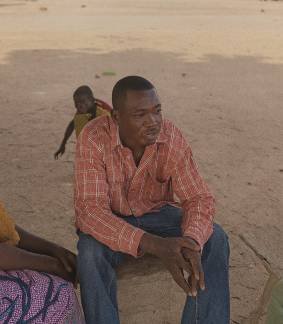
Haruna Indawa, 50, has lived in the Fombina Internally Displaced Persons (IDP) Camp in Adamawa State for nearly a decade. He arrived in 2015 after fleeing Gwoza in Borno State, when Boko Haram fighters stormed his town and set homes ablaze.
He escaped death. But for the last nine years, he’s been trapped in limbo, not with freedom, but with fear, hunger, and illness.
In Fombina, like in dozens of other IDP camps across Nigeria’s northeast, sickness is not something you treat. It is something you endure.
“We don’t get medicine here. When someone is sick, we wait. When it gets worse, we wait more. We just depend on God,”
says Haruna, now the camp’s leader.
A Camp Without a Clinic
At its peak, Adamawa State had more than 1,100 health facilities. By 2017, fewer than 55% were still functioning. The rest were either destroyed or barely operational. For displaced people living in camps like Fombina, that breakdown has meant years without access to basic healthcare.
Across Nigeria, the World Health Organisation estimates that over 70% of IDPs lack access to medical services. In the northeast, where more than 2.3 million people have been uprooted by violence, aid groups have repeatedly raised concerns about the collapse of healthcare systems in and around displacement camps.
A report by Médecins Sans Frontières (MSF) in 2023 painted a grim picture: widespread malnutrition, high child mortality, and unchecked disease — largely due to the absence of functioning health centres.
Between 2017 and 2018, health screenings in camps across Adamawa, Gombe, and Yobe found that tuberculosis rates among IDPs were more than twice the national average. HIV prevalence also surpassed state levels. And that only covers those tested.
“Hospital Is 10 Kilometres Away”
Fombina has no clinic. No nurse on call. No regular visits from doctors or health workers. When someone falls ill, the only option is to carry them, literally, to the nearest town.
“We look for two or three people to carry the sick to Viniklang. It’s 10 kilometers away. That’s our only chance of treatment,”
Haruna explains.
Even that is a luxury most cannot afford, not just in cost, but in time and physical effort. At night, there are no vehicles. Only prayers.
The Toilets Are Full. Disease Is Everywhere.
What makes things worse is the state of hygiene. Fombina camp has just two latrines. Both have collapsed. Open defecation in the surrounding bush is now the norm. The stench is ever-present. So are the flies and diseases.
Yusuf Bitrus, a 25-year-old student who has had to drop out of school
“The toilets are bad. There are infections everywhere. The smell, it’s all around us,”
says Yusuf Bitrus, a 25-year-old student who has had to drop out of school because his family can no longer pay fees.
“There’s no safe place to bathe. Many people now have rashes and skin problems,” he adds.
These aren’t isolated complaints. Cholera outbreaks in the region continue to claim lives. In late 2023, over 2,000 suspected cases were reported in Borno, Yobe, and Adamawa, many of them from camps like Fombina. At least 33 people died, according to the Nigeria Centre for Disease Control.
And it has not stopped. A March 2025 report from the UN Office for the Coordination of Humanitarian Affairs (OCHA) listed cholera, measles, diphtheria, and cerebrospinal meningitis among the top threats in IDP camps across Adamawa. Jada LGA alone recorded 55 new cholera cases and three deaths in just one month.
Promise Unkept
While agencies like the National Emergency Management Agency (NEMA) and State Emergency Management Agencies (SEMAs) are tasked with responding to humanitarian needs, residents in Fombina say government presence is barely felt.
In 2024, the Government of Japan partnered with the International Organisation for Migration (IOM) to fund nine new healthcare centres across Adamawa. The plan was to support 150,000 people in eight local government areas.
But those at Fombina say they’ve seen no improvement.
“People say government knows about us, but it doesn’t. They only came in 2022 to count us. Since then, nothing,”
says Haruna.
“The only people who come are from churches. They bring food, clothes, and books. That’s all.”
The Nigerian government allocates over ₦1.2 trillion annually to the health sector. But very little of that reaches the country’s most vulnerable. Mobile clinics. Latrines. Vaccines. Boreholes. These are not impossible tasks. They’re just not political priorities.
The Basic Health Care Provision Fund (BHCPF), designed to provide free healthcare to the poor, has barely touched the lives of displaced persons. In places like Fombina, it’s as if the fund, and the people it was meant for, don’t exist.
This is not just a health crisis. It’s a breakdown of governance.
“We Are Not Asking for Money”
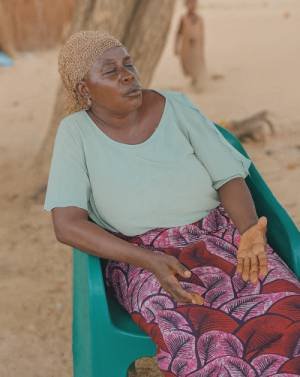
Mrs. Mary Bitrus, a long-time resident of Fombina Camp
“We are not asking for money. We just want good food, clean water, a place to sleep, new toilets, and a clinic nearby,”
says Mrs. Mary Bitrus, another long-time resident of the camp.
These are not extravagant demands. They are basic human needs.
But in Fombina, even those seem out of reach.
Editor’s Note
If the Nigerian government is serious about protecting its citizens, the place to start is here, not in speeches, not in spreadsheets, but in places like Fombina where people have already lost their homes, and now risk losing their lives for lack of soap, latrines, and medicine.