




JOHANNESBURG – There was a time when the name Mugabe could stop traffic in Harare and command red carpets in Pretoria. But on Thursday, February 19, 2026, it was associated with a different kind of spectacle: a two-hour police standoff at a Hyde Park mansion and the sight of Bellarmine Chatunga Mugabe leaving his luxury home in handcuffs.
For those who have followed the long, slow decline of Zimbabwe’s former first family, this latest arrest isn’t just a news headline. It is a symbol. It’s a clear sign that the “untouchable” status once enjoyed by the children of the late Robert Mugabe has finally evaporated in the cold reality of life in exile.
Entitlement Meets the Law
This wasn’t a quiet misunderstanding. According to the South African Police Service (SAPS), the incident began as a dispute over a gardener not showing up for work. It ended with that gardener being rushed to the hospital in critical condition with gunshot wounds.
For Chatunga, now 28, this is a familiar script. He and his brother, Robert Jr., have spent years making headlines for all the wrong reasons. From being booted out of luxury Sandton apartments for violent brawls to warrants in Zimbabwe for disorderly conduct, the brothers have struggled to find a role for themselves that doesn’t involve a police docket.
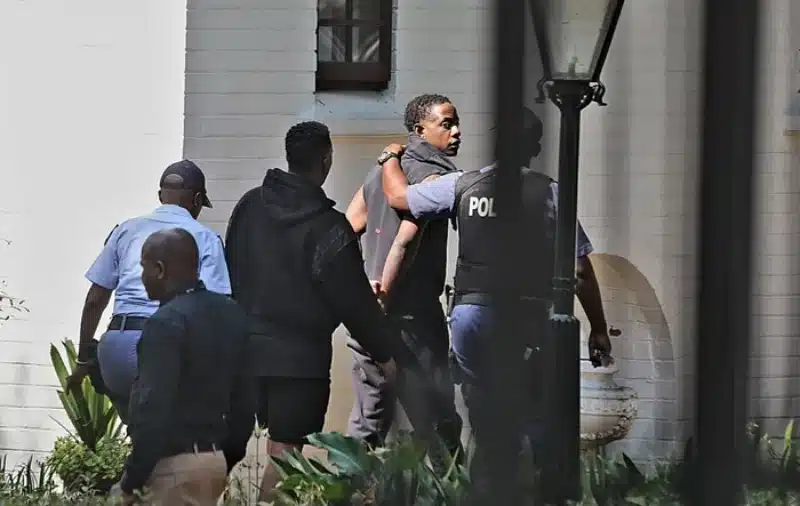
What’s different in 2026 is the lack of a safety net. Back when their father was the “Old Man” of Zimbabwean politics, diplomatic phone calls could make problems disappear. Today, they are just another pair of foreign nationals facing the South African justice system.
Ghost of the Extension Cord
It is impossible to look at this shooting without hearing the echoes of 2017. That was the year their mother, Grace Mugabe, allegedly used an extension cord to assault a young model in a Johannesburg hotel. That moment was the first time the family’s shield of immunity was publicly challenged in South Africa.
Now, nearly a decade later, the violence has shifted from an extension cord to a firearm. The pattern, however, remains the same: an explosive reaction to a perceived lack of service or respect. It suggests that while the family lost their country in 2017, they never quite lost the mindset that they are above the people who serve them.
The View from Harare: A Dynasty in the Rearview
In Zimbabwe, the reaction to the arrest has been telling. It isn’t outrage or even shock. It’s mostly fatigue.
“The Mugabe family has no power left,” says Bulawayo Mayor David Coltart. He’s right. To the vast majority of Zimbabweans—especially the youth struggling with a decimated economy—the Mugabe sons are “spoiled” relics. They represent a past era of excess that many would rather forget.
Even President Emmerson Mnangagwa, who has kept a polite but distant relationship with Grace Mugabe, has little reason to step in here. There is no political capital to be gained by defending a son who is making headlines for shooting his staff.
What’s Left of the Name?
Robert Mugabe prided himself on being a revolutionary and an intellectual. He spent decades crafting a legacy as the father of a nation. But legacies are often at the mercy of those who inherit them.
As Chatunga prepares to stand before an Alexandra magistrate on Monday, he isn’t representing a revolutionary movement. He is a private citizen facing an attempted murder charge. The “Mugabe Legacy” isn’t being debated in high-level policy rooms anymore; it’s being picked apart in a Johannesburg courtroom.
The era of the “Princes of Harare” is over. What’s left is a cautionary tale of how quickly a dynasty can crumble when the power is gone, but the habits remain.

