



By Esther Kadie Tarawally
When Michael Tamba Komba opened his eyes in a dimly lit hospital room, the first thing he saw was his mother sitting silently by his bedside, tears running down her face. Guilt overwhelmed him. Something had to change.
For three years, drugs had consumed his life, pulling him deeper into despair.
“Drugs take your sorrow away, but only for a short while. You keep going back for that feeling, and before you know it, you’re addicted,” says Michael.
Known on the streets as Jaden Ken, Michael was once a celebrated footballer. Today, he uses his journey from addiction to recovery to inspire others across Sierra Leone. He’s now been clean for nine months.
“I was a user of Kush, crack, ecstasy, flex, and tramadol. But I’ve been clean for nine months now,” he says.
As Sierra Leone battles a rising wave of addiction, driven by Kush and synthetic opioids—Michael’s story is igniting hope across a struggling nation.
His descent into drug use began while his football career was still blossoming. After playing in Sierra Leone’s top league and securing a contract in Liberia, scouts from Seychelles showed interest. On the advice of his director, he terminated his Liberian deal, only for both opportunities to vanish.
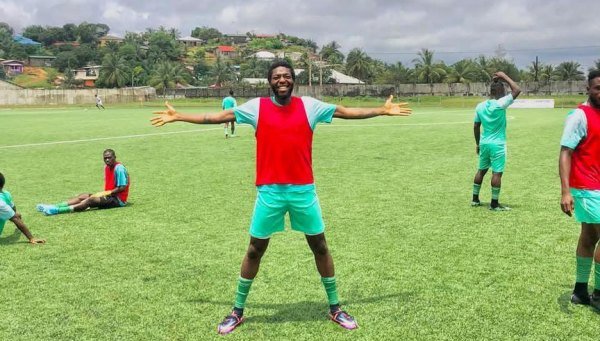
The disappointment hit hard.
“My elder sister noticed first. I was clubbing, sleeping all day, and staying out all night,” Michael recalls.
Things escalated during a content shoot dubbed Sip and Paint, where he drank vodka mixed with ecstasy before filming. Hours later, he collapsed. It was his third overdose.
Michael’s road to recovery was unorthodox. He didn’t attend rehab. Instead, he stayed indoors, surrounded by family, drank water, ate fruits, and cut ties with his former circle.
“Withdrawal is brutal. But recovery is possible. You just need the will,” he says.
His friends doubted him, especially during December, Sierra Leone’s festive season known for wild partying, but he stayed clean.
Today, Michael is a social media activist. He reaches out to addicts in Freetown, Makeni, and other towns.
“When I talk to addicts, I’m also talking to myself. It helps keep me clean,” he says. “Many won’t listen unless you feed them first. But I keep showing up.”
‘Seeing Michael Changed My Life’
Michael isn’t alone in his fight.
Patrick Paul Kamara, 17, is another survivor of the Kush epidemic, and a testimony to the possibility of recovery. His story reflects the urgent need for community and national intervention. Kamara is one of several young people mentored by Michael.
“Seeing Michael’s transformation made me believe I could change too,” says Patrick.
“I had my first Kush when I was 14,” he recounts. “I smoked it for a year, got clean, but then st
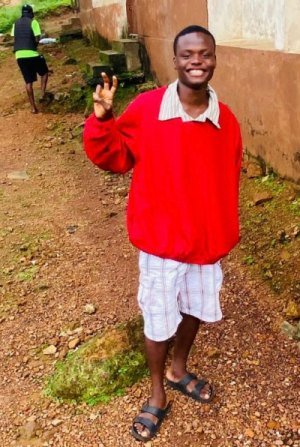
arted taking tramadol. I’ve been clean for five months now.”
When his family discovered his drug use, their reaction was harsh.
“I was caged in the house for four months without seeing the sky. I was beaten. They gave up on me,” he says.
Michael explains that as some users try to wean off Kush, many turn to tramadol instead.
“Even elites, university students, people in churches and mosques—are addicted to tramadol,” he says.
A Nation in Crisis
Michael’s personal battle with addiction, and his ongoing recovery, have made him a credible voice in Sierra Leone’s fight against drugs. But the scale of the crisis is far bigger than one man’s story.
Dr. Jusu Mattia, Registrar at the Ministry of Health and resident psychiatrist at Kissy Psychiatric Teaching Hospital, describes Kush as a dangerous cocktail of substances.
“Kush often includes marijuana, fentanyl, tramadol, and sometimes nail polish remover or embalming fluid like formalin,” he says.
“We have a 250-bed facility, but we often exceed that number due to the rise in substance abuse cases. Some patients are even placed on waiting lists.”
Dr. Mattia notes that Kissy is the only government-run mental health facility in the entire country. Most patients are brought in by family members after violent or erratic episodes; few come voluntarily.
He adds that while most patients are male, many of the female patients are also dealing with drug-induced mental health issues.
“Women often suffer in silence due to social stigma,” he explains.
According to facility records, 90 percent of the 1,584 cases recorded between January and June 2025 were linked to Kush use.
The Government Responds, But Is It Enough?
In April 2024, faced with mounting pressure, President Julius Maada Bio declared a National Emergency on Drug and Substance Abuse, calling it both an epidemic and a national threat.
As part of the response, the government launched a national task force on substance abuse and pledged a coordinated approach involving law enforcement, treatment, and community engagement.
But activists say much more needs to be done.
Sahid Bangura, co-founder and Executive Director of Creating Opportunities for Disadvantaged Persons (CODAP), has spent years working with youth battling addiction. He says the problem is not limited to street children.
“We see university students and elite youths using drugs. They’re functional addicts,” Bangura says.
He acknowledges that the government has made efforts, such as establishing rehab centres in Hastings and Kissy, but says the facilities remain under-resourced.
“The challenge isn’t just funding but also expertise,” he says. “Many families are reluctant to take loved ones to the Kissy Psychiatric Home due to the stereotype that it’s only for the mentally retarded.”
Post-treatment care is also lacking.
“Aftercare programs to prevent relapses are essential,” he stresses.
Bangura calls for a community-based, inclusive approach. He believes prevention must begin at home, in schools, and in places of worship.
“In substance abuse education, they say it takes a village to raise a child. In the same way, it takes a village to wean an addict, and to prevent addiction in the first place.”
He adds that addiction can also be hereditary, and urges religious leaders to speak more openly on the issue.
‘Addicts Don’t Just Need Detox, They Need Direction’
For Michael and Patrick, recovery is not a finish line, but a lifelong journey.
Both advocate for combining detox with skill-building, mentorship, and emotional support.
“The idle mind is the devil’s workshop,” Michael says. “We need to help addicts rebuild their lives, not just detox them.”
Kamara, who recently sat for the 2025 WASSCE, dreams of using his second chance to educate and inspire others.
“Peer pressure led me in, but help got me out,” he says. “I want young people to know there’s a better life beyond drug abuse.”
If you or someone you know is struggling with addiction in Sierra Leone, visit the Kissy Psychiatric Teaching Hospital, Freetown.
