



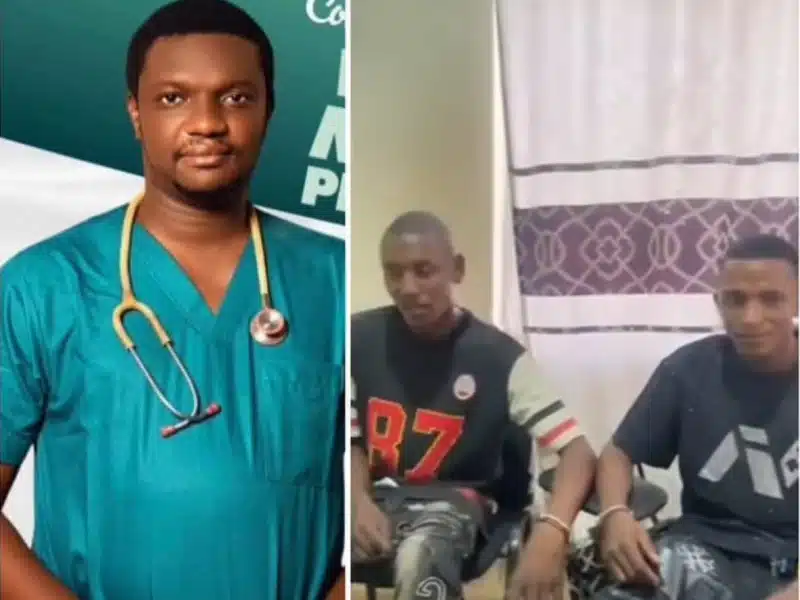
Nigeria – An Edo doctor comes face to face with brother’s killers inside the emergency ward of the hospital where he works, weeks after surviving a January kidnapping that claimed his younger brother’s life and shocked the Auchi community.
Dr Abu Ibrahim Babatunde had learned to live with the nightmares. Every night since mid-January, when he was released after nearly two weeks in captivity, he woke in cold sweats, his brother’s face vivid and unyielding in his mind. The ransom had been paid, fifty million naira his family scraped together through loans, donations, and the generosity of strangers moved by viral appeals across Auchi and beyond. But the money had only bought freedom for one of them.
His younger brother, Abu Tahir, had not been so fortunate. On 5 January, police discovered Tahir’s body near the Orley River along City Pride Road, not far from their home in Igbira Camp. Investigators believe he was killed while in captivity. The knowledge settled heavily in Abu’s chest each time he walked through the corridors of the Specialist Hospital in Auchi, where he worked as a house officer.
On Sunday morning, 8 February 2026, just after nine o’clock, the emergency ward was unusually quiet. Abu welcomed the calm. He had returned to work earlier than many colleagues thought wise, but staying home only intensified the memories. At least in the hospital, surrounded by routine and responsibility, he could function.
He was reviewing patient charts when a nurse asked him to attend to a sick child newly brought into the ward. Abu picked up his stethoscope and walked towards the examination area, already thinking through possible diagnoses.
Then he saw them.
Two men stood beside a small child lying on the examination table. One adjusted the child’s blanket with care. The other spoke softly to the nurse, explaining symptoms. They looked like any other worried relatives seeking urgent help.
But Abu recognised their faces immediately.
The room seemed to tilt. In an instant, he was back in captivity, the darkness, the blindfold, his brother’s laboured breathing beside him. These were the same men. The taller one had grabbed them at their gate on 2 January, forcing them into a vehicle before they could raise an alarm. The shorter one had handled most of the ransom calls, his voice cold and methodical.
Abu’s hands trembled. Every instinct urged him to react, to flee, to confront them, to demand answers. Instead, training and survival instinct took over. He turned calmly, as if he had forgotten something, and walked out of the ward at a steady pace.
He found the hospital administrator and asked for an urgent word. Minutes later, he was speaking to the Divisional Police Officer.
“Two of the men who kidnapped me and killed my brother are in the emergency ward,” Abu said quietly. “They have brought a sick child.”
“Do not alert them,” the officer replied. “We are on our way. Can you keep them there?”
“They are not going anywhere,” Abu said. “The child needs treatment.”
He returned to the ward and resumed his role. The child, a young boy with high fever and respiratory distress, required immediate care. Abu examined him, explained the situation to the two men, and arranged for admission, intravenous fluids, and antibiotics. He treated them as he would any other patient’s relatives.
“Thank you, doctor,” one of the men said.
Abu nodded. “Just doing my job.”
Within twenty minutes, plain-clothes police officers entered the hospital. Abu, standing near the ward entrance, gave a discreet signal. The arrest was swift. Confusion crossed the suspects’ faces, then recognition, then resignation.
“Idris Abubakar and Sani Abubakar,” the lead officer said as they were handcuffed. “You are under arrest for kidnapping and murder.”
Abu watched silently as they were led away. He then ensured arrangements were made so the child’s care would continue uninterrupted.
Later, at the police station, Abu learned that a third suspect, Saminu Kawujie, had been arrested days earlier during a bush-combing operation in Warake Forest. Police recovered knives, mobile phones, an ATM card, and cash. Investigators believe Idris Abubakar was the individual who received the ransom payment. All three suspects were now in custody at the Auchi Divisional Police Station.
The news spread quickly through Auchi and across social media. Messages poured in, admiration, disbelief, praise for Abu’s composure. Many described the episode as poetic justice. Others reflected on the audacity of the suspects returning to their victim’s workplace.
Abu felt no triumph. The arrests did not bring his brother back. They did not erase the trauma or the guilt of survival.
What he felt instead was a quiet sense of closure. He had moved, however modestly, from victimhood to accountability.
The Edo State Police Command later confirmed the arrests, citing intelligence-led operations and community cooperation. Authorities said investigations were ongoing to dismantle the wider kidnapping network operating in the area.
That night, for the first time since his release, Abu slept without nightmares. He dreamed of his brother as he once was, alive, laughing, hopeful. When he woke, the grief remained, but it had softened, making space for something else.
The next morning, Abu returned to the hospital. The emergency ward was busy again, full of ordinary suffering and routine urgency. He put on his medical coat, picked up his stethoscope, and went to work.
Because that is what doctors do.
They show up. They treat whoever needs care. They remain calm in crisis. And sometimes, very rarely, justice walks through their door asking for help.

