



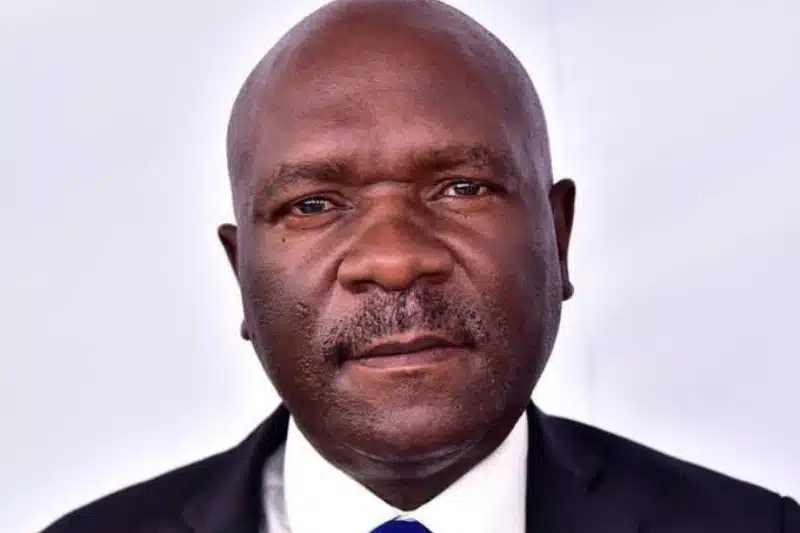
After losing his parliamentary seat, Yusuf Nsibambi former Ugandan lawmaker allegedly cut electricity and withdrew school bursaries from an entire community, exposing the dark underbelly of transactional politics and conditional generosity.
For the residents of Buyaaya–Kitojjo village in Uganda’s Mityana District, the Buyaaya blackout came swiftly and deliberately. It was not a fault in the system nor an act of nature, but what residents describe as the calculated response of a politician scorned by the ballot box.
Yusuf Nsibambi had built his political identity on the image of the beneficent leader. During his tenure as Member of Parliament for Mityana South, he positioned himself not merely as a legislator but as a saviour, a man who reached into his own pockets to lift his constituents from hardship. The transformer that brought electricity to Buyaaya village bore his fingerprints. The power lines stretching across the landscape, the street lights illuminating the night, and the hum of refrigerators in small shops and salons, all of it, he said, came from his personal resources.
Between sixty and sixty-six students, depending on different community accounts, had their school fees paid by Nsibambi. Parents who could not afford to educate their children found an unexpected patron. It was philanthropy with a political edge, the kind of hands-on community support that builds loyalty in constituencies where government services remain patchy and hope is often rationed.
These were not official projects funded through Uganda’s constituency development mechanisms. Nsibambi was careful to frame them as personal gifts, investments from his own savings, and gestures of goodwill that distinguished him from the faceless machinery of government. In Ugandan politics, where Members of Parliament command substantial salaries and allowances, such self-funded initiatives are not unusual. They are often offered to create networks of obligation and gratitude that politicians hope will translate into votes when the time comes.
On January 15, 2026, that time arrived. Uganda held its general elections, and the people of Mityana South made their choice. They elected Suzan Nakawuki of the ruling National Resistance Movement, defeating Nsibambi and his Forum for Democratic Change candidacy by a decisive margin across several polling areas. Even in Buwama, a community where he had invested heavily, support fell short.
What followed shocked residents.
Within days of the results, Nsibambi reportedly hired technicians to disconnect the electricity supply to Buyaaya village. The transformer he had funded, the power lines he had paid for, and the street lights that had become part of everyday life were switched off. Community members alleged that he personally supervised the disconnection, plunging homes and businesses into darkness.
When attempts were made to restore the connection, the situation reportedly escalated. Poles were said to have been cut down, and residents claimed threats were issued to destroy the transformer itself. The blackout persisted while Nsibambi’s own residence, which reportedly shared the same infrastructure, continued to receive electricity. The optics were stark, an illuminated home surrounded by darkness.
The bursaries ended just as abruptly. Around sixty students, many already midway through their academic programmes, saw their funding withdrawn. According to statements attributed to Nsibambi, the reason was simple. Their parents had failed to support him at the polls. Why, he asked, should he continue to pay school fees for families that had rejected him politically?
His public remarks reflected no regret. “I no longer have any obligation to those people,” he was quoted as saying. “That electricity is not government property. I paid for it with my own money.” He appeared affronted by suggestions that he owed the community anything beyond his formal legislative role. “Am I the government?” he asked. “The work of a Member of Parliament is to make laws and pass the national budget, not to provide electricity.”
One statement in particular drew widespread attention. “If they appreciated what I did for them as an individual, they would have voted me back. Let them remain in darkness and ask government for their own electricity.” It was the language of transaction laid bare. The electricity had never been a gift. It was an investment, and the voters had failed to deliver the expected return.
Residents reacted with shock and anger. Many pointed out that electricity had functioned without incident throughout his entire term in office. “Why was it never cut before elections?” they asked. “Now that he lost, he disconnects us.”
The consequences were immediate and severe. Small businesses shut their doors. Salons that relied on electric clippers could not operate. Refrigerators failed, spoiling food and medicines. Children preparing for examinations lost the ability to study at night. Many residents said the fallout felt like collective punishment tied to control of essential infrastructure.
The sense of injustice ran deep. Many argued that they had already given Nsibambi a full term in Parliament. “We exercised our democratic right,” one resident said. “Why should that come with punishment?”
Uganda Electricity Distribution Company Limited responded with firm condemnation. Its spokesperson, Jonah Kiiza, stated that all power infrastructure belongs to the government once connected to the national grid, regardless of who initially funded installation. No individual, he said, has the authority to disconnect communities or claim private ownership of electricity infrastructure.
Uganda Electricity Distribution Ltd moved to restore power to Buyaaya and surrounding areas, asserting government control over essential services. Police said an investigation had been opened into the incident. Legal experts noted that claims of private ownership over grid-connected infrastructure have no basis in law.
The episode generated fierce debate across Ugandan media and social platforms. Many condemned Nsibambi’s actions as vindictive and unbecoming of a former legislator. Others offered a harsher, transactional defence, arguing that voters who failed to reward personal generosity should not expect it to continue indefinitely.
That divide exposes a deeper tension in Ugandan politics. Is a Member of Parliament’s role strictly legislative, as Nsibambi argued? Or does the reality of uneven development create expectations that elected officials will personally intervene to deliver services? And when such interventions are framed as private generosity, does that create obligations voters never explicitly agreed to?
Nsibambi is not alone. In 2018, Patrick Okumu-Ringa reportedly sealed boreholes he had funded after losing an election. Other defeated candidates have withdrawn ambulances, closed clinics, or halted development initiatives they personally supported. Each incident provokes outrage, yet the pattern endures.
Still, cutting off electricity and abandoning students mid-education marked a particularly severe escalation. Electricity is no longer a luxury but an essential service. Education is widely recognised as a fundamental right. To weaponise either in response to electoral defeat crossed a line that even some of Nsibambi’s defenders struggled to justify.
In subsequent remarks, Nsibambi praised President Yoweri Museveni’s victory and the National Resistance Movement’s dominance, conceding that opposition candidates faced steep odds. He announced his withdrawal from elective politics, a decision that removed any incentive to repair relations with his former constituents.
By early February 2026, Uganda Electricity Distribution Ltd had largely restored power to Buyaaya village, though some areas reportedly remained affected. The bursaries, however, were not reinstated. Dozens of students and their families were left scrambling for alternatives, facing disrupted education and uncertain futures.
The darkness that fell on Buyaaya was more than the absence of electricity. It exposed a political relationship built on unspoken assumptions, where generosity came with invisible strings and votes were treated as payment. When voters chose differently, those strings were pulled tight.
Nsibambi’s anger was the anger of a man who believed an unspoken bargain had been broken. But that bargain existed only in his expectations. The voters owed him nothing beyond fair consideration. They weighed their options and decided. That is democracy.

