
ABUJA – President Bola Ahmed Tinubu has formalised the Electoral Act 2026 (Amendment), signing the bill into law on Wednesday, 18 February. While the State House describes the legislation as the definitive legal anchor for the Bimodal Voter Accreditation System (BVAS), a different narrative is taking hold in the streets. Civil society leaders and opposition parties are warns that the law actually erodes the very transparency it claims to protect. They contend that, far from securing the 2027 general elections, this new framework risks undoing decades of hard-won democratic progress.
For the average Nigerian voter, the signing of this bill is not just a legislative exercise. It represents the rules of engagement for a high stakes battle for the soul of the country in 2027. The central question remains: will the technology serve the voter, or will the voter once again be at the mercy of the system?
The Death of Mandatory E-Transmission?
The most significant bone of contention lies in Clause 60, which governs the transmission of results. In the lead up to the 2023 elections, the real time upload of results from polling units to the INEC Result Viewing (IReV) portal was touted as the ultimate antidote to the infamous collation room magic.
However, the 2026 Act has taken a pragmatic turn that critics call retrogressive. While the House of Representatives initially pushed for mandatory real time transmission, the final version signed by the President grants the Independent National Electoral Commission (INEC) significant discretionary power. The law now states that INEC shall prescribe the manner in which results are transferred. This effectively allows for a manual first approach if technical glitches occur, a loophole that civil society groups say was exploited during the previous general elections.
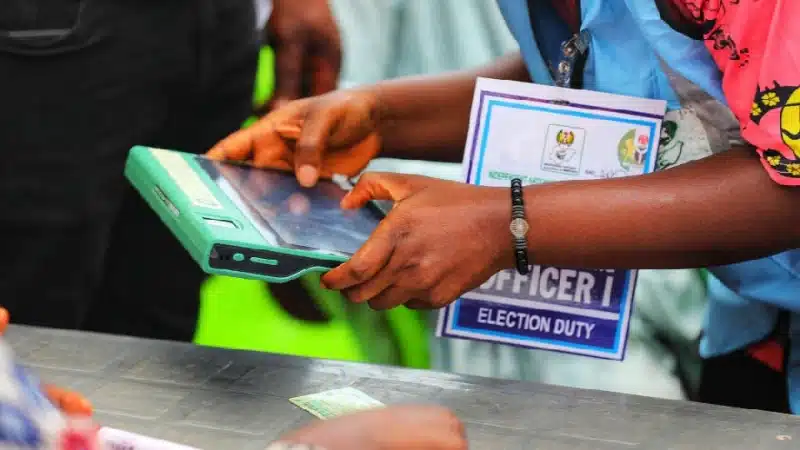
During the signing ceremony at the State House, President Tinubu defended this shift. He suggested that humans still have a significant role to play and that computers cannot do everything. He emphasised the need to avoid glitches and hacking in an age of computer inquisitiveness.
YIAGA Africa and the Setback to Democracy Narrative
For civil society organisations like YIAGA Africa, this discretionary language is a direct assault on electoral integrity. Speaking at a stakeholder roundtable in Abuja, Samson Itodo, Executive Director of YIAGA Africa, warned that the 2026 Act leaves the door wide open for the same ambiguities that marred previous polls.
The current state of our electoral process is fragile, Itodo remarked. By failing to make electronic transmission a mandatory and non negotiable legal requirement, the National Assembly has ignored the primary yearning of the Nigerian electorate for total transparency.
The Nigeria Civil Society Situation Room echoed these sentiments, labelling the Act retrogressive. Beyond result transmission, CSOs are pointing to the revised timelines as a major logistical hurdle. The new law reduces the Notice of Election period from 360 days to 180 days, a move critics fear will squeeze the preparation window for INEC and lead to fire brigade logistics in 2027.
2022 vs 2026: A Side by Side Comparison
To understand why the mood in Abuja is so divided, it is essential to look at how the 2026 Act changes the game compared to the 2022 version.
Political Implications for 2027
As the dust settles on the legislative battle, the political implications for the 2027 general elections are becoming clear. One major concern is the potential for heightened litigation. By striking out Clause 142, which would have allowed parties to prove non compliance using only certified documents without oral evidence, the Act ensures that election petitions will remain long and expensive battles.
There is also the fear of an incumbency advantage. Opposition parties argue that giving INEC discretion over technology benefits the ruling party, especially since the leadership of the commission is appointed by the executive. Perhaps most dangerously, there is a growing concern regarding voter apathy. If citizens feel their digital checks can be legally bypassed by manual overrides, the “my vote does not count” sentiment may lead to record low turnouts in 2027.
A Fragile Path Forward
Despite the outcry, the Act does offer a few silver linings. For the first time, the BVAS is expressly entrenched in law. This means any election conducted without biometric accreditation is now legally void, providing a shield against the old school menace of over voting. Furthermore, the mandate that election funds be released to INEC at least one year before the polls is a win for operational independence.
The signing of the Electoral Act 2026 marks the beginning of the active phase for the 2027 cycle. While the government views it as a stabilisation of the system, the narrative of a setback to democracy is gaining traction among a skeptical public. As Nigeria approaches the 2027 polls, now officially scheduled for 20 February for the Presidential race, the true test will not be the ink on the paper, but whether INEC chooses to use its discretion to empower the voter or shield the system from scrutiny.
Would you like me to focus on the technical breakdown of the BVAS legal entrenchment or investigate the newly signed criminal sanctions for collation infractions?
Civil Society Condemns Rejection of E-Transmission
This video provides an on-the-ground look at the intense disappointment expressed by the Nigeria Civil Society Situation Room immediately following the legislative changes that made result transmission discretionary.
Electoral Act 2026