



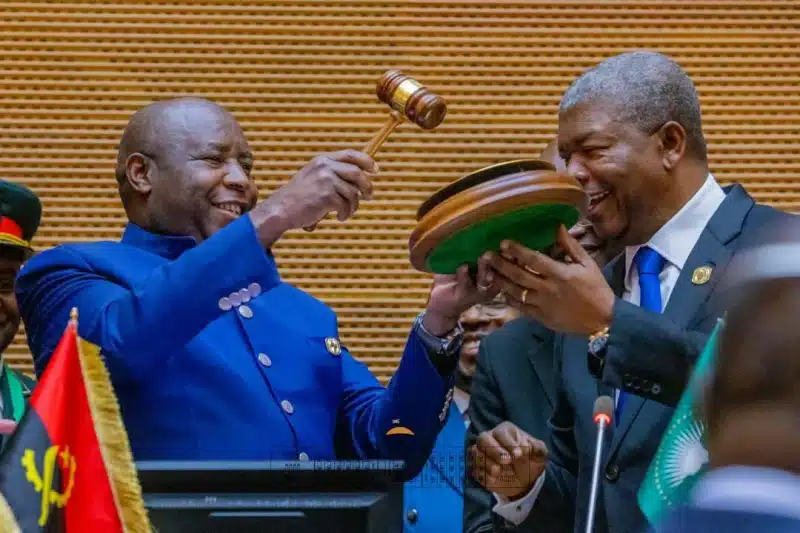

ADDIS ABABA – The dust has settled in Addis Ababa after the African Union Summit, and the mood is notably different this year. While these gatherings usually end with vague promises and recycled rhetoric, the AU Summit 2026 wrapped up on 15 February with a sharp, defiant pivot toward financial independence.
The Burundi Shift: Discipline Over Diplomacy
President Évariste Ndayishimiye of Burundi is now officially at the wheel. He takes over the AU Chairmanship from Angola’s João Lourenço at a time when the continent is exhausted by “global solutions” that never seem to arrive.
Ndayishimiye is not known for mincing words. In his first address as Chair, he bypassed the usual diplomatic pleasantries to focus on a “Year of Implementation.” His message was clear: 2026 is about “discipline” and getting things done, rather than just signing more treaties that gather dust in the AU archives. For a continent often criticised for its “paper-pushing” bureaucracy, Ndayishimiye’s blunt, action-oriented style is exactly the disruptor many young Africans have been calling for.
Water is the New Gold: Protecting the Continent’s GDP
This year’s theme, “Assuring Sustainable Water Availability and Safe Sanitation Systems,” might sound like standard NGO policy talk, but there is a hard economic edge to it. Leaders are finally admitting a painful truth: you cannot build a modern economy if 400 million of your people are still walking miles every morning for a bucket of water.
The summit experts highlighted a startling statistic: 75% of all jobs in Africa are water-dependent. From the massive textile factories in Ethiopia to the small-scale farmers in the Zambezi basin, water is the primary fuel for African labour. By focusing on “fixing the pipes and the pumps,” the AU is not just doing a “good deed,” it is trying to insulate the continent’s GDP against the erratic climate cycles that have historically wiped out billions in economic growth.
NAFA: Africa’s Plan to ‘Fire’ the IMF?
The real story dominating the hallways of the AU headquarters, however, is the New African Financial Architecture (NAFA). For decades, African nations have been trapped in a predatory cycle of high-interest loans from Western institutions and opaque credit deals from the East. NAFA is the planned escape route.
What exactly is NAFA? Essentially, it is a plan for Africa to bank on itself. Instead of begging for credit from the World Bank or the IMF, often on terms that require cutting social spending, the AU wants to pool the continent’s own massive wealth. Africa is not poor; it is poorly managed. By leveraging African pension funds, sovereign wealth reserves, and private insurance capital, the bloc intends to fund its own bridges, dams, and power plants.
The African Credit Rating Agency
A key pillar of NAFA discussed at the summit is the launch of an African Credit Rating Agency. Currently, African nations pay a “risk premium,” essentially a higher interest rate, simply because international agencies often downgrade African economies based on skewed perceptions of risk.
By creating a homegrown agency that understands local market nuances, the AU aims to lower the cost of borrowing. If an African nation can prove its project is viable to an African agency, it should not have to pay “Wall Street prices” to build a local hospital.
How NAFA Helps the Average Citizen
For the “curious citizen” wondering if this is just more billionaire talk, the summit leaders broke down the benefits into three tangible areas:
-
Lower Taxes and Debt Relief: Currently, many African nations spend up to 40% of their national revenue just paying off the interest on foreign debt. If NAFA works, that money stays home. It means a government has the budget for schools and roads without needing to hike the VAT on bread or fuel.
-
The ‘Borrower’s Club’: Africa is stronger as a bloc. By negotiating as one “Borrower’s Club” of 54 nations instead of 54 tiny, isolated countries, the continent can demand fairer terms from global lenders. It turns Africa from a “price taker” into a “price maker.”
-
Profitable Green Growth: NAFA is pivoting toward “Green Bonds.” This is not charity; it is business. By framing African solar and water projects as high-yield investments for global capital, the AU is inviting investors to put money into Africa because it makes financial sense, not out of pity.
The ‘Blue Economy’ and the Great Pipeline
In a move that surprised many analysts, the summit also discussed the Pan-African Water Pipeline. Similar to the gas pipelines that cross Europe, this ambitious project aims to move water from the water-rich Congo Basin to the drying regions of the Sahel and Southern Africa. While still in the feasibility stage, the fact that it was tabled under the NAFA funding model shows a level of regional cooperation rarely seen in previous decades.
2026 and Beyond
The 39th Summit has laid the groundwork for a more assertive, self-funded Africa. But the challenges are immense. To make NAFA a reality, member states must overcome the “trust gap” and ensure that pooled funds are protected from the corruption that has plagued national treasuries in the past.
As President Ndayishimiye takes the lead, the question every African citizen will be asking is simple: Will 2026 be the year we finally stop exporting our wealth only to borrow it back at interest? The Addis Ababa Pivot suggests that, for the first time, the answer might actually be yes.


