




The PFIPC scandal is no longer just about one man and a fake letterhead. New disclosures from the International Monetary Fund now place it inside a much wider pattern of institutional failure running through Nigeria’s public finance system.
At the centre of the PFIPC scandal is Prince Adeniyi Adeyemi Matthew, who presented himself as Director General of the Presidential Foreign Intervention Promotion Council. The Presidency says the council never existed in law. Yet it managed to clear a foreign travel approval, open a Central Bank account, secure staffing and win budgetary backing, all inside institutions built specifically to stop that kind of fraud.
Vanguard News reported that the Office of the Secretary to the Government of the Federation approved Adeyemi’s trip to the Canada Africa Fintech Summit in August 2025, after Permanent Secretary Engr. Nadungu Gagare signed off on the travel. Presidential spokesman Bayo Onanuga has said police investigations found that Adeyemi fraudulently opened a Central Bank of Nigeria account by misleading the Office of the Accountant General. Both approvals sit inside processes that are supposed to carry serious scrutiny.
Pegasus Reporters traced how three civil servants from the Office of the Accountant General were officially posted to the council by late August 2025, with the posting letter appearing on the OAGF’s own website. Separate reporting says the Office of the Head of the Civil Service went on to approve recruitment for more than 300 personnel into the same body. Daily Post Nigeria reported that the council also secured a budget code and an allocation exceeding N1.3 billion in the 2026 Appropriation Act.
It is exactly this kind of institutional traffic, staffing decisions, budget codes, bank clearances, that Peter Obi says points to something far bigger than one impostor. The Nigeria Democratic Congress presidential candidate has seized on a separate disclosure from the IMF’s Resident Representative in Nigeria, Christian Ebeke, who told business executives in Lagos that around N8.83 trillion in 2025 public spending, equivalent to two per cent of GDP, never appeared in official budget reporting.
That figure is calculated against a nominal GDP of N441.5 trillion for 2025, according to National Bureau of Statistics data reported by Leadership. The PFIPC scandal has become a central reference point in that wider debate over accountability and public finance.
Obi has been blunt about what that figure means. In a statement titled Grand Corruption, Nigeria’s Greatest Threat, he argued that the missing sum sat entirely outside legislative oversight and administrative scrutiny, calling the situation simply horrible. He noted that the amount exceeds thirty five per cent of Nigeria’s 2025 capital project budget and is larger than the combined national allocations for education and health put together.
For Obi, that scale of unreported spending is not a one-off accounting gap. He has described it as part of a pattern of grand corruption running through the Tinubu administration, warning that disregard for basic public finance rules threatens both national security and the stability of the Nigerian state. He has renewed his call for President Bola Tinubu to resign over it, a demand he first made weeks earlier citing incompetence and failed campaign promises.
The Finance Ministry has pushed back hard. Minister Taiwo Oyedele insisted the government does not run a shadow budget and that the IMF’s finding relates to the presentation of fiscal reporting rather than the legality of the spending itself. He argued that statutory transfers, intervention funds and capital rollovers are lawful mechanisms already disclosed and subject to audit.
Other opposition figures have joined Obi in linking the two controversies. Atiku Abubakar has called on the EFCC, the ICPC, the National Assembly and the Auditor General to investigate the N8.83 trillion figure directly. The Peoples Democratic Party’s Interim National Working Committee made this point directly, arguing that even the government’s own account of the PFIPC scandal amounts to an admission that the federal system is porous enough to be exploited from within.
The PFIPC scandal and the IMF disclosure now feed the same argument. If a council the Presidency insists was fictitious could still clear a Central Bank account, a foreign travel approval and a budget line, then the wider claim that trillions in spending moved outside proper reporting becomes far easier to believe.
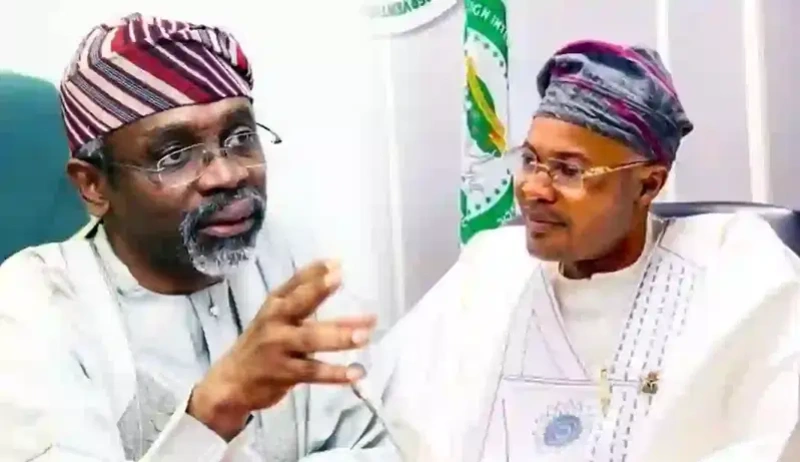
Civil society groups are pressing the same institutions from a different angle. The Committee for the Defence of Human Rights has called on the Budget Office, the Office of the Accountant General and the Central Bank to explain publicly how the PFIPC scandal passed through each of their verification checkpoints undetected. The Resource Centre for Human Rights and Civic Education wants Chief of Staff Femi Gbajabiamila to step aside pending an independent probe, given allegations that he solicited payment to facilitate Adeyemi’s appointment, an allegation the Presidency firmly denies.
The Socio-Economic Rights and Accountability Project has separately asked the Senate President and the Speaker of the House of Representatives to release certified copies of the documents used to justify the council’s budget allocation. Taken together with the IMF’s off-budget figure, these requests point to the same underlying question. How much of Nigeria’s public finance architecture actually catches irregular spending before it becomes a scandal, rather than after.
Adeyemi now faces an eight count criminal charge bordering on forgery and impersonation, with his case listed for hearing on 27 July. He has told Channels Television he intends to prove his claims in court.
Whatever the court eventually decides about him personally, the PFIPC scandal has already demonstrated something the IMF’s disclosure now reinforces at a much larger scale. Nigeria’s oversight institutions are being tested, and so far, the results have not been reassuring.


